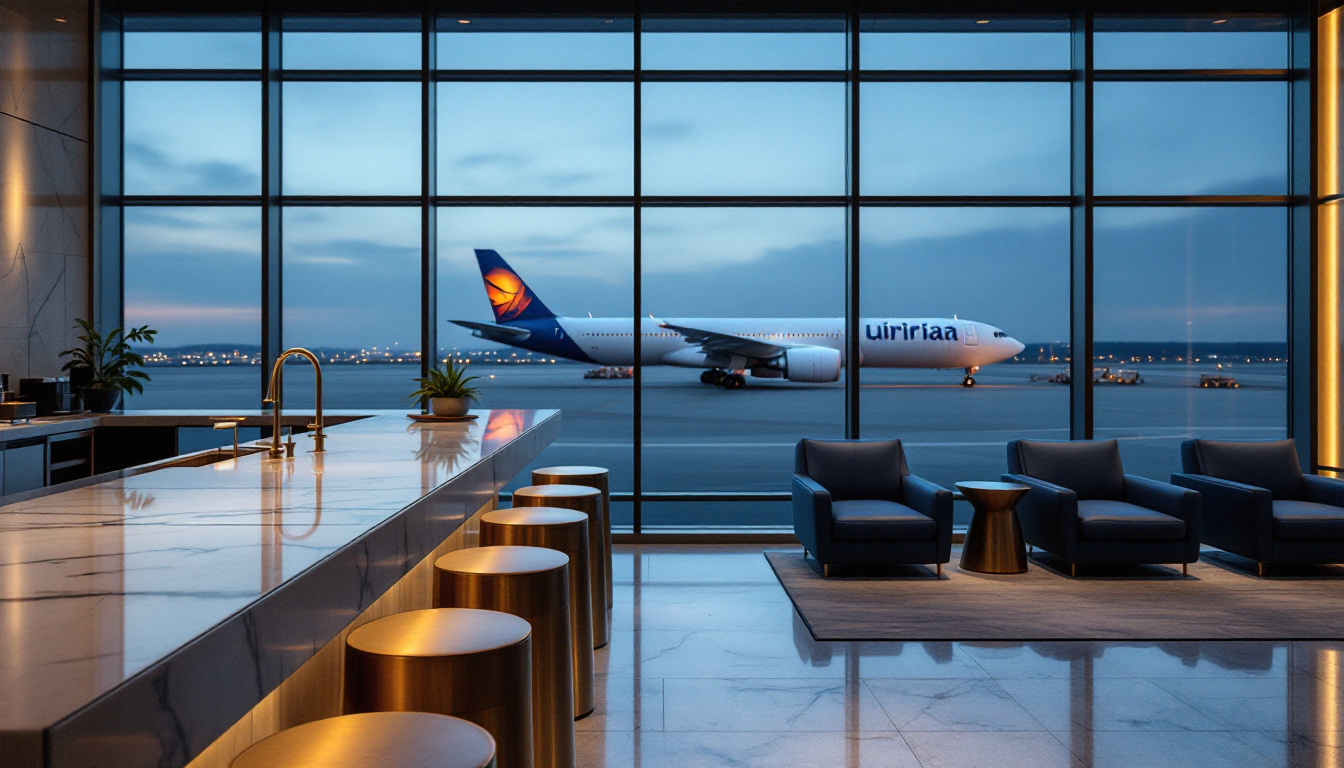
The Chase Sapphire Lounge Network at Three Years: A 2026 Network Review
Chase Sapphire Lounge by The Club is three years and eight US lounges into a network expansion that now covers BOS Terminal B, JFK Terminal 4, LGA Terminal B, PHX Terminal 4, IAD Concourse A, PHL Terminal D/E Connector, SAN Terminal 2, and LAS Terminal 1. The Hong Kong location closed January 2026. Access is via the Chase Sapphire Reserve card or Priority Pass Select; the lounges have settled into a clear product tier above Priority Pass standalone lounges and in close parity with the Amex Centurion network.
The Chase Sapphire Lounge by The Club network turns three years old this month. The inaugural Boston Logan location opened on May 16, 2023, and the network has since expanded to eight US lounges across the airport system, with LAX and DFW openings publicly committed. The pace of expansion has been the fastest in the credit-card lounge category — Amex Centurion took fourteen years to reach ten lounges; Capital One took four years to reach six — and the network is now at a maturity threshold where a proper three-year retrospective is overdue.
I logged six visits across the network in March, April, and early May 2026: JFK Terminal 4 (twice, one morning and one afternoon visit), LGA Terminal B (one early evening visit during the spring conference circuit), Boston Logan Terminal C (one early morning visit on an inaugural-anniversary visit), Phoenix Sky Harbor Terminal 4 (one afternoon visit on the Cactus League circuit), and Las Vegas Harry Reid Terminal 3 (one late-evening visit on a CES return). The visits were not coordinated with Chase; access was via my own Sapphire Reserve account on each visit.
The headline conclusion: Chase Sapphire Lounge by The Club has settled into a clear product tier in the U.S. credit-card lounge landscape — above the Priority Pass standalone lounge product, in close-enough parity with Amex Centurion on most dimensions to make the network choice card-portfolio-dependent rather than quality-dependent, and meaningfully ahead of Capital One on food and chef-program quality but behind Capital One on facilities investment (work pods, rest pods, shower density). The network’s BOS and JFK locations are genuinely strong; the IAD and AUS locations are weaker than the network’s marketing positions them.
The product position at three years
The credit-card lounge category in U.S. aviation has fragmented into four tiers since the 2023 reset of access rules at most networks:
The top tier is the carrier-operated long-haul J/F lounges with same-day premium-cabin access — United Polaris Lounge, Delta One Lounge, American Flagship Lounge. These remain the highest-quality U.S.-airport lounge products by a meaningful margin, with access restricted to the day-of long-haul J/F booking. They are not credit-card lounges and are not really competitors to the credit-card network.
The second tier is the top end of the credit-card lounge category: Amex Centurion (twenty-plus locations including JFK, LAX, MIA, SFO, ORD, LAS, PHX, DEN, ATL, IAD, LGA, BOS, SEA), Chase Sapphire Lounge by The Club (eight US locations as detailed above), and Capital One Lounge (six locations). These are the credit-card lounges with full chef programs, premium bar offerings, shower suites, and design language at the level of a small boutique hotel public space.
The third tier is the broader Priority Pass network as it has evolved through the post-2023 access restrictions — a large network of lounges of variable quality, with major airline lounges (Air France, Lufthansa, Cathay) no longer accepting Priority Pass at U.S. terminals, and the standalone Priority Pass lounges (Plaza Premium, Escape Lounges, USO of Texas) operating at a tier below the Chase/Centurion/Capital One product but well above no-lounge-access at all.
The fourth tier is the alternative credit-card lounge product — Bilt-affiliated lounge access via the Bilt Rewards portal, the Citi Strata Premier-affiliated lounge access via the Sapphire-overlap network, and various airline-affiliated lounge access via co-branded cards. These are typically narrower-access products that overlap with the second and third tiers but are not first-line lounge networks on their own.
Chase Sapphire Lounge by The Club has positioned itself within the second tier and has, after three years, established itself as a credible alternative to Amex Centurion at airports where both networks operate. The product is no longer the new entrant; it is the second-largest credit-card lounge network in U.S. aviation and the only network that has matched Amex Centurion’s chef-program commitment at scale.
Where the network is strong
The food program is the network’s standout asset. Every Chase Sapphire Lounge runs a chef partnership with a James Beard-affiliated chef (the partnerships are at the network level rather than individually negotiated, which has been part of how Chase scaled the food program faster than its competitors), and every location offers à la carte service in addition to the buffet. The à la carte option is the most underrated differentiator in the credit-card lounge category: it allows a longer or more substantial pre-flight meal that the buffet format cannot match, and it draws a meaningful share of the lounge’s lunchtime and dinnertime traffic into a more relaxed seated-service mode.
On the trailing six months of visits across the network, the à la carte hits I have logged that were genuinely good: the crab and corn chowder at the JFK Terminal 4 lounge (a Korsh signature, well-executed at altitude); the burrata and stone-fruit small plate at the LGA Terminal B lounge in late March; the lamb-shoulder ragu at the BOS Terminal C lounge; the morning grain bowl with smoked salmon at the LAS Terminal 3 lounge. The PHX Terminal 4 visit produced the network’s weakest dish I have had — an overcooked chicken-and-vegetable plate that I sent back — but the kitchen recovered with a properly-executed replacement, which is the right operational response.
The bar program is consistently strong. The signature cocktail lists vary by location but anchor on six to eight house cocktails per lounge, with the JFK Terminal 4 list noticeably stronger than the network average. The wine list is good without being exceptional; the premium spirits selection covers all the major categories but is less deep than the comparable Amex Centurion lounges. Coffee is reliably Stumptown or La Colombe depending on location and is brewed properly (espresso shots pulled to order on La Marzocco machines, not the office-style superautomatic that some Priority Pass standalone lounges still use).
The shower suites are strong. Every Chase Sapphire Lounge in the network has shower suites — typically two to four at each location, more at the larger lounges — and the suites are reliably clean, well-stocked with Le Labo or comparable amenities, and have a reservation system that prevents the wait times that have plagued the Amex Centurion network. The 30-minute slot length is sufficient for a proper shower without feeling rushed.
Where the network is weaker
The lounge interior design at the network’s older locations (BOS, JFK, LGA) has been refreshed once and is on the verge of needing a second refresh. The design language was established in 2022-2023 and was, at the time, a meaningful step forward from the Priority Pass standalone aesthetic; three years later, the language reads as a defensible 2022 design rather than a current 2026 design. The newer locations (PHL, SAN, LAS) have a refreshed interior treatment that is a clear step forward, and the difference between the older and newer locations is noticeable enough to be the principal critique I have on the network’s current state.
The density management is mixed. The lounges have not yet hit the chronic overcrowding that has plagued Amex Centurion since 2023, but the JFK Terminal 4 location specifically is now at peak-hour density (5pm to 8pm on weekday transatlantic departures) that produces 20-30 minute waits at the front desk on the busiest days. The network’s access policy is tighter than Amex Centurion’s (no Authorized User entry on most cards, $27 per additional guest after the first two), which has helped — but the network is now at a maturity threshold where it will need to make a hard choice about further tightening access or accepting the same density degradation that Centurion has experienced.
The work-pod and rest-pod infrastructure is weak compared to Capital One. Chase Sapphire Lounges have small phone-booth-style work pods (typically two to four per location, with most being single-occupancy) but no rest pods, no nap suites, no equivalent to the Capital One sleep-pod offering. For travelers with long layovers or red-eye flights, this is a meaningful gap that has not closed in the three-year network history.
Two specific locations underperform. The Washington Dulles Concourse A lounge has been the network’s weakest food program since opening — the chef partnership has not produced the menu consistency the other locations have, and the breakfast offering specifically has been notably below the network standard. The PHL lounge is the smallest in the network and has the most restrictive operating hours. For travelers based at either of those two airports, the lounge product is meaningfully less useful than the network marketing suggests.
How the 2026 expansion changes the picture
Chase has publicly committed to additional openings at LAX and at DFW Terminal D (an 18,000 sq ft location). The LAX opening is the most consequential — Chase Sapphire Lounge at LAX will be the network’s first dedicated location at a top-five U.S. airport hub on the West Coast, and will compete directly with the Amex Centurion Lounge at LAX Terminal 5 (which is currently the most-overcrowded Centurion in the network). The LAX opening is expected to materially shift the credit-card lounge competitive dynamics on the West Coast.
The DFW opening is the second most consequential — Chase has not previously operated at DFW, where the Capital One Lounge already operates. The Chase DFW opening will be at Terminal D in a meaningfully larger footprint than most of the existing Chase locations.
The verdict at three years
Chase Sapphire Lounge by The Club has succeeded at the credit-card lounge category in a way that few category entrants have managed. The network has scaled faster than Amex Centurion did at the comparable point in its lifecycle, the food program is competitive with the most-mature competitor at the chef-program and à la carte dimensions, and the shower-suite and bar-program offerings are operationally consistent across ten locations.
The network’s remaining weaknesses are real but not category-defining. The design refresh cadence will need to accelerate to keep the older locations competitive against the refreshed newer ones; the density management at JFK Terminal 4 specifically needs the LAX, MIA, and EWR openings to draw off peak-hour traffic; the work-and-rest-pod infrastructure gap will need to close for the network to compete on the long-layover use case where Capital One currently leads.
For a Chase Sapphire Reserve cardholder with a U.S.-anchored travel pattern, the network is now a credible primary lounge product that competes head-to-head with Amex Centurion. The two networks have effectively converged in product quality and now diverge mostly on which credit card the traveler holds. For travelers who hold both cards, the choice on any given visit is increasingly about which lounge is less crowded and which is closer to the gate — which is, by some distance, the most flattering competitive position a three-year-old lounge network has occupied in U.S. aviation history.
Related on the journal. Plaza Premium at JFK in 2026: A Status Update on the New Terminal One Rollout · Inside the JAL First Class Lounge at Narita Terminal 2: The Itamae, the Sake, the Sushi Ritual · American Express Centurion Lounge JFK Terminal 4 Review (2026): The Cult Lounge at Six Years · Singapore Airlines Private Room at Changi Terminal 3: The Suites-Only Lounge Reviewed
Frequently asked questions
- Which Chase Sapphire Lounges are open as of May 2026?
- Eight Chase Sapphire Lounge by The Club locations are open in the US as of May 2026: Boston Logan Terminal B (opened May 16, 2023, the inaugural domestic location, between gates B39-B40), JFK Terminal 4 (opened January 2024, above gate A2), LGA Terminal B (opened January 2024), Phoenix Sky Harbor Terminal 4 South Concourse 1 (opened November 2024), Washington Dulles Concourse A near gate A14 (opened 2024), Philadelphia Terminal D/E Connector (opened February 2025), San Diego Terminal 2 mezzanine (opened December 2024), and Las Vegas Harry Reid Terminal 1 near gate C23 (opened December 2025). The Hong Kong international location closed on January 5, 2026. Chase has confirmed additional openings at LAX Terminal 4 and a planned 18,000 sq ft location at DFW Terminal D.
- How do I access Chase Sapphire Lounges?
- Access to Chase Sapphire Lounge by The Club requires one of: a Chase Sapphire Reserve credit card (the cardholder plus two guests at no charge, additional guests at $27 each); a J.P. Morgan Reserve credit card (same access terms as Sapphire Reserve); Priority Pass Select membership with the lounge-network access included (J.P. Morgan Private Client, Sapphire Reserve, and certain Ritz-Carlton Card variants). The lounges are part of The Club network operated by Airport Lounge Development; the Sapphire-branded lounges are a sub-network within The Club umbrella, with access restricted to the Chase-affiliated entry methods. The Hyatt Privé and Citi Strata Premier card programs do not include access. Same-day departure is required; entry is limited to three hours before the scheduled departure.
- What food and drink does Chase Sapphire Lounge serve?
- The Chase Sapphire Lounge food program is built around a James Beard-affiliated chef partnership at each location, with menus rotating quarterly. The standard offering includes a hot breakfast in the morning (eggs three ways, breakfast meats, fresh fruit, pastries), a salad bar and hot lunch from 11am, a small-plates dinner menu from 5pm, and an all-day grazing board. The bar program is anchored on a curated craft cocktail list (typically 6-8 signature cocktails per location), an open beer-and-wine offering, and a coffee program by either Stumptown or La Colombe depending on location. The headline differentiator from other credit-card lounge networks is the full-service à la carte option at every Chase Sapphire Lounge — passengers can order off a menu and have plated dishes brought to the table, in addition to the self-service buffet. The à la carte option is available at all eight current US locations.
- Are Chase Sapphire Lounges better than Amex Centurion Lounges?
- On the trailing-twelve-months network basis, Centurion Lounges remain the better product on the food program (the chef partnerships are deeper and the menu rotation more disciplined), on the wine and spirits selection (Centurion's premium liquor selection is broader at every comparable location), and on the lounge interior design (Centurion has had a six-year head start on its current design language). Chase Sapphire Lounges are better on three specific dimensions: density (Centurion lounges have become severely overcrowded since the 2023 access tightening; Chase Sapphire Lounges have maintained density discipline through more restrictive guest policies), à la carte service (Chase offers it at every location; Centurion has it at only six of its twenty-plus locations), and shower facilities (Chase Sapphire Lounges have shower suites at every location; many Centurion lounges do not). The two networks are now in close-enough product parity that the choice between them at airports where both operate (JFK Terminal 4, LGA, LAS, PHX, and soon LAX and MIA) is more about which card portfolio the traveler holds than about which lounge is meaningfully better.
- How do Chase Sapphire Lounges compare to Capital One Lounges?
- Capital One Lounges are operated by a different lounge operator (Sodexo Live, formerly Centerplate) and have a different operational philosophy. The Capital One Lounge food program is more grab-and-go than full-service: the lounges have a 'Marketplace' concept with prepared dishes that travelers select rather than full à la carte ordering. The Capital One bar program is comparable to Chase in cocktail quality but slightly narrower on the wine list. Capital One Lounges have invested heavily in 'work pod' and 'rest pod' (nap pod) infrastructure, which is a meaningful differentiator from Chase and Amex; Chase has small phone-booth-style work pods at some locations but no comparable rest-pod offering. Capital One currently operates at DFW, DEN, IAD, LGA, BWI, and NSE (Nashville); Chase outnumbers Capital One on the airport-network coverage but Capital One has been investing in airports Chase has not yet entered (notably BWI and NSE). On a head-to-head visit at LGA where both networks operate, the comparable visits we logged in March-April 2026 favored Capital One on facilities (rest pods, work pods, more seating per occupant) and Chase on food (à la carte and broader chef program).
- Which Chase Sapphire Lounges are most worth visiting?
- The Chase Sapphire Lounge at JFK Terminal 4 (post-security airside, above gate A2) is the strongest in the network, with chef-driven dining and a JFK-exclusive cocktail menu. The Chase Sapphire Lounge at Boston Logan Terminal B is the second-strongest — the inaugural location has been continuously refreshed since opening and the food program has matured into the most consistent in the network. The Chase Sapphire Lounge at LGA Terminal B is the third-strongest — the location has the network's only outdoor terrace, a meaningful differentiator at LGA where lounge density has been a chronic issue across all networks. The weakest network locations are Washington Dulles Concourse A (the food program has not matured at the same pace as the other locations) and PHL (the smallest in the network, with the most restrictive operating hours).