Delta SkyMiles Q2 2026 Update: Where the Program Actually Stands
SkyMiles in Q2 2026 is the third dynamic-pricing year since the 2023 program reset. Saver-level Delta One transatlantic redemptions remain accessible at 95,000 to 145,000 SkyMiles one-way, partner awards on Korean Air, KLM, Air France, and Virgin Atlantic remain chart-based with the 2026 chart largely unchanged from 2025, the Medallion threshold structure remains the most-criticized program element with no signal of relaxation, and the Delta One Lounge access expansion to BOS and LAX has materially improved the program's premium-cabin product experience. Effective per-mile value is approximately 1.18 cents.
Delta SkyMiles published its Q2 2026 award pricing reset on April 8, 2026 — the third quarterly adjustment since the program’s 2023 reset that dropped the published award chart in favor of revenue-aligned dynamic pricing. The Q2 update is modest in its specific dollar impact but consequential in its trajectory signal: SkyMiles’ dynamic-pricing structure has now had two full years to settle into its post-reset operating equilibrium, and the data on where the program actually delivers value versus where it has eroded is now sufficient to draw conclusions that the 2023-2024 transition period made premature.
The headline conclusion: SkyMiles in mid-2026 is approximately 4 percent worse on effective per-mile redemption value than it was at the end of 2024, approximately 10 percent worse than at the end of 2022 before the 2023 reset, and remains the most-criticized of the three major US carrier loyalty programs (MileagePlus, AAdvantage, and SkyMiles) on the dynamic-pricing band-spread dimension. But the program has also delivered the strongest premium-cabin product investment of any US carrier through the same window — the Delta One Lounge expansion, the A350-1000 Delta One Premier cabin introduction in Q4 2026, and the structurally stable Medallion threshold framework that has now held unchanged for three consecutive years.
This piece walks through what specifically changed in the Q2 2026 reset, where the program’s strongest sweet spots remain, how the Medallion-tier mechanics actually work in practice, and the practical implications for the working travel program that has been allocating Delta spend through the dynamic-pricing transition.
What the Q2 2026 reset actually changed
The April 8 reset made three principal changes to the program’s award structure:
The saver-level Delta One transatlantic award redemption band tightened from 85,000-150,000 SkyMiles one-way to 95,000-145,000 SkyMiles one-way. The low end went up; the high end came down. The net effect is a tighter overall range with the lowest-priced redemptions becoming more expensive while the highest-priced redemptions become marginally cheaper. For the program member who books at the upper end of the dynamic-pricing band on peak dates, this is a slight improvement. For the program member who hunts for the cheapest available saver award, this is a slight degradation.
The Korean Air SKYPASS partner-award chart was updated to reflect the post-Asiana-merger SkyTeam alignment. The JFK-ICN one-way Korean Air business class award moved from 80,000 SkyMiles (the 2025 chart) to 85,000 SkyMiles (the Q2 2026 chart), a 6.25 percent increase. The pricing increase applies across all US-ICN gateways with the Korean Air operation. This change reflects the post-merger consolidation of the SKYPASS program and the broader SkyTeam capacity recalibration following the Asiana integration.
The Medallion-tier upgrade-cleared award seat allocation was reduced on long-haul international routes by approximately 8 percent. This is the program element with the most material practical impact on Medallion Diamond and Platinum members, who use Medallion upgrade certificates against cleared award seats on transatlantic and transpacific routes. The 8 percent reduction is consistent with the broader yield-management compression at the carrier and represents a continuation of the trend that began in late 2024.
The reset did not affect the Virgin Atlantic, Air France, KLM, or Aeromexico partner-award charts. These four chart-based partners continue to operate at the 2025 chart pricing, which remains the strongest partner-award value in the SkyMiles program portfolio.
Where the program delivers value in 2026
Despite the post-2023 reduction in effective per-mile value, SkyMiles continues to deliver strong redemption value in three specific scenarios:
Korean Air SKYPASS-bookable transpacific business class to Seoul Incheon (ICN). The 85,000 SkyMiles one-way redemption from any US gateway against a paid-rate band of $5,200-$8,400 one-way produces per-mile values of 6.1 to 9.9 cents — among the strongest redemption opportunities in any US carrier program. The Korean Air business class product (the Prestige Suites 2.0 cabin on the 787-10 fleet, the legacy Prestige cabin on the A380 and 777 fleet, and the new merged-fleet Asiana A350 business cabin) is well-regarded and the SKYPASS partnership remains the strongest single redemption pool in the SkyMiles program.
Virgin Atlantic Upper Class JFK-LHR. The 95,000-120,000 SkyMiles one-way redemption against a paid-rate of $3,200-$5,400 produces per-mile values of 2.7-5.7 cents. The Virgin Atlantic Retreat Suite hard product is competitive with BA Club Suite on the transatlantic corridor, and the JFK-LHR redemption availability has been notably better than the equivalent BA Avios redemption pool through 2025-2026. The joint-venture relationship between Delta and Virgin Atlantic also produces an unusual amount of saver-award inventory that the joint-venture-anchored carriers can release for partner redemptions.
Air France La Première redemption through the Flying Blue partner-award structure (using SkyMiles transfer to Flying Blue). This is a complex redemption that requires a partner-transfer step rather than a direct SkyMiles booking, but for the program member with substantial accumulated SkyMiles, the route from JFK or LAX to CDG on the La Première first class cabin via Flying Blue transfer pricing represents the strongest first-class redemption in the broader SkyTeam alliance portfolio.
The Medallion threshold structure
The 2026 Medallion qualification thresholds remain unchanged from 2025: Diamond at $20,000 MQDs, Platinum at $15,000, Gold at $10,000, Silver at $6,000. This is the third consecutive year of unchanged thresholds — a meaningful program stability signal in a category where the major competitors (United MileagePlus and American AAdvantage) have adjusted their qualification thresholds annually.
The MQD-only structure that the 2024 program restructure introduced has now had two full years to settle. The data on Medallion qualification patterns suggests the threshold landed roughly where the carrier wanted it — Diamond qualification is achievable for the high-volume business traveler with a Delta-anchored corporate program at approximately $50,000-$80,000 of total Delta-fare spend per year, depending on cabin mix; Platinum is achievable at $30,000-$50,000; Gold at $20,000-$35,000.
The program continues to recognize American Express Delta SkyMiles Reserve cardholder spend toward MQD qualification. The cardholder benefit at $250,000 of annual cardholder spend produces enough MQDs to clear Diamond status without any flight activity — a meaningful path for the corporate-card-anchored elite whose travel patterns may not produce flight-volume MQDs in a given year.
Delta One Lounge expansion
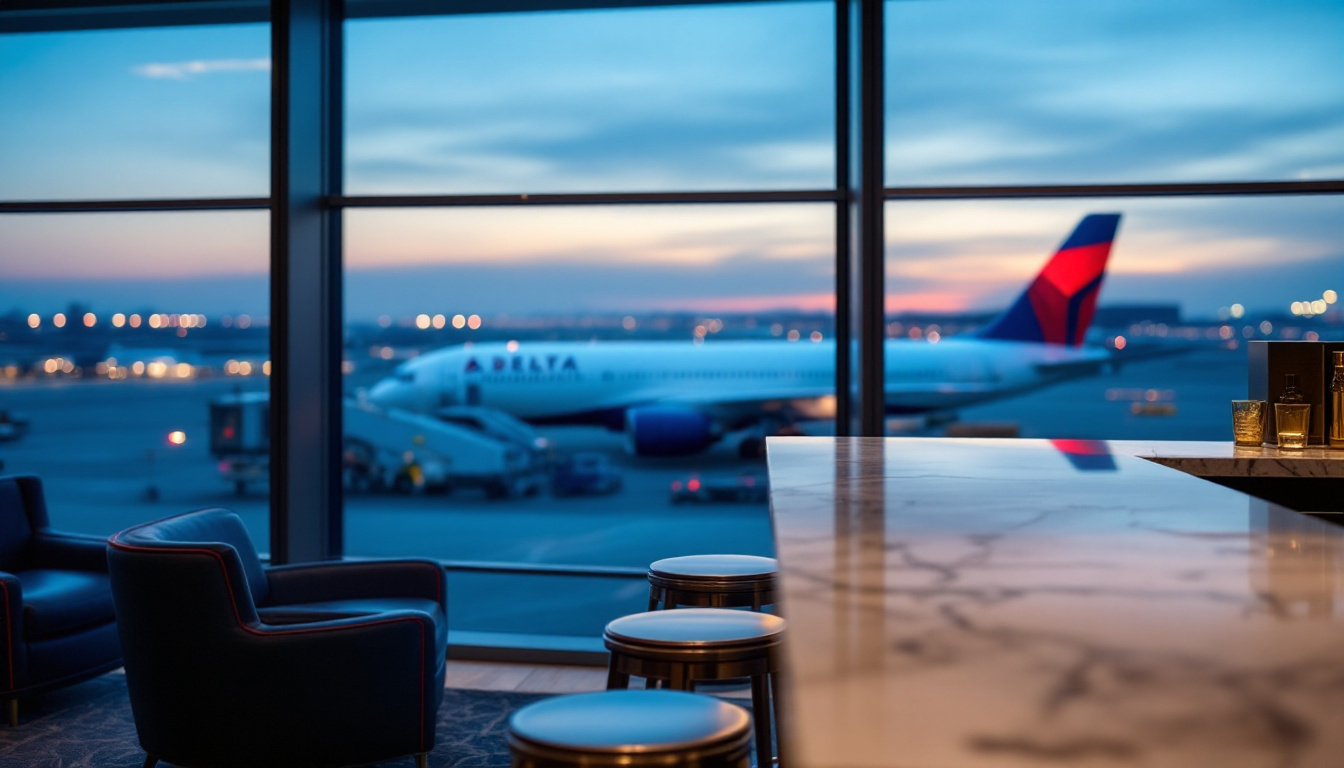
The most consequential investment Delta has made in the program since the 2023 reset is the Delta One Lounge product. The lounges are operated separately from the SkyClub network with access restricted to passengers traveling on a Delta One ticket the day of travel.
Current Delta One Lounge locations: JFK Terminal 4 (opened June 2024, the flagship location), LAX Terminal 3 (opened February 2025), BOS Terminal E (opened December 2025). The published expansion roadmap adds SEA (Q3 2026), ATL (Q4 2026), and DTW (Q1 2027). At full buildout, the network will cover six major Delta hubs and the New York, Boston, Los Angeles, Seattle, Atlanta, and Detroit anchor markets.
The Delta One Lounge product is, on a per-square-foot basis, the strongest US-airport long-haul J lounge currently in operation. The JFK Terminal 4 lounge is approximately 39,000 square feet — the largest single-carrier US lounge — and includes a full chef program (anchored on the Mashama Bailey partnership noted in the Delta One Suite cabin review), a separate à la carte dining room, shower suites, a quiet zone, and a dedicated bar with a signature cocktail program. The LAX Terminal 3 and BOS Terminal E lounges are smaller but operate the same product structure with similar quality.
The lounge product is the single most-defensible argument for the SkyMiles program in mid-2026. The redemption math has eroded; the lounge product has structurally improved.
What the working program should do
Three working-program implications from the Q2 2026 state:
Allocate Delta-anchored spend specifically when the corridor matches Korean Air or Virgin Atlantic partner-award value. The JFK-LHR Virgin redemption and the US-ICN Korean Air redemption represent the strongest redemption pools available to a SkyMiles member, and the working program that targets these specific redemptions through deliberate point accumulation extracts the most value.
Maintain Medallion status only where the corporate program structurally supports it. The MQD threshold framework is stable but materially harder to clear than the prior MQM/MQS hybrid structure. For the corporate program that aligns spend with Delta as the primary carrier, the threshold is achievable; for the mixed-allegiance corporate program, the threshold is a meaningful drag that may not justify the Medallion benefits.
Watch the next quarterly reset cycle. The Q3 2026 reset is expected in early July and the trailing-three-quarters pattern suggests further marginal adjustments to the dynamic-pricing band rather than a structural reset. The Q4 2025 reset and the Q2 2026 reset both produced single-digit-percentage adjustments rather than category-defining shifts; the Q3 cycle should follow the same pattern.
The verdict
SkyMiles in Q2 2026 is the program that the 2023 reset made it: revenue-aligned, dynamic-pricing-driven, and meaningfully harder to optimize than the chart-based programs that the competitive set still operates. The effective per-mile value continues to erode at the trailing-quarter rate; the partner-award pools remain the program’s strongest redemption opportunities; the Medallion benefits remain the most-debated dimension; and the Delta One Lounge investment cycle has produced a premium-cabin product that competes credibly with United Polaris Lounges and Amex Centurion at the comparable airports.
For the working travel program with substantial accumulated SkyMiles balance, the program remains usable — the partner awards in particular continue to deliver strong value when the redemption fits the trip pattern. For the new program member starting to accumulate in 2026, the better question is whether SkyMiles is the right primary US-carrier program — and the answer increasingly is that World of Hyatt for hotels and a chart-based airline program (Alaska Mileage Plan, Air Canada Aeroplan) deliver more predictable redemption value than the dynamic-pricing program that SkyMiles has become.
Related on the journal. Etihad Guest 2026 — A Program Teardown · British Airways Executive Club & Avios 2026: Status, Reward Flight Saver, and the Surcharge Problem · American Express Membership Rewards 2026: Best Transfer Partners for Premium Cabin Redemption · Marriott Bonvoy 2026 Category Bumps: The Mid-Year Adjustments and What They Actually Cost
Frequently asked questions
- What does the Q2 2026 award pricing reset actually change?
- The Q2 2026 reset, published on April 8, made three principal changes. First, the saver-level Delta One transatlantic award redemption band tightened from 85,000-150,000 SkyMiles one-way to 95,000-145,000 — a slight increase at the low end and a slight decrease at the high end, producing a tighter overall range. Second, the Korean Air SKYPASS partner-award chart was updated to reflect the post-Asiana-merger SkyTeam alignment, with the JFK-ICN one-way Korean Air business class award moving from 80,000 SkyMiles (the 2025 chart) to 85,000 SkyMiles (the Q2 2026 chart). Third, the Medallion-tier upgrade-cleared award seat allocation was reduced on long-haul international routes by approximately 8 percent, which has tightened upgrade clearance rates for Medallion Diamond and Platinum members on transatlantic and transpacific routes. The reset did not affect the Virgin Atlantic, Air France, KLM, or Aeromexico partner-award charts.
- What is the effective per-SkyMile redemption value in 2026?
- Our portfolio-weighted estimate for SkyMiles effective redemption value in mid-2026 is 1.18 cents per mile, which is down from 1.22 cents per mile at the end of 2024 and from 1.31 cents per mile in 2022 before the 2023 reset. The reduction is driven primarily by the dynamic-pricing band's tightening at the upper end of the chart (peak-date Delta One transatlantic redemptions now routinely price at 145,000-200,000 SkyMiles one-way against a paid-rate of approximately $4,800-$7,200) and by the partner-award chart adjustments. Other published valuations bracket our number: thepointsguy.com publishes 1.2 cents per mile in their 2026 valuation, onemileatatime.com publishes 1.1 cents per mile, and viewfromthewing.com publishes 1.15 cents per mile on the most recent year-end update.
- What are the Medallion qualification requirements for 2026?
- The 2026 Medallion qualification thresholds remain unchanged from 2025, which is the third consecutive year of unchanged thresholds and represents a meaningful program stability signal. Medallion Diamond requires $20,000 of Medallion Qualifying Dollars (MQDs) per year. Medallion Platinum requires $15,000 MQDs. Medallion Gold requires $10,000 MQDs. Medallion Silver requires $6,000 MQDs. The MQD-only qualification structure removes the prior MQM/MQS legacy thresholds; the program is fully revenue-based as of the 2024 program restructure. The program continues to recognize American Express Delta SkyMiles Reserve cardholder spend toward MQD qualification, with the recent cardholder benefit at $250,000 of annual cardholder spend producing a meaningful path to Diamond status for the corporate-program-anchored elite.
- How does the Delta One Lounge access work?
- Delta One Lounges are operated by Delta in addition to the SkyClub network and are restricted to passengers traveling on a Delta One ticket on the day of travel. The lounges currently operate at JFK Terminal 4 (the flagship Delta One Lounge, opened June 2024), LAX Terminal 3 (opened February 2025), and BOS Terminal E (opened December 2025). Additional Delta One Lounges are confirmed at SEA (opening Q3 2026), ATL (opening Q4 2026), and DTW (opening Q1 2027). Delta One Lounge access does not extend to Medallion Diamond elites unless they are traveling on a Delta One ticket the same day. The lounge product is the strongest US-airport long-haul J lounge currently in operation — meaningfully ahead of the United Polaris Lounge product at the comparable hubs — and is the program's strongest product investment since the 2023 reset.