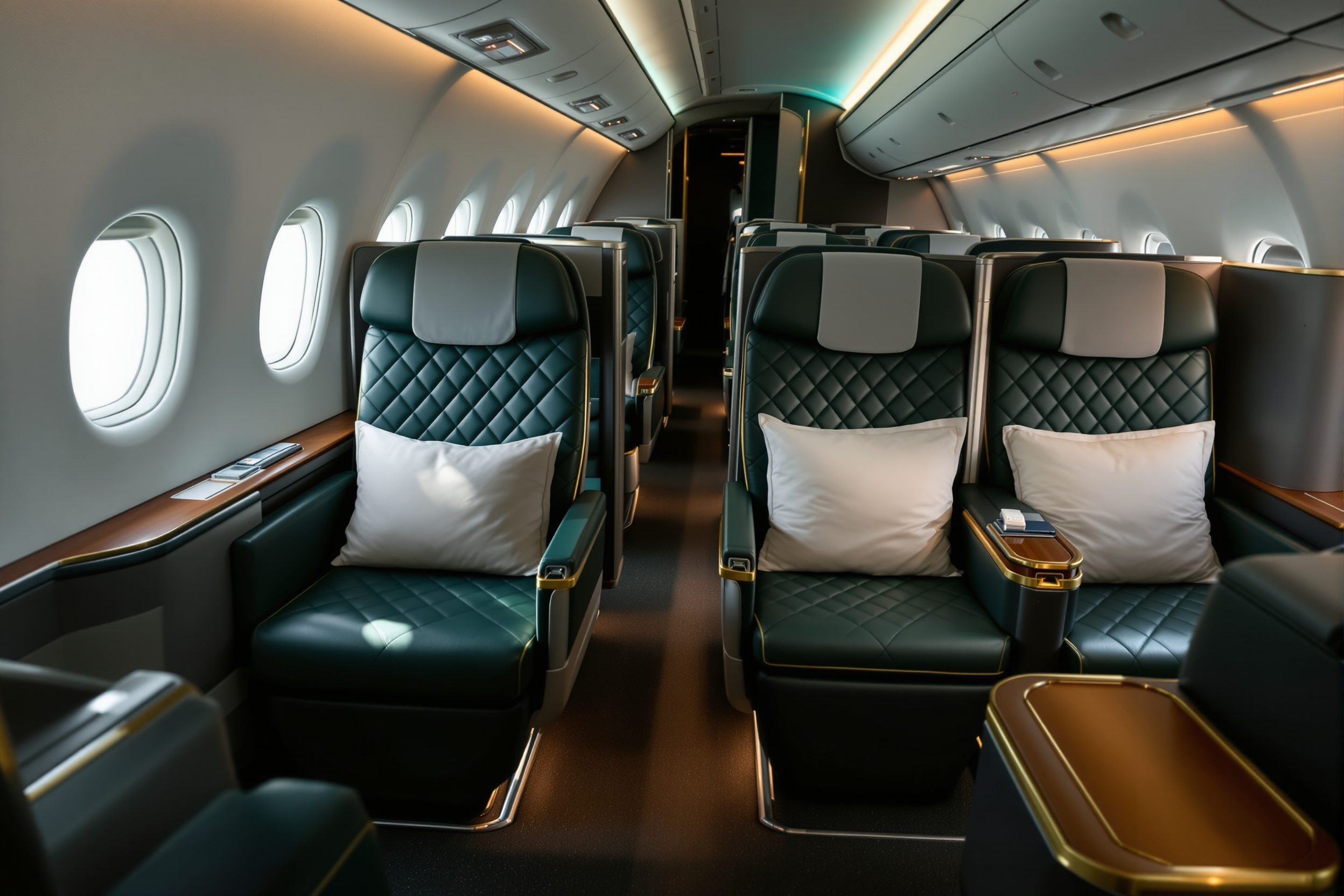
United Airlines Confirms Polaris 2.0 Rollout for 2026: What Changes
United Airlines on April 24, 2026 confirmed Polaris 2.0 rollout plans, following the cabin's April 22, 2026 debut on UA1 San Francisco–Singapore (Boeing 787-9 with 'Elevated' interiors). The carrier targets all 14 weekly SFO–SIN frequencies on the new product by August 2026, with progressive retrofits and new 787-9 deliveries continuing through 2027.
United Airlines used the morning of April 24 to formalize the broader rollout of its Polaris 2.0 business class, two days after the cabin made its commercial debut on flight UA 1 from San Francisco to Singapore on April 22.
In a release issued at 7:00 am Eastern, with Andrew Nocella (Chief Commercial Officer) and Toby Enqvist (Chief Customer Officer) on a 9:00 am call with analysts and select media including Business Class Journal, the carrier confirmed the following:
- Inaugural flight: April 22, 2026, on UA 1 from San Francisco (SFO) to Singapore Changi (SIN) on a Boeing 787-9 with the new “Elevated” interior; UA 2 SIN-SFO followed on April 24.
- Aircraft: Boeing 787-9, with 48 Polaris 2.0 suites in a 1-2-1 herringbone configuration, replacing the existing 48-seat Polaris 1.0 cabin.
- Near-term route plan: All 14 weekly SFO–SIN frequencies converted to Polaris 2.0 by August 1, 2026, plus debut on UA 900/901 SFO–London Heathrow during the same window.
- Retrofit pace: A growing fleet of “Elevated” 787-9s — four flying at announcement with a fifth imminent and roughly 66 more in the delivery pipeline at near-term rates of one airframe per month — with progressive retrofits across the long-haul widebody fleet running through 2027.
- Program cost: USD 4.2 billion confirmed on the analyst call, of which USD 1.7 billion was already booked in 2025 capital expenditure.
What’s actually different
The Polaris 2.0 hard product, supplied by Safran Seats GB (the same Cwmbran, Wales factory that builds the British Airways Club Suite), uses a re-engineered version of the original Polaris seat.
Doors. The headline change. Each suite has a sliding privacy door that closes flush at the top — a configuration United specifically benchmarked against Singapore’s recently announced A350-1000 product (see our coverage on April 15) rather than against Qatar’s Qsuite, which has a known gap.
Bed length. 198 cm fully flat, up from 196 cm on Polaris 1.0. The bed itself is built on a different shell that allows the foot cubby to extend further into the seat in front; the result is that 6’5” passengers no longer have to wedge their feet at an angle, a complaint that has dogged the original Polaris since 2017.
The wireless charging surface. United has gone further than any current premium-cabin product on this: the entire side-console surface, 38 cm by 24 cm, is a Qi 2 wireless charging area. You can drop your phone, your AirPods, your Apple Watch, or your second device onto any part of the surface and they will charge.
Screen. A 22-inch 4K OLED, manufactured by LG Display in South Korea, replacing the 16-inch panel on Polaris 1.0. The bezel is significantly slimmer, and Bluetooth 5.3 audio pairing is enabled at launch.
Cabin density. Same. United is keeping the 48-seat configuration on the 787-9 and 50 seats on the 777-300ER. There was speculation in late 2025 that the carrier might thin the cabin to push prices higher; Nocella confirmed on the call that this was never on the table.
The questions United did not answer
Polaris lounges. The current Polaris lounge network — eight US cities, plus Tokyo Narita — is showing capacity strain at peak hours, and the SFO and EWR lounges are particularly stressed. Asked whether the lounge product would receive a corresponding refresh in 2026, Enqvist said only that “we are evaluating expansion in two markets” without naming them. Industry chatter points to LAX (where the existing Polaris lounge in Terminal 7 is undersized) and ORD (where the Polaris lounge has not had a meaningful refresh since 2019).
MileagePlus saver award levels. The carrier did not commit to holding current Polaris saver award rates after the cabin transition. United’s MileagePlus program has shifted toward dynamic pricing on most routes since 2019, and the gap between saver and standard awards has narrowed materially. Loyalty editor Jonas Reinholt’s full breakdown of the implications will publish on Business Class Journal next week.
Delta and American response. Delta One is in the middle of its own A350 refresh, and American Airlines confirmed in February that its 787-9 Flagship Suite Preferred would not be retrofitted to the existing 777-300ER fleet. American thus enters 2027 with the oldest US business class hard product among the big three.
The first revenue Polaris 2.0 flight, UA 1 SFO-SIN, operated on April 22, 2026; the second daily SFO-SIN frequency converts during the summer, with all 14 weekly SFO-SIN rotations on the new cabin from August 1. SFO-LHR (UA 900/901) joins the network during the same window. Saver award levels on the new cabin have not yet stabilized.
Frequently Asked Questions
When did United Polaris 2.0 enter service?
United Polaris 2.0 made its commercial debut on flight UA 1 from San Francisco (SFO) to Singapore Changi (SIN) on April 22, 2026, with the return UA 2 SIN-SFO following on April 24. The cabin operates on Boeing 787-9 aircraft fitted with United’s new “Elevated” interior — the carrier’s marketing name for the 222-seat layout (down from the standard 257) that prioritises higher-yield premium cabin space. All 14 weekly SFO-SIN frequencies are scheduled to convert to Polaris 2.0 by August 1, 2026, with debut on UA 900/901 SFO-London Heathrow during the same window.
What is different about Polaris 2.0 versus Polaris 1.0?
The headline differences are sliding privacy doors that close flush at the top (a closing-door spec United benchmarked against Singapore’s announced retrofit rather than Qatar’s Qsuite, which has a known gap); a longer 198-cm flat bed (up from 196 cm), with a redesigned shell that lets the foot cubby extend further into the seat in front; a 38 cm by 24 cm full-side-console Qi 2 wireless charging surface; a 22-inch 4K OLED screen manufactured by LG Display (up from 16-inch on Polaris 1.0); and Bluetooth 5.3 audio pairing at launch. Cabin density is unchanged at 48 suites on the 787-9 and 50 on the 777-300ER.
Which routes will get Polaris 2.0 in 2026?
United’s first Polaris 2.0 routes are SFO-Singapore (UA 1/2, with all 14 weekly frequencies on the new product by August 1, 2026) and SFO-London Heathrow (UA 900/901, joining during the same window). The carrier has four “Elevated” 787-9s flying at announcement with a fifth imminent and roughly 66 more in the delivery pipeline at near-term rates of one airframe per month. Progressive retrofits across the long-haul widebody fleet continue through 2027. The Polaris 2.0 programme is a USD 4.2 billion confirmed investment, of which USD 1.7 billion was already booked in 2025 capital expenditure.
Who makes the Polaris 2.0 seat?
The Polaris 2.0 hard product is supplied by Safran Seats GB, manufactured at the Cwmbran, Wales factory — the same facility that builds the British Airways Club Suite. The Polaris 2.0 seat is a re-engineered version of the original Polaris seat, with the structural changes concentrated on the door (a flush-top sliding panel), the foot cubby (redesigned to allow the bed to extend further into the seat in front), and the side console (now a 38 cm by 24 cm Qi 2 wireless charging surface that supports phone, AirPods, Apple Watch, and a second device simultaneously). The 22-inch 4K OLED screen comes from LG Display.
Related on the journal. AAdvantage 2026 Changes: Partner-Bonus Cap and Barclays-to-Citi Conversion · Korean-Asiana Merger Completion: The December 17, 2026 Brand Sunset · Lufthansa Allegris Fleet Progression: A 2026 Mid-Year Report · Singapore Airlines A350-900 Retrofit Delay: The 2026 Update
Frequently asked questions
- When did United Polaris 2.0 enter service?
- United Polaris 2.0 made its commercial debut on flight UA 1 from San Francisco (SFO) to Singapore Changi (SIN) on April 22, 2026, with the return UA 2 SIN-SFO following on April 24. The cabin operates on Boeing 787-9 aircraft fitted with United's new 'Elevated' interior — the carrier's marketing name for the 222-seat layout (down from the standard 257) that prioritises higher-yield premium cabin space. All 14 weekly SFO-SIN frequencies are scheduled to convert to Polaris 2.0 by August 1, 2026, with debut on UA 900/901 SFO-London Heathrow during the same window.
- What is different about Polaris 2.0 versus Polaris 1.0?
- The headline differences are sliding privacy doors that close flush at the top (a closing-door spec United benchmarked against Singapore's announced retrofit rather than Qatar's Qsuite, which has a known gap); a longer 198-cm flat bed (up from 196 cm), with a redesigned shell that lets the foot cubby extend further into the seat in front; a 38 cm by 24 cm full-side-console Qi 2 wireless charging surface; a 22-inch 4K OLED screen manufactured by LG Display (up from 16-inch on Polaris 1.0); and Bluetooth 5.3 audio pairing at launch. Cabin density is unchanged at 48 suites on the 787-9 and 50 on the 777-300ER.
- Which routes will get Polaris 2.0 in 2026?
- United's first Polaris 2.0 routes are SFO-Singapore (UA 1/2, with all 14 weekly frequencies on the new product by August 1, 2026) and SFO-London Heathrow (UA 900/901, joining during the same window). The carrier has four 'Elevated' 787-9s flying at announcement with a fifth imminent and roughly 66 more in the delivery pipeline at near-term rates of one airframe per month. Progressive retrofits across the long-haul widebody fleet continue through 2027. The Polaris 2.0 programme is a USD 4.2 billion confirmed investment, of which USD 1.7 billion was already booked in 2025 capital expenditure.
- Who makes the Polaris 2.0 seat?
- The Polaris 2.0 hard product is supplied by Safran Seats GB, manufactured at the Cwmbran, Wales factory — the same facility that builds the British Airways Club Suite. The Polaris 2.0 seat is a re-engineered version of the original Polaris seat, with the structural changes concentrated on the door (a flush-top sliding panel), the foot cubby (redesigned to allow the bed to extend further into the seat in front), and the side console (now a 38 cm by 24 cm Qi 2 wireless charging surface that supports phone, AirPods, Apple Watch, and a second device simultaneously). The 22-inch 4K OLED screen comes from LG Display.