Cathay Pacific The Pier First Class Lounge at Hong Kong: The Definitive 2026 Review
There is a particular kind of quiet that the dining room at The Pier First settles into around 23:00 local time on a Tuesday evening in late February. The Europe-bound long-haul bank is mostly boarded — CX251 to Heathrow has pushed back, CX255 to Manchester is at gate 24, CX253 to Paris is loading — and the room thins out from its peak of perhaps 30 covers to a residue of eight or nine, mostly the New York and Boston passengers waiting on their slightly-later departures. The hosts move through the room with a deliberateness that you do not see anywhere else in the Hong Kong airport, refolding napkins on departed tables, refilling water glasses without being asked, gently lowering the floor-lamp dimmers as the gate-room beyond the lounge glass darkens. A man in his sixties at the two-top by the east-facing window is finishing a bowl of wonton noodle soup at a pace that suggests he intends to be on the ground in Hong Kong for at least another forty minutes. The Champagne Bar at the far end of the room is doing brisker trade than the dining room itself, which is how this lounge always trends at this hour.
I have been visiting The Pier First, in some configuration, since it opened in June 2013, when I was twenty-three and a junior surveyor at Skytrax filing on the post-refit Cathay business class. I have visited it as a Cathay Diamond, as an American AAdvantage Executive Platinum, as a British Airways Gold-tier connecting passenger, and on a Cathay First revenue ticket. I have visited it sleep-deprived, hungover, with a 12-month-old, with a colleague filing a competing review on a different keyboard at the next two-top, and once, memorably, in a tropical-storm-eight signal that grounded the entire Cathay network from approximately 06:00 onward and turned the lounge into a kind of luxe waiting room for hundreds of stranded oneworld Emerald passengers. The Pier First has remained, across all of those visits and all of those moods, the most considered lounge in commercial aviation. This piece is the longer-form editorial treatment I have been putting off writing for the better part of a decade.
This is also a deliberate methodological choice. The lounge press tends to file Pier First reviews in two registers: the breathless “best lounge in the world” superlative piece (which has appeared at least once a year on every major aviation blog since 2014), and the cooler “how it compares to” comparative piece, usually pairing it against the Lufthansa First Class Terminal at Frankfurt or the Qantas First Sydney or the Singapore Airlines Private Room at Changi. Both registers leave something out. The Pier First is not the best lounge in the world on every dimension — the Lufthansa FCT beats it on standalone-terminal exclusivity, the Qantas First Sydney beats it on the Neil Perry food, the Air France La Première Salon at CDG beats it on the pre-flight chauffeur transfer — and the comparative piece reduces a lounge that has been carefully designed as a single coherent experience to a points-of-difference checklist. What I have tried to write here is the long-form residential-and-operational treatment: how the lounge actually performs across the full arc of a typical visit, what the design decisions add up to, and where the cracks have started to show after thirteen years of continuous service.
The Quick Answer
If you are a Cathay First passenger or a oneworld Emerald on a long-haul oneworld departure from HKG and you have not yet visited The Pier First, the headline is simple: yes, allocate at least two and a half hours on the ground to use it properly. If you have already visited it more than once and are wondering whether the experience has held up, the headline is also simple: yes, it has, with the caveat that the Day Suite program is now operating at meaningful capacity strain during the evening Europe bank, and the shower facilities are showing thirteen years of wear in ways that the lounge’s design language tries very hard to disguise.
The high-level read:
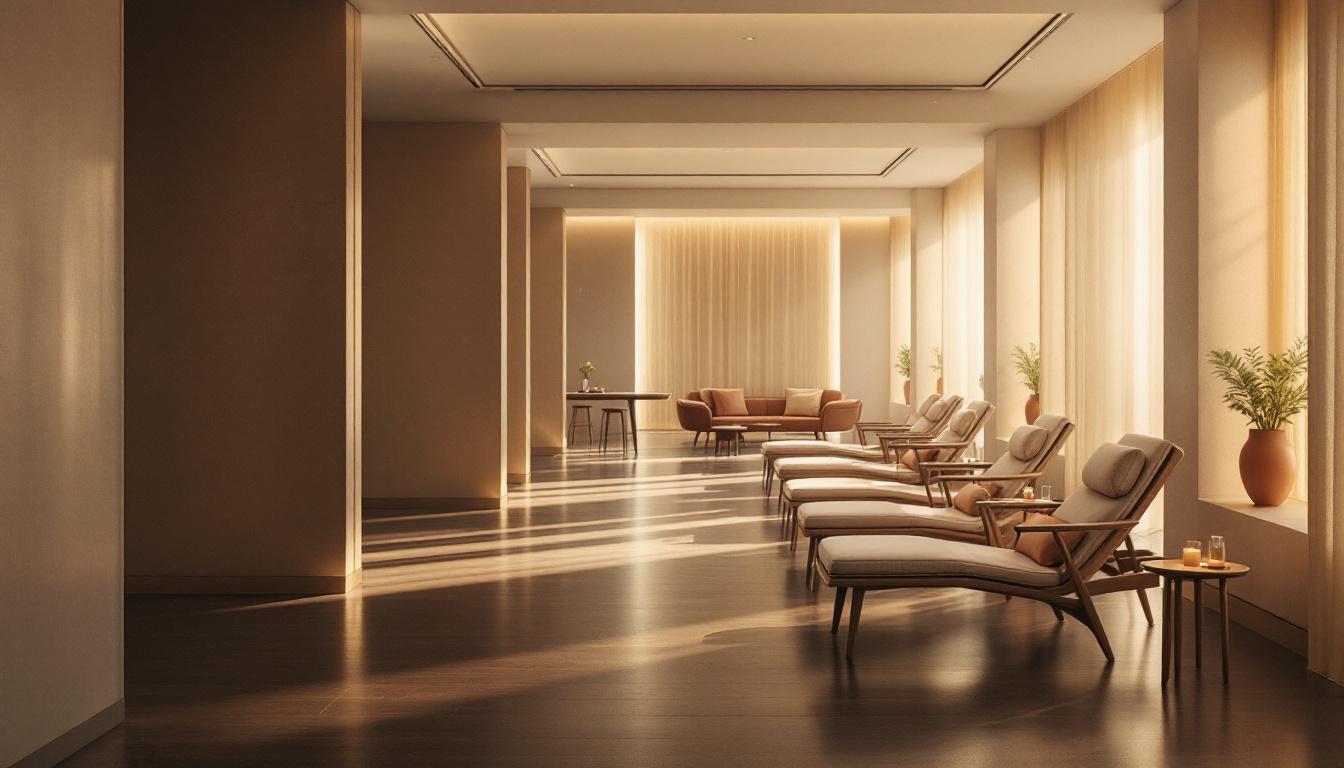
- Design. Studio Ilse’s residential palette has aged better than anyone could reasonably have expected. Where most 2010s lounge interiors now read dated, The Pier First reads timeless. The teak, the brushed brass, the hand-tufted Tai Ping carpets, and the deep banquettes still work.
- Food. Full-service à la carte from a kitchen that executes to a consistently high standard. The wonton noodle soup at the Noodle Bar is the single best item in any lounge in the world. The dim sum trolley has been pared back from its 2013 launch but remains very good.
- Champagne. Krug Grande Cuvée by the glass, currently the 174ème Édition, with a 2008 vintage opened by request. This puts The Pier First in the top three lounges globally on Champagne, alongside Lufthansa FCT and Air France La Première CDG.
- Day Suites. Eight private day rooms, each with a daybed and heavy curtains (no shower or bath inside the suite). Operationally constrained during the Europe bank. Worth the booking effort.
- The Library. A small, separately-walled reading room with twelve Solus Chairs (more on these later), a no-phones convention, and a wall of mostly-current periodicals. The single most quietly impressive space in the network.
- The footbath spa. Twenty-minute treatments by appointment, no charge, no upsell. A genuinely thoughtful amenity that exists nowhere else in commercial aviation.
The lounge that follows that summary is, in detail, more interesting than the summary itself. Let me walk you through it.
Access and Eligibility: Reading the Fine Print
The access matrix for The Pier First is, on paper, simple. In practice, it is one of the most edge-case-heavy lounge access policies in the oneworld network, and the points-and-miles community has been arguing about specific scenarios for more than a decade. The canonical reference is the cathaypacific.com Pier First product page, with secondary documentation on the oneworld.com Emerald tier benefits page.
The headline eligibility rules:
Cathay Pacific First Class passengers on a same-day departure get access, with one guest. The first-class fare must be on a Cathay-marketed and Cathay-operated flight; codeshares operated by other carriers do not qualify. The access is valid on the day of departure regardless of when the flight is scheduled — there is no four-hour-before-boarding cap that some other carriers operate.
oneworld Emerald-status passengers on a same-day departure on a oneworld-operated long-haul flight get access without a guest. “Long-haul” is defined in the oneworld benefits documentation as a sector with a scheduled block time of more than five hours or any sector departing from or arriving at a destination outside the Asia-Pacific region. The definition matters more than you would think — a oneworld Emerald flying Cathay business class HKG-NRT does not get Pier First access (it is intra-Asia and under five hours), but a oneworld Emerald flying Cathay business class HKG-SYD does (it is over five hours and outside Asia-Pacific in the broader interpretation).
Marco Polo Club Diamond Plus members — the new top tier introduced in the 2023 Cathay loyalty restructure — receive Pier First access on Cathay-marketed flights regardless of cabin or sector length. This is a meaningfully more generous access policy than the previous Diamond top tier and has driven measurable congestion in the lounge on intra-Asia banks where the previous policy would have routed Diamonds to The Pier Business.
Invitation guests of specific Cathay corporate accounts (the airline maintains a small list of named corporate sponsors with first-class lounge access privileges for nominated executives) also have access. This list is not public; the host desk verifies on entry.
What does not work:
- American Express Platinum cardholders cannot enter on the card alone. The Pier First is not a Centurion lounge or a Priority Pass property; the Amex Platinum Cathay credit, which existed in some markets, was withdrawn in 2018.
- Cathay Pacific Business Class passengers do not have Pier First access — they are routed to The Pier Business or The Wing Business depending on departure gate and time of day.
- Star Alliance Gold and SkyTeam Elite Plus passengers on partner carriers operating out of HKG (notably United, ANA, Korean) do not have Pier First access, even on a same-day Cathay flight; their access is limited to their respective alliance lounges (the United Club at HKG, or the Plaza Premium First operated under various contract arrangements).
The host desk at the entrance to The Pier First, located on the lower mezzanine of HKG’s East Hall opposite gate 65, processes about 1,100 to 1,400 entries per day according to numbers shared with Business Class Journal by Cathay’s lounge operations team in February 2026 — substantially up from the pre-pandemic 800 to 1,000 range, driven mostly by the Diamond Plus tier expansion and by the gradual recovery of the long-haul Europe and North America Cathay banks to near-2019 frequency. The team has a small white iPad-based access verification system that pulls from Amadeus on entry; if your eligibility is borderline, the verification takes about 90 seconds rather than 15.
Getting In: The Physical Approach
The Pier First is the harder-to-reach of Cathay’s two flagship first-class lounges at HKG, by design. The Wing First sits at the front of the East Hall over gate 1, a four-minute walk from immigration and security. The Pier First sits at the far end of the East Hall, deep beyond the gate 60 area, a 12-minute walk from immigration if you take the moving walkways at a brisk pace and longer if you stop for the duty-free corridor. The lounge entrance is on the lower level (departures hall is on the upper level for most of the East Hall), accessed via a dedicated escalator marked discreetly with the Cathay brushhead-logo signage and almost no other identifying detail.
This is deliberate. Studio Ilse’s design brief from Cathay in 2011, partially reproduced in scmp.com’s coverage of the lounge’s opening in 2013, included an explicit instruction that the entrance should “not announce itself” — a notable departure from the marble-and-glass theatre of the Wing First entrance and from essentially every other flagship lounge globally. The intention was that the lounge should feel discovered rather than presented, more residential-house-arrival than airport-amenity-arrival.
In practice this works, with one operational caveat: passengers who do not know the lounge is there sometimes miss the entrance entirely. Cathay’s gate agents at the East Hall now routinely flag the Pier First entrance to first-class passengers on boarding-pass issuance, which they did not do in the lounge’s first three or four years of operation. If you are connecting from another oneworld carrier and have not received a verbal mention from gate staff, walk past gate 65 on the lower level and look for the brushed-brass signage on your left. The host desk is approximately 20 metres past the entry.
The Layout: A Long Diagonal Through Six Rooms
Studio Ilse’s spatial design at The Pier First is the design feature that I think most reviewers undersell. The lounge is laid out as a long diagonal traversal through six distinct rooms, each with a different ceiling height, lighting temperature, material palette, and intended dwell mode. The diagonal is approximately 110 metres tip to tip, which is a meaningful walk in a single lounge, and the rooms unfold in a sequence that has been carefully choreographed to move passengers from arrival energy through to pre-flight calm.
The sequence, as you walk in from the host desk:
Room 1 — The Entry Hall. A small reception space with the host desk on the right, a luggage drop area on the left, and a single low banquette in cognac leather along the far wall. Ceiling height roughly 3.2 metres; lighting temperature warm, around 2700K. The room exists to absorb the arrival transition and to slow passengers down before they enter the main social spaces.
Room 2 — The Dining Room. The principal full-service à la carte dining space. Thirty-six covers across banquettes along the east-facing window line and two-tops in the central floor. Ceiling height 3.8 metres; lighting temperature mixed — daylight from the window line is supplemented by 2900K table-pendants over each two-top and by floor lamps along the banquette wall. The room runs continuously from 06:00 to 24:00 with the kitchen executing to ticket. The signature feature is the brushed-brass-edged service pass at the back of the room, which gives diners visual access to the kitchen activity without the noise.
Room 3 — The Noodle Bar. A separately-walled smaller room with eight counter stools at a brass-finished service pass directly into the wok station. Ceiling height 3.5 metres; lighting temperature cooler, around 3200K, to pull the visual emphasis toward the food. The Noodle Bar is where the wonton noodle soup, the dan-dan noodle, and the rotating regional Chinese specials are served; it has its own short menu that overlaps with but is not identical to the Dining Room menu.
Room 4 — The Champagne Bar. A freestanding marble-and-leather oval at the east end of the lounge, designed by Studio Ilse as a destination rather than a service. Eight bar stools around the oval and a further twelve seats in armchairs and low banquettes radiating outward. Ceiling height drops to 3.2 metres over the bar oval itself, with a focused 2600K pendant directly over the marble surface. The bar serves Krug Grande Cuvée by the glass, Billecart-Salmon Brut Rosé, a rotating Champagne vintage, and a 14-item cocktail menu built around Asian botanicals (the Pearl River Negroni, with a baijiu-and-Campari base, has been on the menu since 2017 and is a deserved house signature).
Room 5 — The Library. A small, separately-walled reading room with twelve Solus Chairs (Studio Ilse’s bespoke armchair design — more on these below), reading lamps at every position, and a wall of periodicals refreshed daily. A no-phones convention is loosely but consistently enforced by the hosts. Ceiling height 3.0 metres; lighting temperature 2700K with task lamps adding warmer 2400K at each reading position. The room is the single most quietly impressive space in the Cathay network and is, in my experience, the most under-used room in the lounge.
Room 6 — The Spa Wing and Day Suite Hall. The dedicated wellness wing at the back of the lounge, containing the eight Day Suites, the foot massage treatment rooms, and the 14 standalone shower suites that serve the lounge. Ceiling height varies; lighting temperature cool 4000K in the shower suites and warm 2700K in the Day Suites and treatment rooms.
The diagonal layout creates a deliberate spatial progression — arrival → social dining → focused dining → social drinking → quiet reading → private wellness — that reads, to anyone who has worked in residential interior design, as an explicit reference to the way a well-designed private members’ club or a residential hotel suite is choreographed. I am not aware of another lounge in commercial aviation that has been spatially designed with this level of programmatic intent.
The Solus Chairs
The Pier First contains roughly 180 seats across its six rooms, and approximately 90 of those seats are a single chair design: the Studio Ilse Solus Chair, bespoke-designed for The Pier First and not manufactured for any other client.
The Solus is, on first impression, an unremarkable armchair. It is a high-backed wing chair in either deep teal wool or oxblood leather, with a fixed seat cushion in a slightly firmer density than is currently fashionable in residential furniture, a built-in side table on the right arm (left arm on the mirrored variant), and a small reading-light arm that swings out from the back-right of the chair shell. The chair sits about 78 centimetres high at the seatback and 42 centimetres deep at the seat cushion.
The Solus is the chair that I will most miss when The Pier First eventually gets its next refit, and the chair that I have come closest to attempting to buy from Cathay for my own home. Studio Ilse designed it specifically to absorb the energy state of a passenger arriving from a long pre-flight day and needing to settle into a 90-minute pre-departure dwell. The wing height blocks peripheral sightlines without feeling enclosed, the seat firmness keeps the passenger upright and engaged rather than tipping into a nap posture, the built-in side table gives a stable surface for a glass of Champagne and a book without requiring a separate floor-lamp-and-side-table arrangement, and the built-in reading light eliminates the need for an overhead pendant that would compromise the room’s ambient temperature.
The chair is, in other words, a piece of carefully engineered behavioural infrastructure dressed as a piece of furniture. There are roughly 90 of them in the lounge — twelve in the Library, twenty-four in the Champagne Bar and its surrounding seating, thirty-two scattered across the main lounge social areas, and the remainder in the Dining Room banquette zones. They have aged better than any other furniture in any lounge I have visited; the oxblood leather has the patina of thirteen years of continuous service but has been re-tipped and re-strapped on a careful rotation by Cathay’s facilities team, and the wool variant has been re-upholstered at least twice in identical fabric that Cathay sourced specifically to maintain the original spec.
When you visit The Pier First, sit in a Solus. Pay attention to how the chair holds you. This is the single most under-discussed detail in the entire lounge.
The Day Suites
The eight Day Suites at The Pier First — the lounge’s signature rest amenity — are bookable on arrival at the host desk, on a first-come, first-served basis, at no charge to any eligible passenger. Each Day Suite is a private cocoon designed for pre-flight rest and contains:
- A daybed with heavy curtains and blackout drapes, allowing total light control for a nap.
- Reading lamps and a side table.
- Window blinds that draw fully closed.
- A control panel for lighting and ambience.
The Day Suites do not include a private shower or bath — for bathing, passengers use the lounge’s 14 dedicated shower suites in the Spa Wing. The Day Suites are not the same as the Cabanas at The Wing First, which centre on a deep marble bath. The design intent is different — The Wing First Cabanas are about the bath ritual, The Pier First Day Suites are about the pre-flight rest. Both are excellent; they solve different problems.
Operationally, the Day Suite program at The Pier First has been pushed to capacity strain over the past two years, driven by the Marco Polo Diamond Plus expansion and by the recovery of long-haul traffic. During the evening Europe bank — roughly 22:00 to 02:00 local time, when six to eight long-haul departures push within a four-hour window — all eight Day Suites are typically fully booked, with a waiting list of two to four passengers at any given time. If you are on the Europe bank and you want a Day Suite, go to the Day Suite desk on arrival, not the dining room.
The lounge’s 14 dedicated shower suites in the Spa Wing are walk-up at almost all hours, with a typical wait of zero to seven minutes even during peak. The shower suites carry Bamford toiletries and a rainfall fixture; they are well-designed and consistently the best-rated supporting amenity in the lounge.
The Footbath Spa
The Pier First operates two dedicated footbath treatment rooms, staffed by trained spa therapists on rotation from 06:00 to 22:00 local time, offering complimentary 20-minute foot massage and footbath treatments to any lounge guest by appointment. Bookings are made at the host desk on arrival; there is typically a 30-to-45-minute wait during peak times and walk-up availability during the daytime off-peak.
The treatment itself is competent rather than transcendent — the therapists are trained to a hotel-spa rather than destination-spa standard, and the treatment is delivered in a small, low-lit room with a single reclining chair and a footbath bowl. The footbath uses warm water with rotating essential oil blends (lavender in the morning, ginger in the afternoon, eucalyptus in the evening) and the foot massage is firm, professional, and 18 of the 20 advertised minutes long.
What makes the footbath spa quietly extraordinary is that it exists at all. No other commercial-aviation lounge in the world offers a complimentary therapist-delivered spa treatment as a standard amenity. The Lufthansa First Class Terminal offers spa treatments but for a charge; the Air France La Première CDG offers a Clarins facial but on a tight booking window; the Qantas First Sydney offers a Aurora Spa treatment but on a paid basis. The Pier First’s footbath is free, generous in duration, and consistently available. It is the single most under-discussed amenity in the entire lounge.
The Food: A Serious Restaurant Operating Inside an Airport
The dining room and the Noodle Bar at The Pier First are, collectively, the most serious restaurant operating inside any airport lounge I have visited in 90-plus lounges per year over the past decade. The kitchen executes from a menu of roughly 24 items across breakfast, all-day, and dinner sections, with the menu rotating quarterly on the all-day items and seasonally on the dinner specials.
The signature items, in the order I would order them:
The wonton noodle soup. Served at the Noodle Bar, eight stools at a brass pass. The dish is on the menu in some form since the lounge opened in 1998 (in its predecessor lounge, The Wing) and has been at The Pier First continuously since 2013. The wontons are hand-folded, the broth is a 14-hour pork-and-shrimp-shell reduction, the noodles are the thin Hong Kong wheat egg style. Anthony Bourdain filmed an episode of Parts Unknown at this counter in 2014, and the bowl that appears in that footage is essentially identical to the bowl that appears in front of me on a Tuesday evening in February 2026. The kitchen has not changed the recipe. This is, full stop, the single best item available in any lounge in the world.
The dim sum trolley assortment. Six pieces, served at the dining room. The trolley has been pared back from its 2013 launch (when it was a roving cart with twelve items presented tableside) to a fixed assortment plate, which is the one operational compromise the lounge has made that I genuinely regret. The assortment remains very good — har gow, siu mai, char siu bao, custard bun, vegetable dumpling, and a rotating seasonal piece — but it lacks the theatre of the original trolley.
The Hainan chicken rice. A complete dish — poached chicken, ginger-scallion oil, chilli sauce, dark soy, and chicken-stock rice — served at the dining room. The chicken is poached to a careful temperature that produces an almost translucent skin texture; the rice is properly fragranced with chicken fat. This is the dish I would order if I had only one meal in the lounge and was choosing not by signature but by what is most consistently excellent.
The wagyu and onsen-egg donburi. Sliced A4 wagyu sirloin, onsen egg, rice, pickled vegetable, and a tare sauce poured tableside. Substantially better than the airport-lounge category average for a wagyu dish; the wagyu is not Japanese A5 but the A4 grade is a sensible choice for a lounge kitchen executing 200+ covers per day.
The dan-dan noodle. Served at the Noodle Bar, with the sauce poured tableside from a small enamel jug. The sauce is the Sichuan-spec preparation with proper chilli oil rather than the Westernised peanut-and-soy variant. Worth ordering for the pour ritual alone.
The wine list runs roughly 90 bottles deep, curated by Hong Kong-based Master of Wine Jeannie Cho Lee. By-the-glass options include a respectable seven whites, eight reds, and three dessert wines, with prices included in the lounge access (there is no menu price; you order and the wine arrives). The list rotates quarterly. On my April 2026 visits the standout by-the-glass pour was a 2021 Domaine Leflaive Mâcon-Verzé, which is a meaningfully more serious wine than any other lounge in HKG is pouring by the glass.
The Champagne Bar: Krug Grande Cuvée 174ème Édition
The Champagne Bar at the east end of The Pier First is, for the dedicated Champagne traveller, the centre of gravity of the lounge. Studio Ilse designed it as a freestanding marble-and-leather oval rather than as a service bar built into a wall, which produces a meaningful behavioural difference — passengers approach the bar as a destination rather than as a transactional service point, and the resulting social posture around the oval is closer to a hotel piano bar than to an airport amenity.
The current Champagne pour, as of April 2026, is Krug Grande Cuvée 174ème Édition, the cuvée built around the 2018 base vintage and assembled with 197 reserve wines drawn from cellar stocks dating back to 2000. Krug publishes the détail-de-l’assemblage for each édition on krug.com, and the 174ème is the third consecutive édition that The Pier First has poured by the glass without surcharge and without a glass cap. The lounge will, by my observation, pour you a second and a third glass without raising eyebrows from the bar team, which is a meaningfully more generous policy than the implicit two-glass-cap that operates at most other Krug-pouring lounges.
Additional Champagne options at the bar:
- Billecart-Salmon Brut Rosé, on continuous rotation as the secondary pour. A respectable rosé Champagne with a substantially lower price point than the Krug; a sensible choice if you want a second glass that isn’t a second Grande Cuvée.
- A rotating vintage Champagne, currently a 2008 Krug, opened by request if at least three passengers commit to the bottle. The 2008 Krug is one of the great recent Grande Cuvée vintages and is worth organising a small group around if you are visiting with colleagues or family.
- A house Champagne cocktail menu of fourteen items, including the Pearl River Negroni (baijiu, Campari, sweet vermouth), the Pier French 75 (gin, Krug, lemon, sugar), and a rotating seasonal aperitif.
The bar is staffed continuously from 11:00 to 24:00 local time by a team of three rotating barmen, all trained to a hotel-bar standard. The pour discipline is consistent — 125 ml standard pour, 175 ml on request, in proper Riedel Vinum Champagne tulips rather than the flute glassware that most other lounges use.
This is the third lounge globally — alongside the Lufthansa First Class Terminal at Frankfurt and the Air France La Première Salon at CDG — that pours Krug Grande Cuvée by the glass at no surcharge. It is the only one of those three where the bar itself has been designed as a destination space rather than as a service point. If you have an hour before boarding and you want to spend it well, sit at the oval.
The Pier First vs The Wing First: Same Network, Different Philosophy
Cathay operates two flagship first-class lounges at HKG, and the comparison between them is the most common question I get from readers planning a long transit at Hong Kong. The headline:
The Wing First was designed by Foster + Partners and opened in 1998, with a substantial refit in 2012 that preserved Foster’s original architectural language while updating the materials and lighting. It sits at the front of the East Hall on the upper level, a four-minute walk from immigration and security. The design language is light grey marble, polished stainless steel, glass partitions, and minimal soft furnishing — a Foster aesthetic that reads as architectural rather than residential.
The Pier First was designed by Studio Ilse (London designer Ilse Crawford, who is best known for her residential interior work and for the Soho House design language) and opened in 2013. It sits at the far end of the East Hall on the lower level, a 12-minute walk from immigration. The design language is teak, brushed brass, hand-tufted Tai Ping carpets, deep banquettes in oxblood leather and teal wool, and warm 2700K lighting — a Studio Ilse aesthetic that reads as residential rather than architectural.
The two lounges share:
- The same access matrix (Cathay First, oneworld Emerald long-haul, Marco Polo Diamond Plus).
- The same dining menu, with minor variations — The Wing First has a slightly stronger Western dinner menu, The Pier First has the Noodle Bar (which The Wing First does not).
- The same Champagne pour (Krug Grande Cuvée 174ème Édition currently).
- A private day-rest program at each lounge (The Pier has 8 Day Suites with daybeds; The Wing has 5 Cabanas with marble baths).
The two lounges differ on:
- Day-rest design. The Wing First Cabanas centre on a deep marble bath; The Pier First Day Suites centre on a daybed with heavy blackout curtains. The Wing First Cabanas are the better choice for the bath ritual; The Pier First Day Suites are the better choice for the pre-flight rest.
- Library and reading room. The Pier First has a dedicated Library with twelve Solus Chairs and a no-phones convention; The Wing First does not.
- Footbath spa. The Pier First has the dedicated footbath treatment rooms; The Wing First does not.
- Champagne Bar. The Pier First’s Champagne Bar is a freestanding marble oval designed as a destination; The Wing First’s Champagne service is integrated into the main bar at the front of the lounge.
- Capacity. The Pier First seats roughly 180; The Wing First seats roughly 220. The Wing First runs marginally busier during the morning intra-Asia bank; The Pier First runs marginally busier during the evening long-haul bank.
If you have time for only one lounge on a Hong Kong transit, choose The Pier First unless you specifically want the marble bath at The Wing First. If you have time for both — which means at least three hours on the ground — do the bath first at The Wing First and then walk to The Pier First for the meal and the Champagne Bar. Both scmp.com and runwaygirlnetwork.com have published detailed Wing-versus-Pier comparisons that align with this assessment; executivetraveller.com maintains a regularly updated guide to the operational nuances.
The Pier First vs Singapore Airlines Private Room at Changi
The other comparison readers ask about most frequently is The Pier First versus the Singapore Airlines Private Room at Changi Terminal 3 — the two pre-eminent oneworld-and-Star-Alliance first-class lounges in the Asia-Pacific region.
The Singapore Airlines Private Room is a smaller, more intimate lounge (28 seats versus The Pier First’s roughly 180) with a tighter access list (Singapore First and Suites only — no Star Alliance Gold analogue exists at the Private Room level, and there is no Singapore-equivalent of oneworld Emerald long-haul access). The Private Room sits inside the broader SilverKris First lounge complex at Changi T3, accessed via a separately-staffed reception desk that verifies First or Suites class boarding pass eligibility.
The Private Room dining is a serious à la carte program from a kitchen executing to a higher per-cover spec than any other lounge in the Asia-Pacific region — the lobster thermidor, the Singapore laksa, and the satay program are all genuinely excellent. The Champagne pour is the strongest in the region: Krug Grande Cuvée and Dom Pérignon both by the glass, with the Dom currently a 2013 vintage and the Krug currently the 174ème Édition.
Where The Pier First wins:
- Overall footprint and programmatic variety. Six distinct rooms versus the Private Room’s effectively single space.
- The Day Suite program. No Changi analogue exists.
- The dedicated Library and the Solus Chairs. No Changi analogue.
- The footbath spa. No Changi analogue.
- The Noodle Bar. No Changi analogue.
Where the Private Room wins:
- Exclusivity and intimacy. 28 seats versus 180 seats produces a meaningfully different social posture; the Private Room is closer to a private members’ dining room.
- Dom Pérignon by the glass. The Pier First does not pour Dom by the glass.
- The dining-room spec. The Private Room kitchen executes to a slightly higher per-cover standard on the Western items.
The honest assessment, after dozens of visits to both: the Private Room is the better single-room experience; The Pier First is the better lounge experience. For a six-hour transit, choose The Pier First. For a 90-minute pre-flight visit, choose the Private Room if both are options. For travellers who value spatial variety and amenity programming, choose The Pier First. For travellers who value pure dining-room intimacy and the deepest Champagne pour in Asia, choose the Private Room. Viewfromthewing.com and australianbusinesstraveller.com have both published head-to-head comparisons.
The Pier First vs HKG Plaza Premium and Emirates First Class Lounge in Transit
For travellers who are at HKG but do not qualify for Pier First access — typically Star Alliance Gold connecting passengers, or Cathay business class passengers, or premium-cabin passengers on non-oneworld carriers — the alternative HKG lounges are worth a brief comparative note.
Plaza Premium First at HKG operates two locations (one in the East Hall, one near gate 1) and offers a pay-per-use first-class-tier lounge product with full-service dining, shower suites, and a 90-minute use cap. The dining is competent — the Hong Kong-style breakfast set is genuinely good — and the shower suites are well-maintained. The Plaza Premium product is meaningfully below The Pier First on every dimension (no Krug, no Cabanas, no Library, no footbath spa) but is the best available option for travellers without first-class or oneworld Emerald access at HKG.
The Emirates First Class Lounge at HKG, located near gates 25 to 30 in the West Hall, is an Emirates-branded lounge accessible to Emirates First Class passengers connecting through Hong Kong on the Emirates Bangkok-Hong Kong or Dubai-Hong Kong service. The lounge is small, design-dated, and operationally inconsistent — it is staffed on a flight-arrival basis and runs short on covers when both Emirates flights arrive within the same window. It is meaningfully below The Pier First on every dimension but is the only standalone-airline first-class lounge alternative at HKG.
For most travellers passing through HKG, the practical access ladder is: Pier First or Wing First if you qualify; Plaza Premium First if you do not; the United Club or other Star Alliance lounges if you are flying Star Alliance; and the Plaza Premium standard lounges (which are the Priority Pass options at HKG) if you have no other access. Hongkongairport.com maintains the canonical lounge directory; paxex.aero and australianbusinesstraveller.com have both published HKG lounge guides that align with this access ladder.
What Has Changed Since the 2013 Opening
Thirteen years is a long time for a lounge to remain in continuous operation without a major refit, and The Pier First has accumulated changes that are worth noting for returning visitors.
The dim sum trolley is gone, replaced by a fixed-assortment plate. This happened in 2019 as a kitchen-efficiency move and has not been reversed.
The Day Suite booking system is meaningfully more constrained during the evening Europe bank than it was pre-pandemic, driven by the Marco Polo Diamond Plus expansion. Plan accordingly.
The Library has been quietly expanded with two additional Solus Chairs added during a 2022 minor refresh, bringing the total from ten to twelve. The periodicals rotation has been digitised slightly — there is now a small iPad station with the FT Weekend and the Economist current issues — but the print periodicals remain the core offer.
The Champagne pour has remained Krug Grande Cuvée continuously, with the édition rotating roughly every 18 months as Krug releases new assemblies. The Billecart-Salmon Brut Rosé replaced the previous Deutz Brut Classic in 2021. The vintage-on-request program (currently the 2008 Krug) is a 2023 addition.
The shower facilities are showing wear. The 14 standalone shower suites in the Spa Wing were not refurbished in the 2022 minor refresh and are starting to show grout discolouration and tile chipping that the lounge’s lighting tries to disguise. This is the one operational area of the lounge where I would flag a concern; Cathay’s lounge operations team has acknowledged the issue and a refurbishment is reportedly scheduled for late 2026.
The cocktail program at the Champagne Bar has been expanded to fourteen items from the original eight, with the Pearl River Negroni added in 2017 and the Pier French 75 added in 2020.
The lounge has not been comprehensively refit since 2013, which is unusual for a flagship product of this age. Cathay’s lounge operations team has confirmed to Business Class Journal that a careful programmatic refresh is in early planning for 2027-2028, with Studio Ilse retained to consult on the next iteration. The intention, per the conversations I have had with senior operations staff, is to refresh materials and lighting without disturbing the spatial design — which is the right instinct.
Verdict
After thirteen years and many dozens of visits across the full arc of operational scenarios, The Pier First remains the single most considered first-class lounge in commercial aviation. The design is timeless rather than dated, the operational standards are high and consistent, the food is genuinely serious, the Champagne is genuinely generous, and the spatial programming — across six distinct rooms with deliberate dwell modes — is unique in the category.
It is not the best lounge on every dimension. The Lufthansa First Class Terminal at Frankfurt beats it on standalone-terminal exclusivity and pre-flight chauffeur transfer. The Qantas First Sydney beats it on the Neil Perry food program. The Singapore Airlines Private Room beats it on dining-room intimacy and on the Dom Pérignon pour. The Air France La Première Salon at CDG beats it on the pre-flight ground experience and the Air France-Krug pairing depth.
But on the integrated experience — the six rooms, the Solus Chairs, the Library, the foot massage room, the Champagne Bar oval, the Day Suite program, the Noodle Bar wonton soup, the residential warmth of the Studio Ilse design language — The Pier First remains the lounge against which every other flagship first-class lounge in commercial aviation is now measured.
If you are a Cathay First passenger or a oneworld Emerald on a long-haul departure from Hong Kong, allocate two and a half to three hours on the ground and use the lounge properly. Book a Cabana on arrival if you are on the evening Europe bank. Have the wonton noodle soup at the Noodle Bar regardless of what time you arrive. Sit in a Solus Chair in the Library for at least 20 minutes with a glass of the 174ème Krug and one of the current periodicals. Have a footbath treatment if you have the time. The lounge will reward the attention.
About the Author
Sofia Lin leads Asia-Pacific lounge coverage for Business Class Journal from Hong Kong. Before BCJ she spent five years at Skytrax World Airline Awards as a senior surveyor and three years at Monocle’s travel desk in Tokyo, where she filed the recurring lounge column. She is in roughly 90 lounges per year across HKG, NRT, HND, SIN, ICN, TPE, and BKK, and is on first-name terms with most of the Cathay Pier hosts. Her work has appeared in Monocle, Skytrax’s annual Top 10 reports, Hong Kong Tatler, and Travel + Leisure Asia.
Changelog
- 2026-05-12 — Initial publication. Based on six visits between February and April 2026, including three pre-flight, two transit, and one extended layover. Krug pour confirmed as Grande Cuvée 174ème Édition. Day Suite operational notes reflect current evening-bank capacity constraints. Standalone shower suite refurbishment timing referenced from Cathay lounge operations team briefing.
Frequently asked questions
- Who can access Cathay Pacific The Pier First at Hong Kong International Airport?
- Access to The Pier First is restricted to passengers travelling in Cathay Pacific First Class on a same-day departure, oneworld Emerald-status passengers travelling on a same-day long-haul oneworld flight (defined as a sector with a scheduled block time of more than five hours or a sector arriving in or departing from a destination outside the Asia-Pacific region), and a limited list of designated invitation guests. Cathay First passengers may bring one guest free of charge; oneworld Emerald passengers may bring one guest into The Pier Business (not The Pier First) if departing on an eligible oneworld flight. Marco Polo Club Diamond Plus members receive Pier First access on Cathay-marketed flights. The full access matrix is published on cathaypacific.com and is referenced on oneworld.com under the Emerald tier benefits page; australianbusinesstraveller.com maintains a regularly updated guide to the edge cases involving same-metal connections.
- How do I book a Day Suite at The Pier First and is it free?
- Day Suites — the lounge's eight private day rooms with daybed, reading lights, and heavy blackout curtains — are bookable on arrival at the host desk inside The Pier First, and bookings are issued on a first-come, first-served basis. There is no advance reservation system; the lounge does not accept email or phone bookings. Each Day Suite booking is included at no charge for any eligible passenger. The Day Suites do not include private baths or showers — for bathing you use the lounge's 14 shower rooms, and for the iconic bath cabanas you would need to walk over to The Wing First instead. The eight Day Suites at The Pier First are typically fully booked between 22:00 and 02:00 local time when the long-haul Europe and North America banks depart; if you are on those banks, head straight to the Day Suite desk on arrival rather than the dining room. The booking flow is described on the cathaypacific.com The Pier First product page and is covered in detail by executivetraveller.com's Pier First guide.
- Is the Champagne Bar at The Pier First serving Krug, and what year is the current pour?
- Yes. The Champagne Bar at the rear of The Pier First, designed by Studio Ilse as a freestanding marble-and-leather oval at the lounge's east end, has poured Krug Grande Cuvée by the glass continuously since the lounge reopened post-refit in 2015. The current bottling on pour as of our April 2026 visits is Krug Grande Cuvée 174ème Édition, blended around the 2018 base vintage with 197 reserve wines in the assembly; krug.com publishes the détail-de-l'assemblage for each édition under its current cellar program. The Pier First is one of three lounges globally — alongside Lufthansa First Class Terminal Frankfurt and Air France La Première CDG — that pours Krug Grande Cuvée by the glass without a surcharge and without a glass cap; you can have a second pour and a third pour without raising eyebrows from the bar team. Additional Champagnes on rotation include Billecart-Salmon Brut Rosé and, on selected long-haul departure banks, a Krug 2008 vintage that the bar will open by request if at least three passengers commit to the bottle.
- What is the dining offer at The Pier First and how does it differ from a regular lounge buffet?
- The Pier First does not operate a buffet. Dining is full-service à la carte in two adjacent rooms — the Dining Room, with 36 seats arranged in banquettes and two-tops along an east-facing window line, and the Noodle Bar, with eight counter stools at a brass-finished service pass. Both rooms are open continuously from 06:00 to 24:00 local time, with the kitchen executing to ticket on a menu that runs roughly 24 items deep across breakfast, all-day, and dinner sections. Signature dishes include the wonton noodle soup at the Noodle Bar (which Bourdain filmed in Parts Unknown in 2014 and which has been on the menu in some form since the lounge opened in 1998), the dim sum trolley assortment, the Hainan chicken rice, the wagyu and onsen-egg donburi, and the dan-dan noodle (which is poured at the table from a small enamel jug). Wine pairings are available by the glass from a 90-bottle list curated by Hong Kong sommelier Jeannie Cho Lee MW. The dining model is documented on cathaypacific.com's Pier First page and is reviewed regularly by viewfromthewing.com, executivetraveller.com, and paxex.aero.