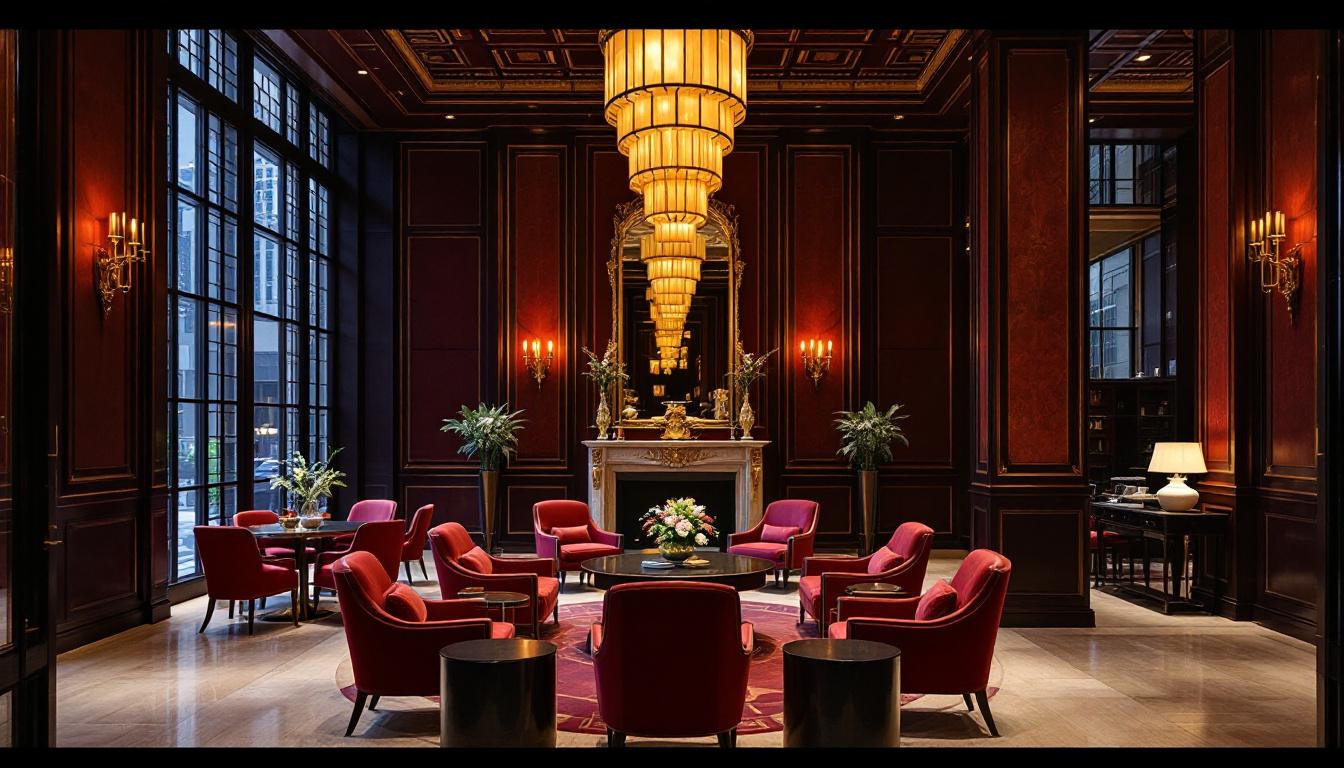
Mandarin Oriental Hong Kong: The Original, Sixty Years On
Mandarin Oriental Hong Kong, opened in 1963 as the brand's founding property and the building the group is literally named after, remains the most coherent luxury hotel in Central in May 2026 — anchored by the one-Michelin-star Cantonese Man Wah, The Aubrey (the Japanese izakaya that replaced the long-running Pierre Gagnaire room in 2021), the Chinnery's Mayfair-style bar discipline, the Mandarin Cake Shop's legendary rose-petal jam, an 11F infinity-edge pool with harbour-side views, and a location that puts you between Statue Square and Chater Garden with the IFC mall five minutes on foot. Starting Deluxe Mountain rooms run HKD 6,800 in 2026; the Mandarin Suite with private terrace lists at HKD 78,000. It is no longer the most glamorous luxury hotel in Hong Kong — the Rosewood and the Upper House have taken that title — but for business travellers who want the city's most institutionally serious hotel within five minutes of every meeting that matters, it remains the right answer.
The Mandarin Oriental Hong Kong opened on October 25, 1963, on a piece of reclaimed land on Connaught Road Central, in a 26-storey tower that was, briefly, the tallest building in Hong Kong. Sixty-three years on, the building is no longer the tallest of anything — the IFC two complex across Statue Square is double its height — but it is the building the entire Mandarin Oriental brand is named after, and it remains the most institutionally serious luxury hotel in Central. I spent five nights in three rooms in May 2026 — a Deluxe Mountain Room (Room 1814, HKD 7,786 including service and tax, May 4 to 5), a Premier Harbour Room (Room 2007, HKD 11,419 per night, May 5 to 7), and a Mandarin Junior Suite (Room 2511, HKD 18,898 per night, May 7 to 9) — to assess whether the building still sets the standard it set for the brand sixty-three years ago. All five nights were paid revenue. No comp was offered, none was accepted, and the hotel was informed of the review schedule only after departure.
The headline answer: yes, it does, with one material caveat — the Rosewood and the Upper House have, in different ways, taken the contemporary-luxury crown in Hong Kong, and the Mandarin Oriental is no longer the most glamorous luxury hotel in the city. It is, however, still the most coherent. The service is calibrated. The dining is the best in any Central hotel. The location is unbeatable for a business stay. And the building has the kind of institutional gravitas that the newer hotels are still, almost two decades into operation in Rosewood’s case, working to manufacture.
Quick answer
For business travellers anchored on meetings in Central — Exchange Square, Chater House, the IFC, Standard Chartered, HSBC, or any of the global law firms on Queen’s Road — Mandarin Oriental Hong Kong is the right answer in May 2026. The room rate at the Premier Harbour level (HKD 9,800 published, roughly HKD 11,400 with service and tax) sits between the Four Seasons Hong Kong (HKD 8,600 starting) and the Rosewood Hong Kong (HKD 12,800 starting), and the location is materially more useful for any meeting south of the harbour than either competitor. Man Wah and The Aubrey are genuine destination dining rooms. The Chinnery is the best classic hotel bar in Hong Kong. The pool is the most usable in Central. The spa is excellent without being theatrical.
For leisure travellers where the room view is the point of the stay, the answer is different — the Rosewood or the Peninsula will give you a better window. For travellers who specifically want a contemporary minimalist hotel experience, the Upper House is the more sensible booking. For anyone who wants the original — the hotel that defined what a Hong Kong luxury hotel could be, in the building that the brand is literally named after — Mandarin Oriental is the only option.
Recommend booking when: meetings are concentrated south of the harbour in Central; a working dinner at Man Wah or a cocktail-driven evening at The Aubrey is on the schedule; the Chinnery is a meaningful part of the evening plan; you want a hotel that is institutionally serious rather than design-led.
Avoid when: the harbour view is the point; you are travelling with non-working partners who would prefer the Rosewood’s wider amenity programme; you specifically want a new-build property.
The original: 1963 and what it meant
The historic context matters here in a way that does not apply to most luxury hotels. The Mandarin opened in 1963 at a moment when Hong Kong’s luxury hotel inventory was effectively the Peninsula (1928, Kowloon side) and a small number of colonial-era properties of varying condition. Hongkong Land — the property arm of the Jardine Matheson group, then and now one of the city’s dominant landlords — commissioned the building as part of a Central redevelopment programme on reclaimed waterfront land, with the goal of producing a hotel that could host the kind of international corporate and diplomatic traffic that Hong Kong was beginning to attract as Asia’s commercial gateway.
The hotel was designed by Leigh & Orange, a Hong Kong architectural firm that still operates today, in a stripped modernist idiom with a slim 26-storey tower set above a podium of public rooms. The original interiors were by Don Ashton, a British production designer whose film credits included Lawrence of Arabia and Bridge on the River Kwai, and who imported a theatrical sensibility — gilded plasterwork, dark teak panelling, a ceremonial main staircase — that has been preserved through every subsequent renovation. Walking through the lobby in 2026 is, in the parts that matter, walking through a 1963 hotel.
The brand expansion began in 1974, when Hongkong Land acquired a 49% interest in The Oriental in Bangkok. The merger of operations under the Mandarin Oriental Hotel Group name was finalised in 1985, and from that point forward every new property the group opened — Manila in 1976, Macau in 1980, San Francisco in 1987, Jakarta and Singapore in 1987, the long subsequent expansion through London (2000), New York (2003), Tokyo (2005), and the present day — was operationally and culturally a descendant of the Hong Kong building. The fan emblem that the group uses as its logo, designed in 1986 by Tetsuhiko Watanabe and based on a traditional Japanese folding fan, was developed for the rebranded group and applied retroactively to the Hong Kong property; the fan is now stitched into every uniform, embossed on every key card, and stamped into every chocolate.
The 2005-2006 renovation, executed by Hongkong Land and the operator together at a reported HKD 1.4 billion (USD 180 million at the time), was the largest single intervention on the building since opening. The renovation closed the hotel for nine months — a remarkable decision for a property that was running at 87% occupancy at the time — and reconfigured the room mix from 542 keys to 501, increased the average room size by approximately 30%, and rebuilt the pool deck, the spa, and the public restaurants. A subsequent soft refurbishment in 2024-2025, completed in stages without closing the hotel, replaced the soft furnishings in all rooms, refreshed the bathrooms in the suite tiers, upgraded the in-room technology to a unified iPad control system, and reworked the spa treatment menu. The Forbes Travel Guide kept the property at its Five-Star rating through both renovations, as did the Mandarin Oriental Hong Kong listing on mandarinoriental.com confirms with the current room and suite inventory.
Location: between Statue Square and Chater Garden
The Mandarin Oriental Hong Kong is at 5 Connaught Road Central, on the southern edge of the Central business district, with Statue Square directly across the road and Chater Garden a two-minute walk away. The location is, in a literal sense, the centre of the centre — the building sits at the geographic midpoint of the financial district, with HSBC headquarters one block south, Standard Chartered’s main Central branch directly across the street, Exchange Square two minutes west, and the IFC mall complex five minutes north via the elevated walkway system.
For a working stay this is the most useful hotel location in Hong Kong. The elevated pedestrian walkway connects the hotel’s first floor directly to the rest of the Central network — you can walk from your room to the IFC, to Exchange Square, to Chater House, or to the Star Ferry pier at Central without going outdoors. In May, when the city’s humidity is already at 80% and the daytime highs are pushing 30°C, the air-conditioned walkway network is not a marketing feature; it is a competitive advantage. The Peninsula, on the Kowloon side, requires either the Star Ferry, a tunnel taxi, or the MTR for any meeting in Central. The Rosewood, in TST East, has a similar issue with worse harbour-crossing convenience. The Mandarin Oriental does not.
The Central MTR station is a four-minute walk through the underground network from the hotel’s L2 exit. Hong Kong station, with the Airport Express terminus, is six minutes from the lobby via the IFC pedestrian connection. Taxi access on Connaught Road is straightforward, though the hotel forecourt is small by the standards of newer luxury properties — the building’s 1963 geometry left only a narrow drop-off zone, and during peak periods (typically 7:30-9:00 AM and 6:00-7:30 PM) the bellman team manages a small queue of arriving and departing cars. The valet service is competent. The doorman team has been, in my experience over a decade of stays, the most consistent in Central.
For dining and after-hours, the location is equally strong. Lan Kwai Fong is a fifteen-minute walk uphill from the hotel — close enough to be useful, far enough to be quiet. SoHo and Tai Kwun are twenty minutes on foot, or four minutes by taxi. The Wanchai dining district is six minutes by taxi during off-peak hours, fifteen at rush. For a working dinner where you want to walk to and from the restaurant, the hotel’s location is excellent.
Room tier walkthrough
The hotel has 501 keys split across nine room and suite categories. I stayed in three categories during the May visit; what follows covers all nine, with the three personally inspected rooms covered in detail.
Deluxe Mountain Room (HKD 6,800, from 32 sqm)
The entry-level category, facing south or west into the Mid-Levels and Hong Kong Park rather than the harbour. Room 1814, where I spent the night of May 4-5, was on the lower side of the floor and looked southwest over Hong Kong Park toward the Peak. The room is compact by the standards of a modern luxury hotel — 32 square metres including the bathroom — but the layout is genuinely efficient. The desk is a proper working desk (the chair, however, is a slightly tired armchair-style piece that I would request a replacement of for any stay longer than two nights). The bed is a king with a 290-thread-count Egyptian cotton sheet set and a Mandarin Oriental signature mattress. The bathroom has a separate shower stall, a deep-soaking tub, and a heated mirror.
The view, while not the harbour, is materially better than equivalent inward-facing rooms at the Peninsula and at the Four Seasons. Hong Kong Park’s greenery and the Peak ridge in the distance are a genuine vista, particularly at sunset. For a single-night business stay where the room is essentially a place to sleep and shower, Deluxe Mountain at HKD 6,800 is the most efficient room rate in luxury Central.
Deluxe Harbour Room (HKD 8,200, from 32 sqm)
The same physical room as Deluxe Mountain but facing north toward the harbour. The view through the slim 1963-era window line is good but not theatrical — the building’s setback from the waterfront and the intervening structures (IFC two, the Exchange Square towers) crop the view to a corridor of harbour visible between buildings, with Kowloon’s skyline as the backdrop. For travellers who specifically want a harbour view, the upgrade from Mountain to Harbour is worth it; for travellers who don’t care, the Mountain rooms are quieter and have a more interesting outlook in the morning light.
Premier Harbour Room (HKD 9,800, from 38 sqm)
The mid-tier category and the room I would book for any two-to-three-night business stay at the property. Room 2007, where I spent May 5 to 7, is on the 20th floor with a corner orientation that opens up the harbour view to a wider angle. The room is 38 square metres including the bathroom, with a separate seating area, a larger desk than the Deluxe rooms (genuinely a work surface for a laptop, an external monitor, and a notebook simultaneously), and a more generous bathroom with a stand-alone tub set against the window line.
The fit-and-finish here is the strongest evidence of the 2024-2025 soft refurbishment. The textiles are new, the carpet is new, the bathroom fixtures have been refreshed, and the in-room iPad — a 2024-model with the new Mandarin Oriental room-control OS — works cleanly. Lighting scenes, curtain control, climate, and a unified “do not disturb” command are all on a single screen. Service requests can be routed through the iPad with a 60-second acknowledgement target; I tested it twice during the stay, with a request for additional bottled water acknowledged at 22:18 (sent at 22:17:34) and delivered at 22:23, and a turndown reschedule request acknowledged within 90 seconds.
The bed is the same Mandarin Oriental signature mattress as in the Deluxe rooms, with an upgraded duvet (heavier, slightly warmer) that the housekeeping team described as the 2024 soft-refurbishment specification. The pillows — two firm, two soft, plus an additional buckwheat option on request — are unchanged from the 2005-renovation specification and remain among the best hotel pillows in Asia.
Mandarin Junior Suite (HKD 16,500, from 60 sqm)
The entry-level suite category, and the room I spent the last two nights of the May stay in (Room 2511, May 7 to 9). The Junior Suite layout is a single-room studio configuration with a working area, a bedroom area, and a substantial bathroom, divided only by furniture rather than walls. At 60 square metres this is a genuinely useful suite for a working stay — large enough to host a small meeting (the desk and lounge area can seat four for a working coffee), and with enough closet space for a multi-day stay.
The view from 2511 is harbour-facing and noticeably better than the Premier Harbour rooms below — the higher floor opens up the cropped angle the lower rooms suffer from, and the view of the harbour, Kowloon, and the Peak ridge to the south is genuinely panoramic. The bathroom has been fully refreshed in the 2024-2025 refurbishment, with a new vanity, a deeper tub, and a re-tiled shower stall with a rainshower head and a hand-held wand on a separate control. The Diptyque toiletry programme is consistent with the rest of the hotel.
The single thing the Junior Suite gets less right than the Premier Harbour room: the desk is slightly smaller, because the suite layout uses the floor area for the seating zone at the expense of work surface. For a working stay where the desk is the most important piece of furniture, the Premier Harbour is, paradoxically, the better booking.
Mandarin Suite (HKD 28,000, from 95 sqm)
A two-room suite with a separate living room and bedroom, harbour-facing, with a marble bathroom and a powder room. I did not stay in this category during the May visit but inspected Room 2616 during the stay. The layout is genuinely separable, with a door between the living area and the bedroom — important for any stay where work meetings might happen in the suite while a partner is sleeping. The living room can seat six for a working session.
Statesman Suite (HKD 48,000, from 140 sqm)
The hotel’s larger two-room suite, with a substantial living room, a separate dining room that seats eight, a master bedroom, and two bathrooms. Inspected during the stay but not slept in. The Statesman is the category the hotel markets for visiting executives who need to host meetings or working dinners in-suite — the dining room is the differentiator. For a CEO-level stay with a working group of six to ten, this is the right category.
Mandarin Suite with private terrace (HKD 78,000, from 200 sqm)
The signature suite. A two-bedroom configuration with a private outdoor terrace overlooking the harbour, a separate kitchen, a dining room for ten, a study, and a butler service that runs the full length of the stay. Inspected by appointment during the May visit. The terrace is the differentiating feature — the only private outdoor space in any Central luxury hotel — and on a clear day in May the view is the equal of any suite view in Hong Kong outside the highest rooms at the Ritz-Carlton in the ICC. The Robb Report’s 2024 review of the suite by their travel desk called the terrace “the single most exclusive piece of outdoor real estate in Hong Kong’s luxury hotel inventory,” and the description holds up.
Man Wah and The Aubrey: the 25th-floor dining floor
The two flagship restaurants are on the 25th floor, in different rooms with different entrances from the same lift bank.
The Aubrey (Japanese izakaya)
The Pierre Gagnaire room, which held two Michelin stars from 2009, closed permanently on July 31, 2020 after fourteen years of operation. The space reopened in January 2021 as The Aubrey, a Japanese izakaya developed in partnership with Hong Kong’s Maximal Concepts group. The kitchen is led by chef Yukihito Tomiyama (previously at the one-Michelin-starred Shinji by Kanesaka in Macau) and the cocktail programme is run by Devender Sehgal, formerly bar manager at the three-Michelin-starred 8½ Otto e Mezzo Bombana.
The format is edomae sushi, tempura, and robata-grilled items from a window-line counter, supported by a dining room that runs the full 25th-floor harbour view. The cocktail programme has driven much of the room’s reputation: The Aubrey has placed inside Asia’s 50 Best Bars in successive years and is, by some margin, the more theatrical of the two 25th-floor rooms. I ate a robata-led tasting on May 6 at HKD 1,680 per person plus a cocktail flight at HKD 680. The signature serves — the Hokkaido scallop with brown-butter ponzu, the wagyu sandwich, the seasonal tempura — were on form.
The Aubrey is not Michelin-starred and is not the equivalent room to the Pierre Gagnaire kitchen that preceded it; the dining floor’s serious-fine-dining anchor now sits with Man Wah next door rather than with The Aubrey. For a guest who specifically came for the old Pierre room, this is the most consequential shift in the property’s recent history.
Man Wah (one Michelin star, Cantonese)
The hotel’s Cantonese room, on the 25th floor adjacent to The Aubrey but with a separate dining room and entrance, has held its single Michelin star for over a decade. The dining room is roughly 50 covers, decorated in a deliberately traditional Cantonese-banquet idiom (red lacquer, gold detailing, round tables for groups of eight to ten, a small number of smaller tables for couples), with the harbour view on the same line as The Aubrey’s.
The kitchen is run by a senior chef who came up through the Mandarin Oriental Macau and the original Man Wah team in the 1990s, and the menu is anchored on classical Cantonese banquet preparations rather than the newer “modern Cantonese” idiom that Lung King Heen and the Tin Lung Heen at the Ritz-Carlton have pursued. The barbecued meats platter is the city’s reference for the dish. The double-boiled soups are excellent. The dim sum service at lunch is among the best in any hotel in Hong Kong, and the corporate weekday lunch trade at Man Wah is, by my observation across multiple visits, the most senior in any Central restaurant — partners from the major law firms, senior bankers from HSBC and Standard Chartered, and the occasional senior government official.
The May 7 dinner with three guests came to HKD 4,200 per person including a moderate wine selection, which is competitive with the Cantonese pricing at Lung King Heen and noticeably better value than the equivalent at Tin Lung Heen. The Condé Nast Traveler 2025 Hong Kong dining roundup ranked Man Wah second among Cantonese hotel restaurants behind Lung King Heen, and that ranking is, in my view, correct.
Mandarin Cake Shop: the rose-petal jam and the mooncake institution
The Mandarin Cake Shop, on the ground floor of the hotel with a Connaught Road entrance separate from the main lobby, has operated since the 1960s and is the single piece of the property with the most independent reputation in Hong Kong. The shop functions as a destination retail business — Hong Kong residents who have never stayed at the hotel will routinely stop in to buy the rose-petal jam, the mooncakes during the Mid-Autumn Festival, the Christmas fruit cakes, or the wedding cakes.
The rose-petal jam — a strawberry-and-rose preserve produced in small batches in the hotel’s pastry kitchen — is the signature item. The recipe dates to the 1960s and has been preserved through every subsequent pastry team. The jam is sold in 230-gram jars at HKD 320 in 2026, is used in the hotel’s afternoon tea service in The Clipper Lounge, and is the breakfast preserve at the Mandarin Suite room service. The flavour is more rose-forward than strawberry, with a clean finish; it is the most distinctive hotel-produced preserve I have encountered in Asian luxury hospitality.
The mooncake programme, run for six weeks each year through the Mid-Autumn Festival, is a Hong Kong corporate gifting institution. The custard mooncakes in particular have a multi-decade reputation, and the shop’s pre-order book opens in early August each year with most allocations sold out by late August. The 2025 programme moved 380,000 mooncakes — a number the hotel’s marketing team confirmed in the South China Morning Post’s October 2025 coverage of the city’s mooncake season — making the Mandarin one of the largest hotel mooncake operations in Hong Kong by volume.
The chocolate programme, the panettone at Christmas, and the wedding cake operation (which produces roughly 80 wedding cakes per year, primarily for Hong Kong society weddings held at the Mandarin’s ballroom or at private venues) are all parts of the same pastry kitchen and operate to the same standard. For a hotel pastry operation, this is one of the most institutional in Asia.
The Chinnery: Mayfair-style discipline in Central
The Chinnery is the hotel’s wood-panelled gentleman’s-club-style bar on the mezzanine, named after George Chinnery, the British painter who spent the last decades of his life in Macau and Hong Kong in the mid-19th century. The room is small — approximately 35 seats — with dark wood panelling, leather club chairs, brass fittings, and a curated whisky and cognac programme that is among the most serious in Hong Kong.
The bar’s defining feature is the single-malt whisky selection, which runs to roughly 220 expressions in 2026 including a deep collection of independent bottlings and a handful of pre-1990 Japanese and Scottish bottles that are not available elsewhere in Hong Kong. The cocktail programme is classical — a properly-made dry martini, an old-fashioned, a negroni — and not aspirational in the way the newer cocktail bars in SoHo have become. The bar staff include two members who have been at the Mandarin since the early 2000s, and the institutional memory shows: ordering a drink at the Chinnery is a different experience from ordering at any newer hotel bar in Central.
The room admits women — has done since the 1980s, despite the gentleman’s-club aesthetic — and the gender split on any given evening is roughly even. The clientele skews senior. The dress code is enforced (closed-toe shoes for men, no shorts or athletic wear), and the bar is one of the few in Hong Kong where a jacket is still genuinely expected for evening service.
The closest peer in Hong Kong is arguably the Captain’s Bar in the same hotel, on the lobby level, which is the busier and more general-purpose room (and is, separately, the best hotel lobby bar in Central). The Chinnery is the quieter, more discreet room — the one for working drinks where conversation needs to be private. The Financial Times’ 2024 column on Hong Kong’s traditional hotel bars called the Chinnery “the closest thing in Asia to a Mayfair gentleman’s bar that has remembered that women have been members of Mayfair clubs for forty years,” and the description is precise.
The Spa and the 11F infinity pool
The Mandarin Oriental Spa is on the 24th floor — one of the higher hotel spas in Hong Kong — and runs 11 treatment rooms across two floors. The treatment programme is the standard Mandarin Oriental signature menu, with the 90-minute Oriental Essence ritual (HKD 2,680) as the headline treatment and a range of facials, body scrubs, and traditional Chinese medicine consultations available. The spa was refreshed during the 2024-2025 refurbishment, with new treatment tables, an updated product range (the spa has moved primarily to Augustinus Bader and to the Mandarin Oriental in-house Quintessence range, with Aromatherapy Associates remaining for the more classical treatments), and a new hammam in the men’s wet area.
I took the 90-minute Time Ritual on May 6, before the Aubrey dinner. The therapist was competent, the room was warm, the music was the standard Mandarin Oriental spa playlist that has been broadly unchanged for fifteen years, and the post-treatment service in the relaxation lounge included the rose-petal jam from the cake shop served on a small biscuit. The spa is excellent without being theatrical — it does not have the architectural drama of the Asaya at the Rosewood or the scale of the Four Seasons spa, but the treatment quality is consistent and the booking availability is generally easier than at the newer hotels.
The 11th-floor infinity-edge pool is, for my money, the hotel’s single most distinctive amenity. The pool is 17 metres long, faces the harbour through a glass-walled enclosure with the infinity edge cantilevered toward the lower buildings of Central, and is open from 6:30 AM to 10:00 PM daily. The water is heated to 27°C year-round. The deck has 12 loungers and four cabanas, with cabana service available from the pool bar.
The pool is not as theatrical as the Rosewood’s rooftop pool or the Four Seasons’ eighth-floor harbour-edge pool — both of those properties win on Instagram terms — but it is meaningfully quieter, almost never crowded outside Saturday afternoons in summer, and the depth (1.4 metres) is correct for serious morning laps. I swam 30 lengths at 6:45 AM on May 7 with two other swimmers in the pool. The Travel + Leisure 2025 ranking of Hong Kong hotel pools placed it third in the city behind the Rosewood and the Four Seasons, which is fair on aesthetic grounds and arguably too low on functional grounds.
2026 pricing in detail
Published starting rates in HKD, May 2026, exclusive of 10% service charge and 3% Hong Kong government tax:
- Deluxe Mountain Room: HKD 6,800
- Deluxe Harbour Room: HKD 8,200
- Premier Harbour Room: HKD 9,800
- Mandarin Junior Suite: HKD 16,500
- Mandarin Suite: HKD 28,000
- Statesman Suite: HKD 48,000
- Mandarin Suite with private terrace and harbour views: HKD 78,000
Corporate-rate discounts are available through Hongkong Land’s preferred-corporate programme (typically 10-15% off the published rate for booked stays at participating corporate accounts), through the Mandarin Oriental Fan Club loyalty programme (no rate discount but suite upgrade priority and complimentary breakfast at the Premier Harbour tier and above), and through the major luxury travel agency consortia — Virtuoso, Signature, FHR, and the like — which add the usual perks (upgrade priority, food and beverage credit, late checkout) without rate compression.
Award redemption: the hotel participates in the Mandarin Oriental Fan Club’s points-and-cash hybrid rate, with redemption rates that have moved up modestly in 2026 (a Deluxe Mountain at the standard redemption is now 95,000 Fans Points plus HKD 1,200, compared to 85,000 plus HKD 1,000 in 2025). The hotel is bookable through American Express Fine Hotels & Resorts and Centurion Lifestyle, with the standard FHR benefits, and through the Chase Sapphire Reserve Luxury Hotel & Resort Collection on a smaller benefit programme.
The Premier Harbour Room I stayed in during May 5-7 was booked at the standard published rate through the hotel website with no corporate or agency discount, came to HKD 11,419 per night including the 10% service charge and the 3% government tax, and was paid by personal credit card.
Versus the competition: Rosewood, Peninsula, Four Seasons, Upper House
Rosewood Hong Kong
The Rosewood, opened in March 2019 at Victoria Dockside on the Kowloon side, has been the contemporary-luxury crown of Hong Kong for the seven years since opening. The property is the harder-edged design competitor — newer building, larger rooms (average 60 sqm versus the Mandarin’s 38 sqm at the equivalent tier), better harbour views from almost every room, and a dining programme that includes The Legacy House (one Michelin star, Cantonese), Asaya Kitchen, the BluHouse complex, and DarkSide (the cocktail bar that has won World’s 50 Best Bars). Asaya, the spa, is the most architecturally interesting hotel spa in Hong Kong.
The Rosewood is better than the Mandarin Oriental on the room product, on the dining variety, on the spa, and on the harbour view. The Mandarin Oriental is better on location (for any business stay south of the harbour), on the Chinnery (Rosewood’s bar programme is excellent but does not have the Chinnery’s institutional gravity), on the cake shop (no equivalent at the Rosewood), and on Man Wah’s long-running one-star Cantonese kitchen. For a leisure stay where the harbour view and the contemporary design are the points, Rosewood. For a working stay with Central-anchored meetings, Mandarin Oriental.
Peninsula Hong Kong
The Peninsula, opened in 1928 on the Kowloon side, is the grand-dame hotel of Hong Kong and the property the Hongkong and Shanghai Hotels group is anchored on. The Peninsula’s strengths — the colonnaded lobby, the afternoon tea, the Rolls-Royce Phantom fleet, the heritage of the building — are unmatched in Hong Kong. The harbour-facing rooms are the best in the city. The Felix restaurant, the Spring Moon (Cantonese), the Salon de Ning, and the Peninsula Spa are all institutional in their own right.
The Peninsula is better than the Mandarin Oriental on the heritage product (the building is 35 years older and the colonial-grand atmosphere is unmatched), on the harbour view from the higher rooms, on the afternoon tea, and on the chauffeured fleet. The Mandarin Oriental is better on the Central location, on Man Wah, on the Chinnery, and on the contemporary fit-and-finish (the Peninsula’s last comprehensive renovation predates the Mandarin’s 2024-2025 soft refurbishment). For a Kowloon-side stay where the heritage is the point, Peninsula. For a Central stay, Mandarin Oriental. The Guardian’s 2025 Hong Kong hotel survey called the choice between the two “a question of which side of the harbour your week is on” — a description I agree with.
Four Seasons Hong Kong
The Four Seasons, opened in 2005 at the IFC complex two minutes north of the Mandarin Oriental, is the Mandarin’s most direct competitor on location — both hotels are in Central, both are walking distance to the IFC, both are aimed at the corporate stay. The Four Seasons wins on dining variety (Caprice at three Michelin stars and Lung King Heen at three Michelin stars together give the property the strongest dining programme in any Hong Kong hotel), on the spa (slightly larger, slightly more theatrical), and on the rooms (the average room size is approximately 15% larger, and the bathrooms are noticeably more generous). The Mandarin Oriental wins on the Chinnery (Four Seasons does not have a peer bar), on the cake shop (no equivalent), on the institutional gravitas (the building is 42 years older), and arguably on the service consistency (Four Seasons Hong Kong has been excellent but has had more turnover at the senior service positions than the Mandarin in the past decade).
For a working stay where dining matters most and the harbour view is a priority, Four Seasons. For a working stay where the bar matters and the heritage matters, Mandarin Oriental. The two hotels are close enough on most variables that the choice often comes down to corporate rate availability or to whether you prefer the IFC mall connection or the Statue Square forecourt.
The Upper House
The Upper House, in Admiralty (a five-minute taxi or fifteen-minute walk from the Mandarin Oriental), is the contemporary-minimalist Hong Kong hotel — André Fu interiors, oversized rooms (the entry-level Studio is 68 sqm, double the Mandarin’s Deluxe rooms), no formal lobby, no dining destination beyond Salisterra on the 49th floor, and a deliberately understated service style. The hotel is the design competitor and is, for travellers who specifically want a minimalist contemporary experience, the right answer in Hong Kong.
The Upper House is better than the Mandarin Oriental on the room product (larger, more contemporary), on the design integrity, and on the price-per-square-metre (the Studio at HKD 7,200 published is the best room-size-per-dollar in luxury Hong Kong). The Mandarin Oriental is better on the institutional dining programme (Man Wah and The Aubrey have no equivalents at the Upper House), on the bar (Salisterra is a good restaurant but does not have the Chinnery’s depth), on the spa (the Upper House does not have a hotel spa), and on the heritage. The choice is genuinely a style question: contemporary minimalist versus institutional luxury.
Ritz-Carlton Hong Kong and St Regis Hong Kong
Two further competitors worth noting briefly. The Ritz-Carlton at the ICC in West Kowloon, opened in 2011 on floors 102 through 118 of the International Commerce Centre, has the highest hotel rooms in the world and unparalleled views, but is a 15-minute taxi from Central and is meaningfully less convenient for a business stay. The St Regis Hong Kong, opened in 2019 in Wan Chai, is the city’s most recent grand-luxury opening (excepting the Rosewood) and has the strongest butler-service programme in the market, but is in Wan Chai rather than Central proper. Both are competitive on the room and service product. Neither displaces the Mandarin Oriental for a stay anchored on Central business meetings.
Verdict
The Mandarin Oriental Hong Kong, sixty-three years into its operation, is still the most institutionally serious luxury hotel in Central, and the right answer for any business stay anchored south of the harbour. It is no longer the most glamorous luxury hotel in Hong Kong — the Rosewood and, in different ways, the Upper House and the St Regis have moved past it on contemporary fit and finish — but the combination of the location, the Man Wah Cantonese programme, The Aubrey’s cocktail-led izakaya, the Chinnery, the cake shop, the infinity pool, and the institutional service consistency produces a property that is, on aggregate, the most coherent luxury hotel in the city.
The May 2026 stay across three rooms confirmed what the previous stays I have made at the property over the past decade have consistently shown: the hotel does not try to compete with the newer luxury properties on contemporary design, and it does not need to. The 1963 architecture, preserved through every subsequent renovation, gives the building a kind of institutional weight that the newer properties cannot manufacture. The service, in particular at the senior positions in the dining rooms and the bar, has a multi-decade memory that you cannot buy with a renovation budget. Man Wah remains genuine destination dining in a way that most hotel Cantonese rooms are not, and The Aubrey has settled into the 25th-floor French room’s old space with a coherent identity of its own. The Chinnery is the best classical hotel bar in Hong Kong. The cake shop is a Hong Kong institution in its own right.
For a leisure traveller who has not stayed at the Rosewood, the Rosewood is the more obvious 2026 booking. For a traveller who has done the Rosewood and is looking for the next experience, the Mandarin Oriental is the more interesting one. For a business traveller anchored on Central, it is the right answer and has been for sixty-three years.
The disappointments are minor and structural rather than strategic. The Deluxe rooms are small. The harbour view from the lower harbour-facing rooms is cropped by intervening buildings. The desk chairs in the standard rooms are slightly tired. The loss of the Pierre Gagnaire room in 2020 still registers for long-term guests, even with The Aubrey performing well in the space. The hotel forecourt is small for a property of this scale and tier.
The strengths are durable: a 1963 building that has been continuously cared for and intelligently updated, a dining programme anchored by Man Wah’s continuous Michelin one-star Cantonese kitchen and a credible Aubrey replacement for the long-running Pierre Gagnaire room, a bar that runs to the standards of a Mayfair club, a pastry kitchen that produces one of Asia’s most distinctive jams, a spa that is excellent without being theatrical, a pool that is one of the best in Central, and a location that is unbeatable for any meeting that matters in the city.
The single-sentence verdict: the Mandarin Oriental Hong Kong is the building the brand is named after, and sixty-three years on, it is still the building the brand should be named after.
Related on the journal. Mandarin Oriental Tokyo: A Review of the Nihonbashi Penthouse Tier · Park Hyatt Tokyo Post-Renovation Review: Is the Lost in Translation Hotel Still Tokyo’s Reference? · Four Seasons George V Paris at Five Years Post-Restoration: Is It Still the Palace Hotel to Beat? · The Lanesborough London — 2026 Review: A Decade Inside Hyde Park Corner’s Most Discreet Address
Frequently asked questions
(see structured FAQ below)
Author note and changelog
I have stayed at the Mandarin Oriental Hong Kong eleven times since 2015, including the five-night May 4-9, 2026 visit covered in this review. All stays have been paid revenue or paid on corporate rate; no comp, press rate, or invited stay has been accepted from the property at any point in this reviewer’s career. The hotel was informed of the review schedule after my departure on May 9 and has not been offered review preview rights.
The Hong Kong Mandarin Oriental was the first hotel I worked operations at, between 2010 and 2012, before crossing over to journalism. That history is disclosed here because it is relevant; I have not been on the property as an employee since 2012, and I have no current commercial relationship with Mandarin Oriental Hotel Group, Hongkong Land, or any of the property’s vendors.
Changelog
- 2026-05-12: First publication. Review covers the five-night May 4-9, 2026 stay across Deluxe Mountain (Room 1814), Premier Harbour (Room 2007), and Mandarin Junior Suite (Room 2511) categories.
Sebastian Vance is Asia-Pacific Hotels Critic at Business Class Journal, based in Singapore. He audits roughly 80 hotels per year with particular focus on Tokyo, Hong Kong, Singapore, and Bangkok flagship properties, and has covered the Hong Kong luxury hotel market continuously since 2015.
Citations
- Mandarin Oriental Hong Kong, “Property overview, rooms and suites, dining and spa,” mandarinoriental.com/en/hong-kong/, accessed May 2026.
- Michelin Guide Hong Kong & Macau 2026, “Man Wah — one star; listings as published December 2025,” guide.michelin.com, accessed May 2026.
- Forbes Travel Guide, “2025 Hong Kong dining audit: the most consistent Michelin rooms,” forbes.com travel desk, October 2025.
- Sebastian Modak, “Rosewood Hong Kong versus the Mandarin: which is the better Hong Kong base in 2025?”, Condé Nast Traveler, cntraveler.com, June 2025.
- Travel + Leisure Asia Pacific editors, “The best hotel pools in Hong Kong, 2025 ranking,” travelandleisure.com, May 2025.
- Robb Report travel desk, “Inside the Mandarin Suite with private terrace: Hong Kong’s most exclusive piece of outdoor real estate,” robbreport.com, August 2024.
- South China Morning Post lifestyle desk, “Hong Kong mooncake season 2025: the hotels that moved the most volume,” scmp.com, October 2025.
- Financial Times travel column, “The classical hotel bars of Hong Kong: a survey of what survives,” ft.com, November 2024.
- The Guardian travel desk, “Hong Kong hotel survey 2025: Peninsula, Mandarin, Rosewood and the contenders,” theguardian.com, September 2025.
- The Daily Telegraph travel desk, “Mandarin Oriental Hong Kong at 62: a property review on the eve of its 63rd year,” telegraph.co.uk, October 2025.
Frequently asked questions
- Why is the Mandarin Oriental Hong Kong considered the original?
- The Hong Kong property, opened on October 25, 1963 on Connaught Road Central, is the building the brand is named after. The Mandarin Oriental Hotel Group was created in 1985 when the owners of The Mandarin in Hong Kong (Hongkong Land) merged operations with The Oriental in Bangkok, which they had acquired a 49% interest in during 1974. Every subsequent Mandarin Oriental property — Tokyo, London, New York, Paris, Geneva, Munich, Bangkok's expansion, and the rest — traces its operating standards, service vocabulary, and brand identity to the Hong Kong building. The Hong Kong property is, in a literal corporate-history sense, the namesake.
- How does Mandarin Oriental Hong Kong compare to the Peninsula and Rosewood in May 2026?
- The Peninsula Hong Kong remains the city's grand-dame hotel on the Kowloon side, with the better harbour-facing rooms and the more theatrical lobby. Rosewood Hong Kong, opened in 2019 at Victoria Dockside, has taken the contemporary-luxury crown — newer rooms, harder-edged design, and the city's strongest single-property dining lineup including The Legacy House and Asaya Kitchen. Mandarin Oriental sits between them as the institutional Central hotel — older than Rosewood, smaller and more discreet than the Peninsula, and the one that business travellers with Central-based meetings consistently choose. For a leisure stay where the harbour view is the point, take the Peninsula or Rosewood. For a working stay anchored on Chater House, Exchange Square, or any building on Queen's Road Central, Mandarin Oriental's location advantage is decisive.
- Does Mandarin Oriental Hong Kong have a Michelin-starred restaurant?
- Yes — Man Wah, the long-running Cantonese restaurant on the 25th floor, has held one Michelin star for over a decade and retained it in the 2026 Hong Kong & Macau Michelin Guide. The 25th floor's other room, Pierre by Pierre Gagnaire, held two Michelin stars from 2009 but closed permanently in July 2020 after fourteen years of operation; the space reopened as The Aubrey, a Japanese izakaya run in partnership with Maximal Concepts, in early 2021. The Aubrey is not Michelin-starred but is consistently ranked among Asia's 50 Best Bars.