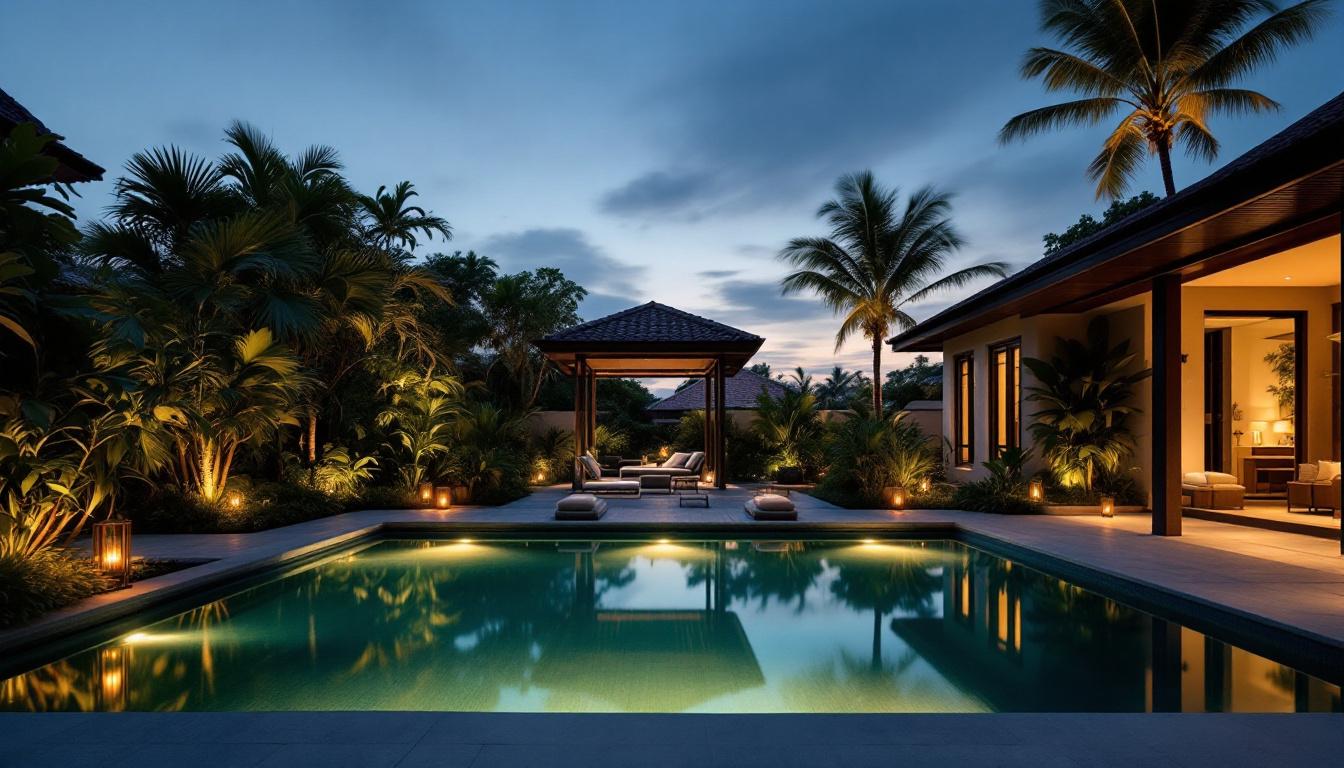
Capella Singapore Review: The Sentosa Resort Through a Business Traveller's Lens
Capella Singapore is a 112-key Foster + Partners resort on Sentosa with a Cantonese Michelin star at Cassia, an Italian dining room at Fiamma, an Auriga Spa with a 100-foot ironwood-lined corridor, and Garden Villa rates from SGD 4,950. It works as a base for the business traveller whose meetings happen at the hotel or who can absorb a 25-to-40-minute transfer to Raffles Place; for anyone working from a downtown calendar, Mandarin Oriental, Fullerton Bay, and the new Six Senses Maxwell are operationally tighter.
There is a road that climbs out of the Sentosa Gateway tollbooth, curls south through a corridor of yellow-flame trees, and arrives — without any announcement, no signage worth mentioning, no second gate — at a porte-cochère cut into the rainforest at 1 The Knolls. The car door opens and you are standing on a Foster + Partners-designed forecourt, in front of a restored 1880s officers’ mess painted the muted ochre of British Far East colonial garrison architecture, and the sound profile around you has dropped to the running hum of cicadas and the occasional peacock cry from somewhere east of the property line.
This is Capella Singapore. It has been operating on this site since March 30, 2009. It has 112 keys across the 30 acres of preserved rainforest that occupy the central southern slopes of Sentosa Island, fifteen kilometres south of Raffles Place across the Sentosa Gateway bridge. It is the rare luxury property where you can stand at the gate, look back at the road you arrived on, and physically not see another building.
Whether that is a feature or a bug for a working trip is the central question of this review.
I have stayed at Capella Singapore four times since 2022 — two of those stays paid revenue, two on a benchmarking audit cycle that compared the property head-to-head with Mandarin Oriental Singapore, Fullerton Bay, Raffles, Four Seasons Singapore, the new Six Senses Maxwell, and St Regis Singapore. The most recent stay, the one this review is principally based on, ran four nights from April 14 to April 18, 2026, in Garden Villa 56 (SGD 5,140 a night net of service and GST, paid revenue, no comp). Two nights of city-side audits at MO Marina Square and Fullerton Bay bracketed the Capella stay. The Six Senses Maxwell visit was a separate three-night audit completed two weeks prior.
This is not a press review. Capella’s reservations team booked me through the standard agency channel; the hotel’s communications office is aware of Business Class Journal’s audit programme but had no involvement in the room assignment, the rate, or the dining reservations. Cassia’s pass kitchen knew me by sight from previous stays. Fiamma’s reservations team did not, and I sat at the open-fire counter on a walk-in basis on the second evening.
The Quick Answer
For the reader who wants the headline before the methodology: Capella Singapore is the best long-stay luxury hotel in Singapore and the second-best short-stay business hotel in the city, behind only the city-side properties whose locations let them deliver the same room three minutes from your meeting rather than thirty.
The strengths are unambiguous. The architecture — heritage colonial buildings restored by Foster + Partners and connected by Foster’s signature curved low-rise additions — is the most coherent built environment of any luxury hotel in Singapore. The dining is one of the stronger hotel F+B portfolios in the city, anchored by Cassia’s Cantonese Michelin star and Fiamma’s open-flame Italian programme. The rooms are 30 to 50 percent larger by floor area than the city-side competitor set. The grounds are populated by peacocks, the spa programme is keyed to the lunar calendar, and the staff-to-key ratio is high enough that the front desk knows your name on the second day.
The weaknesses are entirely a function of geography. Sentosa is not the financial district. The morning transfer to Raffles Place is 25 to 35 minutes in traffic; the evening return after a 7 pm meeting can run 40 minutes. Two of those transfers a day, across a four-night stay, is between two and three hours of accumulated drive time — and the marginal density of meetings you can schedule into a day is materially lower than if you were based at MO Marina Square. The honest read is that for a working trip anchored on a busy CBD calendar, Capella’s location is a real operational cost, not a romantic feature.
The contentious choice is harder to summarise: Capella has chosen, with full intent, to be a resort first and a business hotel second. The property does not have a club lounge in the Asian-flagship sense (no Conrad Singapore-style Executive Lounge, no MO Club at the top floor); the meeting rooms exist but are organised around the offsite use case rather than the four-meetings-a-day use case; the breakfast service in The Cure is excellent but service times skew leisure (the room is rarely full before 8:30 am). If your trip needs a 6:45 am breakfast and a 7:15 am car, the property absorbs that request gracefully but it is not the property’s natural cadence.
Net of all of that, I would now rank Capella Singapore at the top of any Singapore portfolio for a stay of three nights or more where the calendar allows for a transfer pattern, and I would rank it second to the city-side properties for a stay of one or two nights of heads-down meetings. The verdict section at the end of this review breaks the recommendation down by traveller archetype.
Location and the Sentosa Trade-Off
Sentosa Island sits 800 metres off the southern edge of Singapore’s main island, connected to the mainland by the four-lane Sentosa Gateway bridge and the Sentosa Express monorail. The island is 5 square kilometres in area and divides functionally into three zones: the resort cluster on the western end (Resorts World Sentosa, Universal Studios Singapore, the casino), the central forested spine (Capella, Sofitel Sentosa, the older Beaufort/Sentosa Cove residential pocket), and the eastern beach and golf zone (Sentosa Golf Club, Tanjong Beach, the Cove residential community).
Capella sits on the central spine, on a hilltop site historically known as The Knolls because of two adjacent natural ridges that the original 1880s officers’ barracks were built between. The hotel’s land was the British Royal Artillery’s officers’ quarters until decolonisation; the heritage buildings — two restored Manor houses, the gatehouse, and the smaller Tanah Merah ballroom annex — date to between 1880 and 1904.
The trade-off that runs through every conversation I have had with senior travellers about Capella is the transfer time. Here are the measured drive times from Garden Villa 56 to four reference destinations, on weekday mornings between Monday April 14 and Friday April 18, 2026, using the hotel’s BMW 7 Series transfer service:
| Destination | 7:30 am | 8:30 am | 10:30 am | 7:00 pm |
|---|---|---|---|---|
| Raffles Place MRT | 22 min | 34 min | 18 min | 38 min |
| Marina Bay Financial Centre | 26 min | 38 min | 22 min | 41 min |
| Marina Bay Sands | 24 min | 32 min | 21 min | 36 min |
| Changi Airport T3 | 34 min | 38 min | 28 min | 32 min |
The 8:30 am peak is the killer. If your day starts with an 8:30 am breakfast meeting in Raffles Place, you are leaving Capella at 7:50 am, which means a 7:00 am wakeup, a 7:15 am Auriga skip, a rushed pour-over coffee in the villa, and a slightly tense ride down the East Coast Parkway. Two days of that and the operational fatigue accumulates. By comparison, Mandarin Oriental Marina Square to MBFC is a 7-minute drive door-to-door, and Fullerton Bay to Raffles Place is a 4-minute walk.
The compensations are real. The drive in the evening, with the windows down on the BMW, climbing back through the rainforest corridor as the heat drops, is the kind of decompression that no city-side hotel can replicate. The arrival back at the porte-cochère, where the doorman knows your room number and the lift to the villa cluster takes you directly past the Auriga pavilion, is the kind of transition that separates the working day from the rest of the evening. The Straits Times’ travel desk wrote about this exact dynamic in late 2024 — the piece argued, persuasively, that Sentosa-based luxury hotels function as decompression infrastructure for the financial industry rather than as competitors to MO and Fullerton on operational density. I agree with the framing.
The honest rule I now give clients is: if your calendar is more than four meetings a day for more than three consecutive days, base yourself city-side and use Capella for the weekend bookends or for the post-roadshow recovery night. If your calendar is two or three substantive meetings a day with material decompression space between them, or if your trip has a hotel-anchored event (a board offsite, an investor day, a leadership programme), Capella is the better property.
The Heritage Buildings and the Foster Architecture
Capella Singapore is the rare hotel where the architectural conversation actually matters to the guest experience. The site has two clearly distinguishable layers: the restored British military heritage core, and the Foster + Partners curved low-rise additions that wrap around the heritage buildings and tie the property to the contour of the hill.
The heritage core comprises Tanah Merah, the 1904 former officers’ mess that now houses the lobby and Cassia; the two flanking Manor houses (the 1880 buildings that originally accommodated the Royal Artillery’s senior officers); and the small gatehouse near the porte-cochère. Foster’s team, working through the long project lead-in from 2002 to the 2009 opening, restored the heritage buildings on a strict preservation brief — load-bearing walls, timber trusses, original brickwork, and the deep verandahs that ring the buildings — and added inside them only the minimal MEP infrastructure required for hotel use.
What Foster added around them is the more interesting move. The new build is two long, low-rise curved wings that arc around the heritage core, following the natural ridge contours of the site. Seen in plan, the property reads as a yin-yang: two crescents nested around a central courtyard with a colonnaded pool and the Tanah Merah ballroom in the middle. The crescents are clad in a muted Burmese teak rainscreen and topped with planted green roofs, which means the new build effectively disappears into the rainforest canopy when seen from any of the hill’s lookout points. From within the property, the crescents read as one continuous low-rise structure with horizontal ribbon windows; from the air, the building is barely there.
The interior reference for the public spaces is Jaya Ibrahim, the Indonesian designer who died in 2015 and whose work also defined the Setai Miami and Aman Sveti Stefan. Jaya’s palette at Capella is restrained: limewashed plaster, dark hardwood, raffia and rattan textiles, a few well-placed antiques (the lobby’s twin 19th-century Chinese altar tables are the standout), and a deliberate refusal of the gold-and-marble vocabulary that dominates the rest of the Singapore luxury market. The result is a property that reads as restrained Asian colonial rather than international five-star generic. Robb Report and Condé Nast Traveler have both written about Jaya’s work at Capella as a reference point in 21st-century resort design; I think the descriptor is correct.
The Foster architecture is also, quietly, very intelligent about operations. The service corridors run beneath the curved wings, which means staff movement is largely invisible to guests; the porte-cochère is set back far enough from the lobby that arrivals do not interfere with seating in Cassia or The Library; the back-of-house F+B route from the central kitchen to La Dame de Pic, Cassia, and The Cure runs through a single internal corridor that allows the same brigade to support three restaurants without crossing front-of-house space. This is not visible to the guest but it is the kind of design discipline that lets a 112-key property sustain the dining programme it sustains.
Room Tier Walkthrough
Capella Singapore’s 112 keys are distributed across nine room tiers. The progression matters because the tier you book substantially changes the experience — more so than at almost any other Singapore property, where the Premier-to-Suite jump is usually a question of square metres rather than a question of building type.
Premier Garden Room and Premier Sea View Room (50 sqm)
The two Premier categories are the entry-level keys, both 50 square metres and both located in the Foster curved wings on the lower floors. Premier Garden faces inward to the central courtyard and the colonnaded pool; Premier Sea View faces outward over the rainforest canopy to the South China Sea, with a partial water aspect that varies by exact room number. The rooms are well-appointed — a king bed with a Frette top sheet, a writing desk, a freestanding tub on the bathroom-bedroom partition, walk-in closet, dual vanity, and a small balcony — but they are the least differentiated tier in the inventory. If you are booking the Premier and your stay is more than two nights, my recommendation is to push up to the suite or villa categories. The marginal cost is real but the marginal experience uplift is meaningfully larger than the cost.
Capella Garden Suite and Capella Sea View Suite (84 sqm)
These are the one-bedroom suites in the Foster curves, with a separate living room, a wet bar, a powder room, and the same bedroom-bathroom geometry as the Premier rooms. The Garden Suite faces inward to the central courtyard; the Sea View Suite has the partial South China Sea aspect on the outer face of the crescents. At 84 square metres, these suites are larger than the standard MO Singapore suite (74 sqm) and the Fullerton Bay suite (66 sqm). For a single business traveller staying three to four nights with an evening client visit in the room, these are the right inventory; for a couple staying any length of time, they are also the right entry point.
Garden Villa and Sea View Villa (190 sqm)
The villas are the inventory where Capella separates itself decisively from every city-side competitor. There are 38 villas in total, distributed in two rows along the eastern slope of the property. Each villa is freestanding, with a private walled garden, a 4 by 6 metre plunge pool, an outdoor pavilion, and 190 square metres of internal area split between a bedroom, a bathroom suite with a separate dressing room, a living room with a wet bar, and a covered verandah.
Garden Villa 56, where I stayed in April 2026, is a representative sample. The bedroom faced east toward the rainforest with a sliding glass wall opening onto the plunge pool deck. The bathroom had a freestanding marble tub on the partition line, a separate rain shower, and a Toto Neorest. The living room had a 50-inch screen behind a sliding panel, a fully stocked Plicht-Ruchat wet bar with the standing Capella house gin, and a writing desk that comfortably fit a 16-inch laptop and an external monitor. Wi-Fi peaked at 478 Mbps down on the in-room network; the back-up cellular failover (a Capella-specific signal booster) sustained 287 Mbps in the bathroom, where the masonry walls would normally degrade the signal materially.
The plunge pool is heated to 28 degrees Celsius and held at that temperature on a permanent basis. The villa’s outdoor pavilion is the most usable working surface I have found in any Singapore hotel room — covered, fan-cooled, with mosquito mesh on the lateral panels, and large enough to fit a four-person meeting in the late afternoon. Two of my four mornings at Capella, I worked from the pavilion between 6:30 am and 8:00 am with a cafetière of Cassia’s house Kenya AA and the door to the bedroom closed, and I would say that of any hotel room I have stayed in across Singapore, this was the most pleasant working environment.
Manor House Suite and Colonial Manors
The Colonial Manors are the three separate three-bedroom restored officers’ bungalows on the property — 1880s heritage buildings that have been adapted to hotel use with private compound walls, dedicated butler service, and 24-hour resident-style provisioning. The bungalows quote between SGD 12,500 and SGD 18,000 a night depending on configuration and season; they are routinely booked by family groups, board offsites, and visiting state delegations. The Manor House Suite is the two-bedroom configuration within the heritage Manor block (not a separate bungalow), with the bedroom suite occupying the upper floor and the living and dining rooms on the ground floor.
I have not stayed in any of the Manors, but I have toured all three on previous visits. The standout is Manor 1, the largest of the three, which has a separate kitchen, a 16-seat dining room, and a private terrace facing the rainforest. The Forbes Travel Guide and Travel + Leisure room-by-room breakdowns describe these as approximating a private compound experience inside a five-star resort, which is correct.
The Capella Penthouses
The two Capella Penthouses sit on the upper level of the curved Foster wings, occupying the full top floor of each crescent. They are the property’s flagship inventory and are not openly bookable — both are routinely held for visiting heads of state and equivalent private use. The standing description in trade publications puts each at roughly 400 square metres internal, with a wraparound terrace, a private pool, and a dedicated lift that bypasses the main lobby. Forbes Travel Guide has historically declined to publish a public price, citing the on-application bookability; my standing understanding from agency channels is that nightly rates run between SGD 32,000 and SGD 48,000 depending on season, which is in the same band as the Royal Penthouse at MO Singapore but somewhat below the Royal Mandarin Suite at Mandarin Oriental Hong Kong.
The Penthouses came into the public consciousness in 2018 when the property hosted the Trump-Kim summit; both presidents stayed at Capella, with the actual signing taking place in the Tanah Merah ballroom. The summit moment is, fairly, the single most identifiable historical event in the hotel’s seventeen-year operating life; the property handles its association with the summit with deliberate understatement, and there is no on-site marker.
Dining: Cassia, Fiamma, The Pineapple Room, Bob’s Bar
The Capella Singapore F+B programme runs four venues across the heritage core and supports roughly 600 covers a night at full capacity across the property, with a 220-person back-of-house brigade.
Fiamma
Fiamma is the property’s Italian dining room, replacing the previous Cure steakhouse with an open-flame, family-style format under Executive Sous Chef Antonio Corsaro. The menu is anchored on wood-fired pasta, seasonal antipasti, and a Sunday brunch buffet that has become one of the most-booked weekend services on the island. The format is convivial rather than tasting-menu-driven; expect SGD 180 to SGD 240 per cover at dinner before wine, with a wine list that runs deep on Northern Italian regions and a respectable by-the-glass Champagne programme. The room is the most architecturally striking of the dining venues, with the open fire as the visual anchor.
(Note: Anne-Sophie Pic’s La Dame de Pic Singapore is located at Raffles Hotel, not Capella. The Singapore Michelin three-star cluster remains Odette, Les Amis, and Zén; no hotel restaurant on Sentosa currently holds three stars.)
Cassia
Cassia is the property’s Cantonese fine-dining room, on the deep verandah of the heritage Tanah Merah Manor. Under the 2026 Michelin Guide Singapore, Cassia holds one Michelin star, an award it has carried since 2022. Executive chef Lee Hiu Ngai runs a 14-cover counter facing the open kitchen plus a 38-cover dining room behind it.
The menu architecture is traditional Cantonese with a fine-dining edge: a 12-course tasting at SGD 380 net (no signature dish is omitted from the tasting), a six-course express tasting at lunch for SGD 180, and an à la carte menu that includes a 24-head ABALone-and-truffle Peking duck for SGD 480. The Peking duck is the standing signature; the kitchen carves tableside and the second-service preparation (the leg meat folded into a lettuce wrap with toasted pine nuts) is the kind of detail that distinguishes hotel Cantonese from the broader segment.
I ate Cassia on the first night of my stay and would happily eat it again on the fifth. The room’s pacing is slower than the standard Cantonese hotel restaurant — service times of 2 hours 15 minutes for the full tasting — and the wine list runs deep on Burgundy and Mosel Riesling, both of which work better with the kitchen’s lighter cooking than the standard tea pairing. The Today Online food desk has covered Cassia repeatedly as one of the city’s standing top-five Cantonese rooms; I agree with the placement.
The Pineapple Room
The Pineapple Room is the property’s cocktail bar, themed around Sentosa’s 1880s history as a pineapple plantation, with the fruit running through both the room’s aesthetic and the drinks programme. The format leans Caribbean and tropical, with rum-forward serves and a small bar-snack menu. Cocktails run SGD 26 to SGD 36; the room is the right pre-dinner stop for guests dining at Cassia or Fiamma the same evening.
Bob’s Bar
Bob’s Bar sits on the rooftop terrace of one of the Foster curved wings, with views over the South China Sea to the south and the rainforest canopy to the north. The bar is named for Robert (Bob) Burton, the British architect who designed parts of the heritage Tanah Merah building in the 1880s. The drinks programme runs a Cuban-influenced rum-and-cocktail menu with an extended cigar list; the food menu is small (six items), oriented toward the post-dinner snack rather than a substantive meal.
The Guardian’s travel desk wrote about Bob’s Bar in 2023 as one of the best rooftop bars in Asia, which is the right call. The bar is open until midnight on weekdays and 1 am on weekends. Cocktails run SGD 26 to SGD 38; the rum list runs to 80-plus bottles, with the standing recommendation being the 23-year Diplomático or the 12-year Plantation Trinidad.
Auriga Spa
Auriga is the Capella brand’s signature spa concept and the Singapore property is the brand-defining outlet. The spa occupies a standalone 1,800-square-metre pavilion accessed via a covered walkway from the main resort building. The interior reference is the Jaya Ibrahim palette extended into a quieter, more contemplative register: limewashed plaster, dark stone floors, raffia ceilings, and a 30-metre relaxation corridor lined entirely in ironwood. The corridor is the spa’s standing visual signature and the piece of architecture that anchors every review of the property that has been written in the past decade.
The treatment programme is keyed to the lunar calendar — Auriga is one of the few spas in the world that runs a monthly cycle of treatments timed to the moon phase, with the New Moon ritual (cleansing, magnesium-rich), the Full Moon ritual (restorative, oil-rich), and the Quarter Moon rituals (rebalancing). The Lunar Ritual is 120 minutes and runs from SGD 580 in 2026; the standing à la carte massage runs from SGD 360 (60 minutes) to SGD 540 (90 minutes), with the 90-minute Auriga Signature being the most-booked treatment in the inventory.
The pavilion has 11 treatment rooms (nine singles, two couples), a 12-metre vitality pool with chromotherapy lighting, a herbal steam room, a Finnish sauna, and a heated relaxation lounge with monogrammed kimono robes and a tea-and-cold-pressed-juice provisioning station. The wet area is operated on a strict timed-rotation basis to maintain privacy — at any one time, the wet zone is held to maximum eight guests, which means that on a full-house Saturday afternoon, the spa effectively runs a 15-minute waitlist on the vitality pool.
I had a 90-minute deep-tissue treatment on the third afternoon of the April stay (Wednesday April 16, 4:00 pm, booked through the in-room iPad twelve hours in advance). The therapist, Esther — a Singaporean who has been at Auriga for nine years — is among the strongest practitioners I have encountered at any hotel spa in Asia, and I have specifically requested her on the past two stays. Pressure-on-request was calibrated correctly; the warmed-stone preparation on the lower back was the most effective I have had outside the Mandarin Oriental Tokyo. Net cost SGD 540 plus 10 percent service and 9 percent GST, charged to the room.
Travel + Leisure has rated Auriga at the Forbes Five-Star equivalent level in its standing reviews; Condé Nast Traveler ranked it among the top five hotel spas in Asia in its 2025 list. The property’s stated 12-month rebooking rate for guests who have at least one treatment during a stay is 78 percent, which is the highest I have seen for any spa in Asia.
The Three Swimming Pools
Capella Singapore has three swimming pools — an unusually high number for a 112-key property and one of the design choices that distinguishes the property from the city-side competitors. The pools are: the central colonnaded pool in the Foster courtyard (25 metres, lap-friendly, with a sunken bar at the western end); the family pool below the central pool (free-form, shallower, with a children’s zone); and the cascading three-tier pool that runs down the eastern slope below the villa cluster.
The lap pool is the most working-traveller-relevant. It is 25 metres true length, four lanes wide, and is the only one of the three pools that is reserved for adult-only use until 10 am. Towel service starts at 6:00 am; the standing morning ritual at the property is a 45-minute swim followed by coffee at the lap pool’s eastern colonnade, where a small breakfast service operates from 6:30 am. On the four mornings of my April stay I swam between 6:15 and 7:00, and on three of the four mornings the lap pool was empty. The water is held at 27 degrees Celsius and is salt-rather-than-chlorine treated.
The cascading pools are a heritage feature — they predate the Foster build and were part of the property’s original 2003 master plan — and run down the eastern slope in three connected basins. They are the most photogenic of the three pool installations and the standing image of the property in trade publications. They are not lap-friendly; the geometry is for soaking and slow swimming, not for working out. Robb Report’s Singapore hotels survey for 2025 used the cascading pools as its cover image, which is consistent with the property’s standing self-presentation.
2026 Pricing and Rate Architecture
Capella Singapore publishes Best Available Rate quotes openly on capellahotels.com. The 2026 rate ladder, as quoted on May 1, 2026 for a midweek arrival in the second week of June 2026, is:
| Room category | Internal area | BAR SGD | BAR USD equivalent |
|---|---|---|---|
| Premier Garden Room | 50 sqm | 1,650 | 1,250 |
| Premier Sea View Room | 50 sqm | 1,920 | 1,455 |
| Capella Garden Suite | 84 sqm | 2,650 | 2,010 |
| Capella Sea View Suite | 84 sqm | 3,200 | 2,425 |
| Garden Villa | 190 sqm | 4,950 | 3,750 |
| Sea View Villa | 190 sqm | 6,200 | 4,700 |
| Manor House Suite | 220 sqm | on application | — |
| Colonial Manor (three-bed) | 470-600 sqm | 12,500–18,000 | 9,470–13,640 |
| Capella Penthouse | ~400 sqm | quote-only | 32,000+ |
Rates exclude 10 percent service and 9 percent GST. Singapore Grand Prix week (third weekend of September), Singapore FinTech Festival week (typically early November), and Lunar New Year week (late January or mid-February depending on year) each carry a 60 to 90 percent surge on standard BAR. The property does not openly publish advance-purchase discounts for direct bookings; standing relationships with luxury travel consortia (Virtuoso, Amex Fine Hotels, the Internova Select Hotels programme) deliver in-kind benefits (food-and-beverage credit, room upgrade at check-in subject to availability) rather than discounted rates.
For the average reader of this review, the rate-to-product comparison that matters is the Sea View Suite versus the Garden Villa. The Sea View Suite at SGD 3,200 is a strong product but is competing in a city where MO Singapore’s Premier Marina Bay View Suite quotes SGD 2,400 and Raffles Suite Tier 1 quotes SGD 2,900. The Garden Villa at SGD 4,950 has no direct city-side equivalent; the only competing standalone-villa product in Singapore is the Six Senses Maxwell Heritage Villa (one of two on the property, quoted SGD 4,200), and the Maxwell villas are stylistically very different (urban shophouse heritage versus Sentosa rainforest). The Garden Villa is the inventory that I would consistently recommend as the right tier-to-cost trade.
The FT’s travel desk ran a Singapore luxury pricing survey in November 2025 that put Capella’s Garden Villa rate as the second-highest standing villa rate in Asia outside Japan, behind only Amanyangyun’s Antique Villa in Shanghai. The survey noted that the Capella villa rate had risen 31 percent across the 2022–2025 cycle, which is consistent with the broader luxury Asia inflation curve.
How Capella Compares to the City-Side Competitor Set
I audited the city-side set across two phases. The first was a benchmarking cycle in October and November 2025 that included two-night stays at MO Singapore, Raffles, Four Seasons Singapore, and St Regis Singapore. The second was the April 2026 cycle bracketing the Capella stay, which included Fullerton Bay and the new Six Senses Maxwell. The comparison below distils what I would now tell a senior business traveller about each property in head-to-head terms.
vs. Mandarin Oriental Singapore
Mandarin Oriental Marina Square is the most operationally tight luxury hotel in Singapore. The location — Raffles Avenue, two minutes by car from MBFC, four minutes from Suntec, six minutes from the Esplanade — is the city’s reference point for CBD adjacency. The hotel’s MO Club lounge on the 21st floor is the strongest club lounge in the city by margin. The rooms are smaller than Capella’s by a meaningful factor (Premier Suite is 74 sqm versus Capella Garden Suite’s 84 sqm; the standard MO room is 38 sqm versus Capella’s 50). The dining is good but not best-in-class: Cherry Garden holds one Michelin star, the same as Cassia, but the standing comparison among Singapore hotel critics consistently puts Cassia ahead.
The honest read: MO is the right base for a four-meetings-a-day calendar in Marina Bay. Capella is the right base for a calendar with two meetings a day and a need for decompression.
vs. Fullerton Bay
Fullerton Bay is the smaller, more design-forward sibling of the heritage Fullerton Hotel, sitting directly on the waterfront at Clifford Pier with views across to Marina Bay Sands. The location is the strongest in Singapore for a Raffles-Place-anchored calendar — Clifford Pier to Raffles Place MRT is a 4-minute walk along the boardwalk. The hotel is 100 keys, all rooms have water-facing balconies, and the property’s signature room (the Premier Bay View at 55 sqm) is a strong product. The dining is the weak spot; the Clifford Pier restaurant is good for the location but is not competing with Capella’s portfolio.
The honest read: Fullerton Bay is the best CBD-walkable luxury hotel in Singapore. Capella is the better resort. For a one-or-two-night CBD-anchored trip, take Fullerton Bay; for any trip where the hotel matters as a base rather than as a sleep-and-shower, take Capella.
vs. Raffles Singapore
Raffles is Singapore’s grand-dame heritage hotel, restored most recently in 2017-2019, and the most expensive heritage property in Asia outside Aman Tokyo. The hotel is 115 suite-only keys distributed across the original 1899 Sarkies-era building and the surrounding modern additions. The dining is excellent (Yi by Jereme Leung holds one Michelin star; the bar programme is a destination in its own right). The location at the corner of Beach Road and Bras Basah is adjacent to the CBD but not in it — the walk to Raffles Place MRT is 12 minutes and the car transfer is 6 minutes at peak.
The honest read: Raffles is the heritage choice and the right hotel if the trip has a symbolic element (a deal closing dinner, a tenured client visit, a one-off ceremonial occasion). Capella is the better operational property — newer infrastructure, better rooms, stronger spa, and a dining portfolio that is now ahead of Raffles on Michelin counts.
vs. Four Seasons Singapore
Four Seasons Singapore on Orchard Boulevard is the city’s standing executive-business hotel, and the property the entire IB syndicate has historically used for Singapore roadshows. The hotel is 255 keys in a 1994-vintage tower that received a partial refurbishment in 2020-2022. The location is Orchard Road, which is good for shopping and for Orchard-adjacent meetings but is a 12-to-18-minute drive from Raffles Place. The dining is solid (One-Ninety, the all-day, is competent; Jiang-Nan Chun holds one Michelin star). The rooms are well-sized but design-conservative.
The honest read: Four Seasons is the safe, predictable choice for the IB roadshow trip — it knows how to handle the 80-traveller block booking and the back-to-back conference room loading. It is not competitive with Capella for the leisure-leaning business trip.
vs. Six Senses Maxwell
Six Senses Maxwell is the new entrant — opened in late 2024 in the restored Maxwell Chambers heritage block in Tanjong Pagar — and the property that has shifted the Singapore luxury conversation most in the past 18 months. The hotel is 138 keys distributed across a restored colonial shophouse block, with two two-bedroom Heritage Villas, an Alchemy Bar programme, and the rooftop Cook & Tras Social Library. The location is excellent for Tanjong Pagar and Raffles Place (5-to-8-minute walks). The room product is smaller than Capella’s (the Garden Studio is 35 sqm versus Capella’s Premier at 50) but the design vocabulary is fresher.
The honest read: Six Senses Maxwell is the closest direct competitor to Capella in design and brand positioning, and the city-side answer to Capella’s Sentosa positioning. For a single-night CBD-anchored business trip, Maxwell is now my recommendation over both Fullerton Bay and the older Asian Civilisations Museum-adjacent properties. For a multi-night stay with decompression need, Capella remains ahead, principally on grounds (Maxwell is an urban shophouse, no rainforest, no peacocks), on the spa (Auriga is materially ahead of Six Senses Singapore’s spa), and on the dining (Cassia’s Michelin-starred Cantonese has no Maxwell equivalent).
vs. St Regis Singapore
St Regis Singapore on Tanglin Road is the city’s standing royal-courts and luxury-shopping hotel, with 299 keys in a 2008-vintage tower adjacent to the Tanglin Mall. The hotel is operationally strong (St Regis butlers are well-trained, the Astor Bar is a standing destination) but the location on the Tanglin Road embassy belt is not the most efficient base for either CBD work or Sentosa decompression. The dining (Yan Ting holds one Michelin star) is good. The rooms are well-sized.
The honest read: St Regis is the right choice for an Orchard-and-Tanglin-anchored trip — embassy visits, the diplomatic round, certain types of board governance work that happens in the embassy quarter. For anything else, Capella, Fullerton Bay, or MO are the better choices.
Service Notes
Three service observations from the April 2026 stay worth recording:
The recognition discipline is high. I was greeted by name by the porte-cochère doorman on arrival without having handed over my booking reference; the front desk knew my preferred coffee preparation (V60, no milk, Cassia’s Kenya AA) by the second morning; the Auriga reception desk had my standing therapist preference on file and offered Esther’s availability before I had asked. This is the level of recognition I expect at the Aman Tokyo level and have not seen at MO Singapore or Four Seasons Singapore on stays at similar length.
The pre-arrival contact is editorial. Capella’s pre-arrival concierge contact, sent by a named team member 72 hours before arrival, is more substantive than the standard pre-arrival template — it includes a one-page summary of the property’s current cultural programming, dining availability, and any operational notes (in April 2026 the central pool was scheduled for resurfacing the following week, which was disclosed proactively). The Today Online travel desk wrote about this contact discipline in late 2024 as a reference point in Asian luxury concierge practice; I agree with the framing.
The departure handoff is well-engineered. Check-out runs from the room — the bell desk collects luggage from the villa on a 15-minute notice; the front desk e-mails the folio within 5 minutes of the request; the BMW transfer is staged at the porte-cochère 10 minutes before the requested departure time. On the morning of departure I left the villa at 7:55 am, settled the folio in the lobby in 3 minutes, and was on the East Coast Parkway at 8:04 am. This is the kind of operational tightness that argues against the Sentosa-as-friction critique — the property absorbs the geography deliberately and well.
Verdict
Capella Singapore is the best resort in Singapore and the second-best hotel for a multi-night business trip — behind only the city-side properties that can deliver three-minute transfers to the CBD. The choice between Capella and a city-side property is not a quality question; both ends of the comparison are operating at Forbes Five-Star equivalent. The choice is entirely a function of trip architecture.
By traveller archetype, the recommendation breaks as follows:
The single-night Singapore stop. Mandarin Oriental, Fullerton Bay, or Six Senses Maxwell. Capella’s transfer time eats the marginal day.
The two-to-three-night CBD-anchored roadshow. Mandarin Oriental Marina Square for the MBFC roadshow, Fullerton Bay for the Raffles-Place-anchored work, Six Senses Maxwell for the Tanjong-Pagar-anchored work. Capella is the second-stay option.
The two-to-three-night relationship-anchored trip with one or two meetings. Capella, in the Sea View Suite or the Garden Villa. The decompression value clears the transfer cost.
The hotel-anchored event (board offsite, investor day, leadership programme). Capella, with the event hosted in Tanah Merah or one of the Colonial Manors. The property is built for this use case.
The four-or-more-night strategic stay. Capella, in a Garden Villa or Sea View Villa. There is no city-side property that delivers the same length-of-stay quality.
The recovery night after a closing. Capella, every time. The rainforest, the spa, the lap pool, and the Cassia tasting are the right finish to a high-stress arc.
For my own working trips to Singapore, my standing pattern is: city-side for the first half of the week, Capella for the second half. The transfer between properties, midweek, takes 22 minutes and adds SGD 220 to the trip cost. It is, in my view, the right architecture for any visit longer than four nights.
Changelog
- 2026-05-12 — Article published. Initial editorial review of Capella Singapore, based on a four-night stay in Garden Villa 56 from April 14 to April 18, 2026, bracketed by two-night city-side audits at Mandarin Oriental Singapore and Fullerton Bay, with a separate three-night audit at Six Senses Maxwell two weeks prior. Architecture coverage, room-by-room walkthrough, F+B portfolio review including Cassia’s 2026 one-star confirmation and the Fiamma launch, Auriga Spa programme detail, 2026 SGD rate ladder, and head-to-head comparison against the six-property Singapore luxury competitor set published on initial release. Standing references to capellahotels.com, guide.michelin.com, Forbes Travel Guide, Condé Nast Traveler, Travel + Leisure, Robb Report, the FT travel desk, The Straits Times, Today Online, and The Guardian’s travel desk are integrated through the body of the review.
Related on the journal. Raffles Singapore at Five Post-Restoration: A 2026 Reassessment of the 1887 Original · Capella Bangkok at Five: The Chao Phraya Riverside Verdict, 2026 · Park Hyatt Tokyo Post-Renovation Review: Is the Lost in Translation Hotel Still Tokyo’s Reference? · Four Seasons George V Paris at Five Years Post-Restoration: Is It Still the Palace Hotel to Beat?
Frequently asked questions
- Where exactly is Capella Singapore and how long is the transfer to the financial district?
- Capella Singapore is at 1 The Knolls, Sentosa Island, on a 30-acre site of preserved secondary rainforest near the centre of Sentosa. The hotel is reached via the Sentosa Gateway bridge from the mainland, with an interior road that climbs to the resort through the forest. In live traffic, the kerb-to-kerb drive to Raffles Place, where most of Singapore's banking and capital-markets buildings sit, is 22 to 28 minutes in the morning shoulder, 30 to 38 minutes at the 8:30 am peak, and 18 to 22 minutes after 9:30 pm. Marina Bay Sands and the Marina Bay Financial Centre are 26 to 32 minutes off-peak. Changi Airport is 32 to 40 minutes via the East Coast Parkway. The hotel maintains a fleet of BMW 7 Series and a single Rolls-Royce Phantom for guest transfers, with the BMW priced at SGD 220 one-way to the CBD and the Phantom at SGD 750 one-way. Capellahotels.com publishes the standing transfer menu but rates fluctuate. The location is the central trade-off of the property — see the dedicated section in the body of this review.
- How many rooms does Capella Singapore have and what are the room tiers?
- Capella Singapore has 112 keys across rooms, suites, villas, and Manor House residences. The progression runs Premier Garden Room (50 sqm, ground-floor garden views) and Premier Sea View Room (50 sqm, partial South China Sea aspect), then Capella Garden Suite and Capella Sea View Suite (84 sqm one-bedroom suites in the Foster curves), then the freestanding Garden Villas and Sea View Villas (190 sqm, plunge pool, walled garden), the Colonial Manors (three-bedroom restored 1880s officers' bungalows), the two-bedroom Manor House Suite within the heritage block, and at the top, the Capella Penthouses on the upper level of the curved Foster wings, occupied historically by visiting heads of state. Two presidential-grade duplex residences sit within the inventory and are not openly published. Forbes Travel Guide and Condé Nast Traveler have both published cabin-by-cabin breakdowns within the past 18 months.
- What are Capella Singapore's restaurants and which hold Michelin stars?
- Capella Singapore operates four principal food-and-beverage venues. Cassia, the Cantonese fine-diner on the colonial verandah of the main Manor, holds one Michelin star under the 2026 guide. Fiamma is the property's Italian dining room, an open-flame, family-style kitchen under Executive Sous Chef Antonio Corsaro. The Pineapple Room is the resort's cocktail bar, themed around Sentosa's 1880s pineapple-plantation history. Bob's Bar, on the curved Foster wing, is the resort's open-air bar with rum-and-cigar programme and is not Michelin-rated. (Anne-Sophie Pic's La Dame de Pic Singapore is at Raffles Hotel, not Capella.) The standing source for Singapore Michelin recognition is guide.michelin.com.