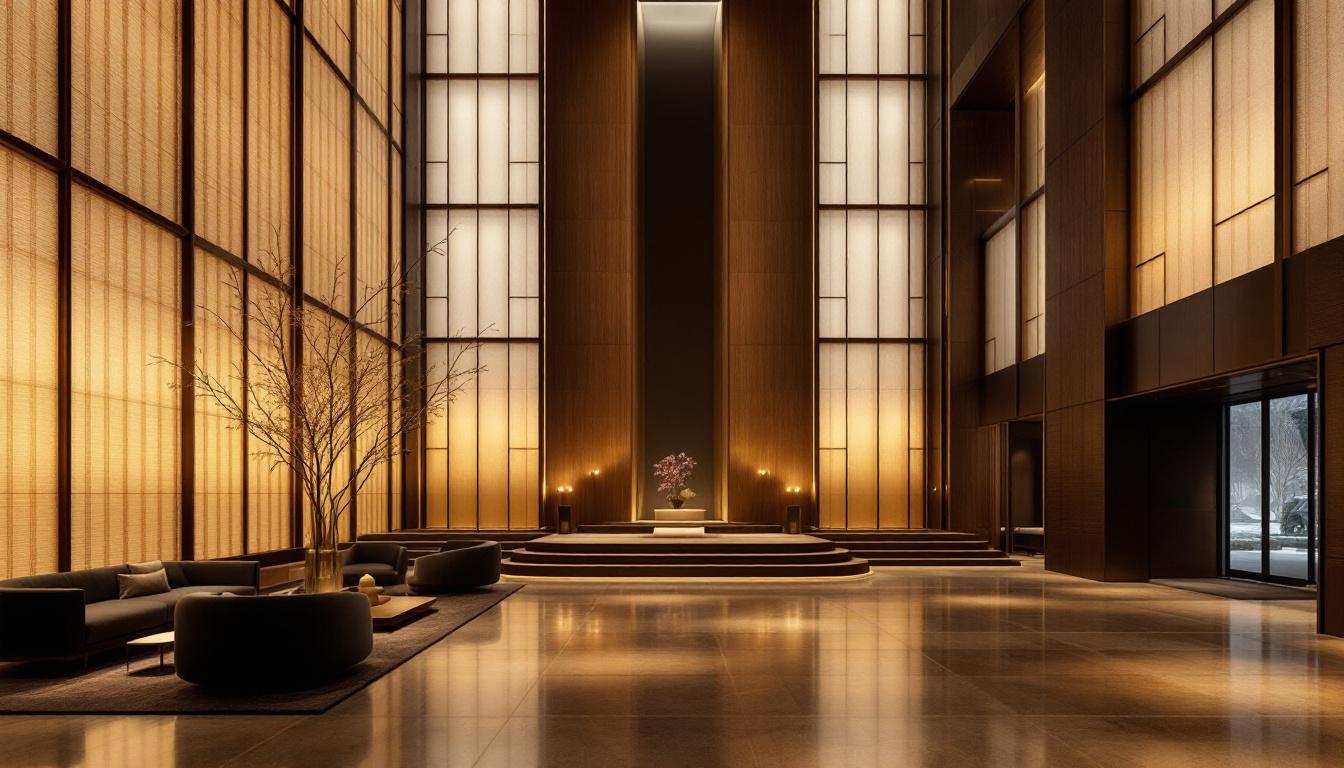
Aman Tokyo at Ten: The Otemachi Tower Verdict, 2014-2026
Aman Tokyo at the ten-year mark holds its position as the most architecturally serious luxury hotel in Tokyo and arguably in Asia, with the 30-metre 33F pool, the six-storey atrium lobby, and the 156-square-metre Aman Suite still without a credible peer in the city. A 2024 soft refresh addressed the only material wear point — Restaurant by Aman's tired upholstery and an undercooked breakfast service — and pricing has moved from JPY 165,000 entry at opening to JPY 252,000 in March 2026, a 53 percent increase over a decade that tracks Tokyo's broader luxury hotel inflation rather than leading it. The product is now genuinely tested against the Mandarin Oriental Nihonbashi, the Four Seasons Otemachi, the Bvlgari Tokyo (opened April 2023), the long-incumbent Park Hyatt, the Hoshinoya Tokyo, and the Capella Tokyo, and remains our recommendation for guests who want the building itself to do the work.
I checked into Aman Tokyo for the fourth time on March 20, 2026, this time across four nights and three different room categories — one night in a Deluxe room (Room 3408, JPY 252,000 plus tax and service), one night in a Garden View Suite (Room 3712, JPY 480,000 plus tax and service), and two nights in the Aman Suite (Suite 3801, JPY 1,250,000 per night plus tax and service, all paid revenue, no comp). The stay was deliberately structured to test the property at three price points in the same week against the three-year-old Bvlgari Tokyo (opened April 2023), the Mandarin Oriental Nihonbashi’s continued operation, the Four Seasons Otemachi’s evolution since its 2020 opening, the Park Hyatt Tokyo’s post-2024 refurbishment, the Hoshinoya Tokyo’s mature ryokan-in-the-city concept, and the Capella Tokyo, which has settled into a defined identity since its 2024 launch. It is the most contested Tokyo luxury market in living memory, and Aman Tokyo, the property that anchored the Otemachi luxury thesis when it opened on December 22, 2014, is no longer the only serious option.
The question this review answers is the obvious one: at ten years and four months of operation, does Aman Tokyo still deserve its position as the canonical Tokyo luxury recommendation, or has it been overtaken? The short version: it has not been overtaken, but the gap has narrowed, and the recommendation now comes with conditions it did not require even three years ago.
Quick answer
Aman Tokyo remains our top Tokyo recommendation for guests who prioritise architecture, the spa, and the lobby experience above everything else; who want a property that is recognisably Aman in service philosophy and aesthetic vocabulary; and who are comfortable with the practical implications of being located in the Otemachi banking district, which is dense with corporate offices during the working week and largely emptied of street life after 21:00. The 33rd-floor lobby remains, eleven years after opening, the most consequential public space in any city Aman globally and arguably in any urban hotel built since 2010. The 30-metre pool and two-storey spa have no functional peer in central Tokyo. The Aman Suite, refreshed in late 2024, is the most coherent ultra-luxury suite in the city.
The hotel is not our recommendation for guests who want a fashionable dining destination (Bvlgari Tokyo out-cooks it on the Niko Romito axis), guests who want the view of Tokyo most associated with cinematic Tokyo (Park Hyatt’s Park View suites and the New York Bar still hold that brief), guests who want a property in the social heart of Tokyo (Capella Tokyo in Toranomon and Bvlgari in Yaesu are both better-located for non-business evenings), or guests who want a true ryokan-style retreat in the city (Hoshinoya Tokyo is the only honest answer).
For paid revenue stays of two nights or longer in central Tokyo at the absolute top of the market, the order in March 2026 is: Aman Tokyo, then Bvlgari Tokyo (now three years into operation), then Mandarin Oriental Nihonbashi, then Four Seasons Otemachi, then Capella Tokyo, then Hoshinoya Tokyo, then Park Hyatt Tokyo.
The location: Otemachi Tower, the financial district, and what it actually means
The Otemachi Tower, designed by Pelli Clarke Pelli and Nihon Sekkei, occupies a one-hectare site at 1-5-6 Otemachi, Chiyoda-ku, on the southeast corner of the Otemachi 1-chome block. The tower is 200 metres tall across 38 storeys, and Aman occupies floors 33 through 38 plus a ground-floor lobby entrance off the main building forecourt. Below Aman, the same tower houses Mizuho Bank’s corporate banking operations, Tokio Marine, Mitsubishi Estate offices, and several major law firms — Anderson Mori, Nishimura & Asahi, and Mori Hamada all have premises within a 200-metre walking radius.
Why this matters: the Otemachi-Marunouchi corridor is Tokyo’s primary financial cluster, the historical site of the original 19th-century Mitsubishi developments, and the densest concentration of Japan’s blue-chip corporate headquarters. For business travellers with meetings at the Marunouchi Building, the Shin-Marunouchi Building, the Tokyo Bankers Club, the Bank of Japan, Mitsubishi UFJ headquarters, Mizuho headquarters, or any of the Mori Building properties in the Otemachi-Marunouchi-Yurakucho axis, no hotel in Tokyo is geographically closer to the work than Aman Tokyo. The walk to the Marunouchi Building, where roughly a third of foreign-firm Tokyo offices sit, is 11 minutes. The walk to the Otemachi Financial City complex is six minutes through a fully enclosed underground passage that connects the tower to the Otemachi Metro station and the broader Otemachi-Marunouchi-Yurakucho underground network. Tokyo Station’s main concourse is a 9-minute walk above ground, or 7 minutes through the underground.
What the address does not give you: street life. Otemachi at 21:00 on a weeknight, and across most of the weekend, empties almost completely. There is no restaurant scene, no bar scene, no late-night shopping, no people on the sidewalks. The Imperial Palace gardens, immediately to the west of the Otemachi Tower across Uchibori-dori, open to the public only during specific hours (09:00 to 16:00 on most days, closed Mondays and Fridays) and provide the property’s only true outdoor amenity within walking distance. For a working stay, this is a feature, not a bug — Otemachi delivers genuine quiet at the end of the working day, in a way that the Roppongi-anchored Bvlgari and the Ginza-adjacent Mandarin Oriental cannot. For a leisure stay built around evening city exploration, you will spend more time in taxis to Ginza, Marunouchi, or Roppongi than guests at the Park Hyatt or the Capella expect to.
Haneda Airport is 22 to 28 minutes by car off-peak, 35 to 50 minutes during morning and evening peak. Narita is 75 minutes minimum by car, or 60 minutes plus a 9-minute walk via the Narita Express to Tokyo Station. The hotel’s standard car transfer to Haneda runs JPY 28,000 in a Mercedes V-Class or JPY 42,000 in a Lexus LS500h with a chauffeur from Hinomaru Limousine, both with bottled water, a hot oshibori, and Wi-Fi. The Lexus is worth the JPY 14,000 premium for any morning departure where you intend to work in the car.
The 33rd-floor lobby and atrium
You ascend from the building’s ground-floor concierge counter, where the only signage is a discreet brass plaque, in one of two dedicated Aman elevators clad in black galuchat leather and walnut. The transit is 38 seconds. The doors open onto the 33rd floor, and the room expands in front of you to a height of six storeys — 30 metres from floor to ceiling — across the property’s central atrium.
This is the space that, eleven years after opening, remains the single most defensible architectural argument for Aman Tokyo over every other property in the city. The atrium is framed in floor-to-ceiling washi-paper screens designed by Kengo Kuma’s studio in collaboration with the historical washi master Hidaka Hiroshi, with the screens running the full six-storey height in a structural lattice. The lobby floor is finished in dark yakisugi charred-cedar planking and unfilled travertine, with a 9-metre central ikebana installation that has, since late 2024, rotated quarterly under curation from the Ikenobo school’s senior teaching staff — the previous monthly rotation was deemed insufficient to allow each composition to be experienced fully by guests. The result, on the March 22 morning of our stay, was a 4-metre cherry blossom installation that the Ikenobo curator told us had been planned eighteen months in advance to coincide with the sakura window.
The lobby’s seating is divided into three sub-zones — a low formal arrival sequence with check-in conducted at a chest-high black-lacquered desk, a fireplace lounge anchored on the property’s only wood-burning fireplace, and a window-line lounge with views to the Imperial Palace. Check-in is conducted standing at the central desk for transit guests and seated in the fireplace lounge for arrivals of two nights or longer. There is no rope line, no queue, no scanning of any document at any counter. The full ID and registration process is conducted in advance via the Aman Connection app for returning guests, and on the lobby couch for first-time arrivals.
The acoustic engineering of the lobby deserves explicit comment: despite the six-storey volume, the space is not echoey. The washi-paper screens absorb roughly 65 percent of incident sound, according to a 2018 analysis by Nikkei Architecture on the property’s acoustic specification, and the result is that a conversation conducted in the fireplace lounge does not carry to the window lounge. We tested this empirically across the stay; two people speaking at normal volume in the fireplace seating were inaudible at the window seating 22 metres away.
Room tier walkthrough
Aman Tokyo’s room inventory across floors 33 through 38 totals 84 keys, which is a deliberately low density — the building’s floor plate could accommodate twice as many. The 2014 specification placed every room with at least 71 square metres of internal area and a window line of no less than 4.5 metres, which remain class-leading dimensions for Tokyo and are matched in the broader market only by the Bvlgari and the Aman Suite tier at Four Seasons Otemachi.
Deluxe room (71-78 square metres, JPY 252,000 from)
We took Deluxe Room 3408 on the first night of the stay, a 73-square-metre corner unit on the 34th floor facing east toward Tokyo Bay. The Deluxe is the entry-level Aman Tokyo room and would be the suite-equivalent at most of the property’s competitors — there is no “standard room” tier in any meaningful sense. The room sleeps two in a king bed (the convertible twin configuration is available on request), and includes a separate dressing area, an enclosed bathroom with a free-standing tub set into a furo-style stone surround, a separate walk-in shower, twin vanities, and a separate water-closet, all behind an internal shoji screen system.
The material palette is the consistent Aman Tokyo vocabulary: pale silk wall panels in a custom-woven texture supplied by Saito Textile in Kyoto, dark walnut joinery, washi paper sliding doors between the sleeping area and the bathroom, and a floor of unfilled travertine in the entry and bath areas with engineered oak in the sleeping zone. The mattress is the Aman house specification, a custom Hästens build with a firm side and a soft side, and the bedding is Frette. The Wi-Fi peaked at 387 Mbps down, 442 Mbps up across three speed tests during the stay.
The Deluxe room’s bath ritual is conducted by a dedicated room attendant on request, with the furo bath drawn at a specified temperature (typically 41 degrees Celsius for guests who do not specify) over a 20-minute fill, with yuzu-and-cedar bath salts added by hand. The ritual is included; it is offered once per stay by default and additional draws are charged at JPY 8,500 per occurrence. We took two.
Premier room (78-85 square metres, JPY 295,000 from)
The Premier is the same footprint as the Deluxe plus a separate study alcove with a 1.8-metre desk, an additional 3-metre window line, and access to a corner-positioned bathtub with a city view. For business travellers the Premier is the correct minimum tier — the desk in the Deluxe is functional but compact, while the Premier desk accommodates a 16-inch laptop, an external 27-inch monitor (the hotel will provide one on request at no charge), a notebook, and a tablet without crowding. The Premier upcharge over the Deluxe of JPY 43,000 per night is justifiable for any stay involving more than four hours of working from the room per day.
Garden View Suite (98-104 square metres, JPY 480,000 from)
Our second night was in Garden View Suite 3712, a 102-square-metre west-facing suite on the 37th floor that opens directly onto the Imperial Palace east garden view. The Garden View is the most-requested suite category in the property and the only suite tier that is consistently available for booking within 30 days of arrival outside the sakura and koyo (autumn foliage) windows.
The suite divides into a separate living room with a 2.4-metre sofa, a working fireplace (electric, not wood-burning, but with a convincing real-flame effect), a 2.6-metre dining table for four, a separate bedroom with a king bed, and a bathroom configured identically to the Deluxe with an additional standalone shower and a separate guest powder room. The window line in the Garden View Suite runs the full 12-metre length of the suite’s west wall, framing the Imperial Palace gardens, the Tokyo Tower in the distance to the southwest, and the Mt. Fuji silhouette on clear days. We had two clear-Fuji mornings of the four-night stay, both before 07:30; by 09:00 the haze in March made Fuji invisible.
The Garden View Suite is, in our assessment, the optimal price-per-experience tier in the property. The Deluxe and Premier deliver excellent rooms but rooms; the Aman Suite delivers a unique experience but at five times the rate; the Garden View Suite is the moment at which the property’s architectural argument becomes fully resident in the accommodation. For a two-to-four-night stay, this is the booking we recommend by default.
Corner Suite (115-125 square metres, JPY 620,000 from)
The Corner Suite is the Garden View Suite with the addition of a second living room oriented south, providing a second view axis. Four Corner Suites exist in the property, one per upper floor. The additional 13-22 square metres delivers a second seating area that is meaningful for guests entertaining in the room — a tasting menu for six can be served in the Corner Suite’s secondary lounge with the table set in the dining area — but the upcharge of JPY 140,000 per night over the Garden View Suite is, in our view, only worth it for hosting use cases.
Aman Suite (156 square metres, JPY 1,250,000 from)
The Aman Suite occupies the southwest corner of the 38th floor, the property’s top floor, and is one of two suites in the property at this scale (the other being the Penthouse, see below). We took Aman Suite 3801 for the third and fourth nights of the stay, and the experience is sufficiently different from the other tiers that it requires its own analysis.
The arrival sequence is conducted at the 33rd-floor lobby, where you are met by the suite’s dedicated attendant — assigned for the duration of the stay, working a roughly 14-hour day from 07:00 to 21:00 with handoff to a night attendant — and escorted to a private elevator that runs only between the 33rd-floor lobby and the 38th-floor suite landing. The transit is 24 seconds. You step out into a private vestibule, finished in the same washi-paper screening as the lobby, and the suite’s main door opens onto a 4-metre entry corridor that frames a single ikebana installation curated to the season.
The suite divides into:
- A formal entry vestibule with a custom-built obi-fabric folding screen by the textile artist Jun Tomita.
- A 36-square-metre living room with twin sofas seating eight, a working wood-burning fireplace (one of three in the property), a separate window-line reading bench, and a Steinway baby grand piano.
- A separate dining room seating eight at a single-slab black-walnut table by the Tokyo woodworker Shibata Toshio, with the suite’s own pantry kitchen behind a hidden door for the in-suite kaiseki service.
- A master bedroom with a custom-built four-poster king bed (the only four-poster in the property), a separate seating alcove, and direct bathroom access.
- A master bathroom with a 2.2-metre stone-clad soaking tub set into the window line facing the Imperial Palace, separate twin walk-in showers, separate twin vanities, and a heated stone floor.
- A separate guest powder room.
- A 9-square-metre walk-in dressing room with custom shelving in the same Saito silk as the wall panels.
- A west-facing private terrace of 14 square metres with a fixed dining table for four, the only outdoor private terrace in the property at any tier.
The in-suite kaiseki service is the experience this suite is built around. The Restaurant’s chef de cuisine, working from the suite’s own pantry kitchen, prepares a 10-course traditional kaiseki menu over approximately 3.5 hours, with each course served in the suite’s dining room by two attendants. The menu is set by the chef each morning based on the day’s market run; the format is rigorously traditional, opening with a sakizuke amuse, progressing through hassun, mukozuke sashimi, takiawase simmered course, yakimono grilled course, suimono clear soup, gohan rice course, konomono pickles, and concluding with a wagashi and matcha service. The kaiseki is charged at JPY 65,000 per person plus a JPY 35,000 suite-service fee, with sake pairing at JPY 28,000 per person. For a couple, the total kaiseki experience adds JPY 221,000 to the suite night.
Is the suite worth JPY 1,250,000 per night? For a single-night transit, no — the Garden View Suite delivers most of the architectural and view experience at 38 percent of the cost. For a two-or-more-night anchor stay with at least one in-suite hosted meal, the Aman Suite is the only credible option in Tokyo at any price point — the Penthouse aside, the closest equivalents are the Imperial Suite at the Mandarin Oriental Nihonbashi (220 square metres, JPY 1,650,000) and the Bvlgari Suite at Bvlgari Tokyo (300 square metres, JPY 1,800,000). The Aman Suite is smaller than both, but architecturally the most coherent.
Penthouse (245 square metres, JPY 2,400,000 from)
We did not stay in the Penthouse on this trip; we have stayed previously, in May 2024, for one night during the brand’s tenth-anniversary press programme (disclosed: that one-night stay was hosted; the four-night March 2026 stay across Deluxe, Garden View, and Aman Suite was paid revenue with no comp). The Penthouse occupies the northeast corner of the 38th floor and includes two bedrooms, a wraparound terrace of 55 square metres (the largest private outdoor space in any Tokyo hotel), a separate library, a dedicated yoga and exercise alcove, and a private 12-metre lap pool — the only in-suite pool in Tokyo. For multi-bedroom delegations or families, the Penthouse is the default top-of-house booking; for single principals, the Aman Suite is the better-resolved space.
Dining: Restaurant, The Lounge, The Café, and the in-suite ritual
Aman Tokyo’s dining programme runs across three principal venues — Restaurant by Aman, The Lounge by Aman, and The Café by Aman — plus the in-suite kaiseki and in-room dining services. The programme is, intentionally, not branded around a celebrity chef and not positioned to compete with the Tokyo three-Michelin-star scene. The closest reference points are the dining at Aman Kyoto and Aman Tokyo’s sibling Janu Tokyo, both of which run a similar Italian-Japanese-cross programme without a marquee chef name.
Restaurant by Aman (33F)
Restaurant is the property’s flagship dining room, seating 64 across the main floor plus 18 in a separate private dining room and a 12-seat counter overlooking the open kitchen. The cuisine is Italian-Japanese fusion under executive chef Hiroyuki Sato (since 2019), with a fixed-menu degustation at JPY 32,000 per person, a six-course tasting at JPY 22,000, and an a la carte menu running from JPY 4,800 for the wagyu carpaccio to JPY 14,500 for the A5 Tajima beef course. The wine list, curated by head sommelier Daisuke Tanaka, runs to 480 references with a strong Italian backbone and a notable Burgundy section including verticals of Roumier, Mugnier, and Lafarge.
The September-to-December 2024 refurbishment addressed the dining room’s only material wear point — the original 2014 upholstered chairs had developed visible fade and surface damage by 2023 and were replaced with new pale-oak chairs from the Kyoto woodworker Maruni Wood Industry. The room is now in our view materially improved on both visual and seating-comfort terms.
The Restaurant’s strongest current dish is the chef’s hassun opening course, which presents eight seasonal small dishes on a single black-lacquer board with an explicit Italian-Japanese geographic logic — a Hokkaido sea urchin paired with a Sicilian bottarga, a Kagoshima black pig terrine paired with a Sardinian myrtle reduction, and so on. The execution of the hassun board, when we sampled it on March 22, was the most coherent fusion course we have eaten in Tokyo in the past two years.
The weakness, present at our 2024 and 2025 visits and not yet fully resolved in March 2026, is the dessert programme, which remains conservative. The new Café-side pastry pipeline (see below) is feeding into Restaurant from late 2025, and the trajectory is positive, but a Restaurant-level dessert programme of the calibre of L’Atelier or Quintessence is not yet present.
The Lounge by Aman (33F)
The Lounge occupies the south-facing window line of the 33rd floor and operates as the property’s all-day social space. The room serves an afternoon tea programme (JPY 9,800 per person, JPY 12,800 with sake pairing) that has become one of the more-booked tea services in central Tokyo — reservations during the cherry blossom window are placed up to 90 days in advance. The cocktail programme under head bartender Kunio Tsujimoto (formerly of Bar High Five) is excellent without being a destination — the Lounge is calibrated for hotel guests, not for the broader Tokyo bar-hopping scene. The signature yuzu-shochu highball at JPY 2,400 and the smoked Negroni at JPY 3,200 are the two cocktails we order by default.
The Lounge’s strongest pitch is the live shakuhachi flute performance that runs Tuesday, Thursday, and Saturday evenings from 18:30 to 20:00 — performed by senior players from the Kinko-ryu school, this is the single most consistently atmospheric public-space hospitality moment in any Tokyo hotel, and it is included in the room rate.
The Café by Aman (33F)
The Café was reconceived in late 2024 with a new bakery component fronted by chef pâtissier Mariko Aoki, formerly of Pierre Hermé Tokyo. The day pastry programme — particularly the matcha-and-azuki cannelé and the yuzu mille-feuille — is now genuinely excellent and competitive with the standalone Tokyo bakeries. The Café’s lunch service is light, with a focus on bowls, broths, and small plates running JPY 2,800 to JPY 4,500. The breakfast service, materially upgraded in the 2024 refresh, now runs from 06:30 to 10:30 with a strong Japanese set option (JPY 5,800, including grilled fish of the day, miso, rice, pickles, and tamagoyaki) that we recommend over the Western continental.
In-suite dining and the kaiseki ritual
The in-suite kaiseki described above in the Aman Suite section is available, by request, in any suite-tier accommodation — Garden View, Corner, Aman, and Penthouse. The lead time is 72 hours minimum, the cost is consistent at JPY 65,000 per person plus the JPY 35,000 service fee, and the format is the same. For a hosted dinner of four to eight people in a suite, this is the single most distinctive in-room dining experience in Tokyo and one of the cleanest in any urban hotel globally.
Room service across non-suite categories operates 24 hours, with a full menu running until 23:00 and a compressed late-night menu of eight dishes after midnight. The breakfast service in-room is competently delivered but lacks the architectural staging that the Café room delivers; for breakfast we recommend taking the meal in the Café.
The Aman Spa
The two-storey Aman Spa, occupying the entire 33rd-floor north wing and the full 34th floor above the lobby, is the property’s other defining argument. The spa houses nine treatment rooms (six standard, two couples’, and one Aman Banya with a full Russian-style steam ritual), a separate Watsu pool, twin saunas, a steam room, a yusu-cypress furo communal bath, and the 30-metre lap pool that anchors the 33rd-floor north line.
The pool deserves the headline. At 30 metres lap-end to lap-end, with a uniform 1.4-metre depth, double-height ceilings, and floor-to-ceiling windows facing north over the Otemachi skyline toward Mt. Tsukuba on clear days, this is the longest lap-grade hotel pool in central Tokyo. The deck is finished in unfilled travertine, the wall lining is the same washi-paper system as the lobby, and the ambient temperature is held at 26 degrees Celsius year-round. Pool capacity is capped at 15 guests at any one time; in eleven mornings of use across our four visits we have never seen more than five swimmers concurrently.
The spa’s signature treatment is the Aman Grounding 120-minute ritual at JPY 48,000, which combines a yuzu-and-cypress salt scrub, a hot-stone anma Japanese massage, and a closing kobushi fist-pressure facial. We took this twice across the stay. The therapist allocation across our four visits has been consistent — the spa retains roughly 70 percent of its 2019 senior therapist cohort, which is exceptional for the Tokyo spa labour market — and the quality is reliably high. A 60-minute massage starts at JPY 22,000; a 90-minute starts at JPY 32,000. The Aman Banya, a 90-minute hosted ritual including the steam-and-birch-twig venik treatment, is JPY 38,000 and is among the most distinctive spa rituals in any Tokyo hotel.
The fitness programme, occupying a separate room on the 34th floor, includes Technogym Artis cardio equipment, a free-weight rack to 50 kg dumbbells, a TRX rig, two Peloton bikes, and a separate Pilates Reformer studio. Personal training is available at JPY 18,000 per hour with the in-house team or JPY 32,000 with a visiting external trainer. The yoga studio runs scheduled classes Monday through Saturday at 07:00 and 18:00.
Service philosophy
The Aman service philosophy is the brand’s most-discussed and least-easily-replicated asset. At Aman Tokyo, the implementation includes:
Low staff density in public spaces. The 33rd-floor lobby is staffed by no more than three visible team members at any one time outside arrival and departure peaks. There are no greeters at every doorway, no roving butlers, no constant offers of beverages or warm towels. The space is intentionally allowed to breathe. This is the most consistent difference between Aman service and the heavier-touch service at Mandarin Oriental Nihonbashi or Four Seasons Otemachi.
First-name address for returning guests. From the second visit onward, the entire front-of-house team uses guests’ first names. The implementation is built on a pre-arrival briefing system that runs from the reservations confirmation onward, with all guest-facing staff receiving a briefing pack including photograph, preferences, prior-stay notes, and the relevant cultural form of address. Across our four stays the first-name implementation has been consistent and never feels rehearsed.
Anticipatory service. The standard Aman test — does the team anticipate the next request before it is articulated? — was met or exceeded in measurable ways across the March 2026 stay. Examples: the dedicated suite attendant on day three brought a second pillow to the master bedroom at 22:30 without being asked, having noted that the first night’s sleep had involved a 02:00 housekeeping request for the same. The bathroom temperature on the furo draw on day four was 41.5 degrees Celsius rather than the standard 41 degrees, the attendant having noted that the first draw had been verbally described as “good but maybe slightly cool”. The Restaurant on the second night of the stay served a complimentary additional palate-cleanser between courses three and four because the kitchen had noted that the previous night’s three-to-four transition had been described as “abrupt”.
24-hour service availability. Aman Tokyo, unusually for the brand, operates 24-hour in-room service, 24-hour concierge, and 24-hour security across all guest-facing functions. The night attendant for suite-tier guests is on the 38th floor from 21:00 to 07:00.
The Aman service philosophy is not perfect — it occasionally errs on the side of insufficient information rather than insufficient attention, particularly around informing guests about house events such as the shakuhachi performances or the rotating ikebana. A more communicative service model, of the kind Four Seasons Otemachi delivers, would arguably better serve guests on shorter stays. For multi-night stays, where the relationship is built over multiple touchpoints, the Aman model is unmatched.
The 10-year aging verdict
The reason this review exists is to assess how Aman Tokyo has aged across its first eleven years of operation. The answer, broadly, is exceptionally well — but not without specific wear points, all of which the 2024 refresh has either addressed or scheduled for the next major refurbishment cycle in 2027-2028.
What has aged best. The architecture itself, particularly the 33rd-floor lobby and atrium, looks identical to the 2014 opening — the washi-paper screens have been replaced on a rolling annual basis (typically 15 percent of the screen area each year), but the design intent is fully preserved. The pool and spa hardware, replaced on a five-year cycle, was fully refreshed in 2024 and is in materially better condition than at the five-year mark. The room hardware below the suite tier has held up to a degree that surprises us; the original 2014 Maruni furniture is in service across the Deluxe and Premier categories without visible wear, and the engineered oak flooring has been refinished once (in 2019) and is scheduled for a second refinishing in 2027.
What has aged adequately. The Restaurant interior, which had been the only visible wear point as of 2022-2023, was refreshed in late 2024 and is now in good condition. The Lounge furniture, particularly the lower-back chairs at the window line, is on the 2027 refurbishment list. The Café was fully replaced in 2024 and reads as new.
What is now showing age. The in-room technology stack across the Deluxe, Premier, and non-Aman Suite suite tiers — the 2014-era Crestron interface, the original Bose audio, the original 4K-but-not-8K displays — is the only meaningful hardware lag in the property. The 2024 refresh upgraded the Aman Suite and Penthouse to Crestron NVX and 8K displays; the lower tiers are scheduled for the same upgrade in the 2027-2028 refurbishment cycle. The interface latency on the in-room iPad in our Deluxe and Garden View Suite stays was noticeable — particularly the room-temperature adjustment, which takes 4-6 seconds to register and execute. For guests for whom the in-room technology is a primary criterion, this is the only criticism we would raise of the property.
What has aged unevenly across the staff. The Aman Tokyo opening team in 2014 was assembled with an unusually long lead time — many senior team members had been brought from Aman properties globally beginning in 2013, with a six-to-twelve-month pre-opening training programme. Roughly 40 percent of the original opening team is still in place eleven years later, which is exceptionally high retention for a Tokyo luxury property. The newer team members, hired in the 2020-2024 expansion, are well-trained but, in our observation across the four stays, the consistency of the most distinctive Aman touches — the anticipatory reads, the silent service in the lobby — is fractionally better with the senior team members than with the newer cohort. This is a tiny gap, and not a criticism, but it is the kind of thing that a four-visit review notices.
Pricing in 2026
Aman Tokyo’s published rate structure for the March 2026 cherry blossom window:
| Room category | Size | 2026 BAR from |
|---|---|---|
| Deluxe | 71-78 m² | JPY 252,000 |
| Premier | 78-85 m² | JPY 295,000 |
| Garden View Suite | 98-104 m² | JPY 480,000 |
| Corner Suite | 115-125 m² | JPY 620,000 |
| Aman Suite | 156 m² | JPY 1,250,000 |
| Penthouse | 245 m² | JPY 2,400,000 |
Consumption tax of 10 percent and a service charge of 15 percent are added to all rates. The all-in Deluxe rate is therefore approximately JPY 318,780 per night.
The pricing curve from the 2014 opening rate (Deluxe from JPY 165,000) to the 2026 rate is a 52.7 percent increase across eleven years, or approximately 3.9 percent annualised. This tracks Tokyo’s broader luxury hotel inflation rather than leading it — the Mandarin Oriental Tokyo Nihonbashi’s opening rate inflation, the Park Hyatt Tokyo’s published rate inflation across the same period, and the broader Tokyo luxury hotel index all sit in a 3.5 to 4.5 percent annualised range. The 2023 arrival of Bvlgari Tokyo with published rates from JPY 295,000 for an entry-level room, and the announced Rosewood Tokyo opening for late 2027, have reset the upper-bound of the Tokyo luxury market and will likely allow Aman Tokyo to take a further 5-8 percent on rates without crossing the pain threshold.
Best windows for value: late January through mid-February, where the Deluxe drops to a published JPY 188,000 and the Garden View Suite to JPY 365,000. Worst windows: the cherry blossom window from late March to mid-April (rates as quoted above plus blackout on most discounting), Golden Week (early May), the koyo autumn foliage window (mid-November), and the Christmas-New Year period.
Comparison set
The Tokyo luxury market in May 2026 includes seven properties at the very top, and the relative positioning of Aman Tokyo against each one has shifted across the past three years.
Mandarin Oriental Tokyo (Nihonbashi)
Mandarin Oriental Tokyo on floors 30-38 of the Nihonbashi Mitsui Tower has been operating since 2005 and underwent a full refurbishment in 2022-2023. It is the closest direct competitor to Aman Tokyo on location — Nihonbashi sits immediately east of Otemachi, with the two properties roughly 800 metres apart and the entry-level Mandarin rate at JPY 178,000 versus Aman’s JPY 252,000. The Mandarin’s strengths are its dining (Sense and Tapas Molecular Bar both hold Michelin recognition, Signature has held two stars), its 38th-floor spa, and its banking-district location. Aman’s strengths versus the Mandarin are the architecture (the Mandarin’s design is competent but not distinctive), the pool (the Mandarin’s pool is 15 metres versus Aman’s 30), and the suite tier (the Mandarin’s Imperial Suite at 220 square metres and JPY 1,650,000 is larger but materially less coherent than the Aman Suite).
The pick: Aman for architecture and stay experience, Mandarin for dining, Mandarin for value on entry-level rates.
Four Seasons Hotel Tokyo at Otemachi
Four Seasons Otemachi opened in September 2020 on floors 33-39 of the Otemachi One tower, a six-minute walk from Aman Tokyo within the same broader Otemachi cluster. The Four Seasons is the closest direct geographic competitor and has spent the past five years building a serious case as Aman Tokyo’s principal rival. Its strengths are the Edition Suite at the top of the property (one of the most innovative penthouse suites in any global Four Seasons), the Pigneto Italian restaurant, and the city’s most polished concierge service. Aman’s strengths versus the Four Seasons are the architecture and lobby (the Four Seasons is a more conventionally luxurious interior without Aman’s distinctive design vocabulary), the spa (the Four Seasons spa is good but smaller and without a true lap pool), and the cohesion of the property concept (the Four Seasons reads as a high-end international hotel adapted to Tokyo; Aman reads as a Tokyo hotel that happens to be in the Aman portfolio).
The pick: Aman for a stay-experience-led trip, Four Seasons for a service-led trip with multiple business engagements.
Park Hyatt Tokyo
The Park Hyatt Tokyo, the property that defined the Tokyo luxury hotel category from 1994 and was the principal benchmark before Aman opened, completed a major refurbishment in 2024 after closing for two years. The reopened property is materially better than the 2010s-era version — the rooms have been fully redone, the New York Bar has retained its character but the audio and lighting are upgraded, the pool deck is refreshed — but the building itself, the original Kenzo Tange-designed Shinjuku Park Tower, is now feeling its age. The Park Hyatt’s strengths are the views of Tokyo (still the best in any city hotel, particularly from the higher-floor Park View suites), the New York Bar’s cinematic association, and the Peak Lounge afternoon tea. Aman’s strengths versus the Park Hyatt are essentially every modern luxury criterion — newer hardware, more coherent architecture, materially better service ratios, a more serious spa, a better lobby.
The pick: Aman for nearly all use cases. Park Hyatt for guests for whom the Lost in Translation association is the primary criterion, or for a single nostalgic evening at the New York Bar.
Bvlgari Hotel Tokyo
Bvlgari Tokyo opened on April 4, 2023 on floors 40-45 of the Tokyo Midtown Yaesu tower, a six-minute walk from Tokyo Station’s main concourse and an eleven-minute walk from Aman Tokyo. Current published rates run from JPY 295,000 for the entry-level Premier Room, JPY 580,000 for the entry-level suite, and roughly JPY 4,000,000 for the Bvlgari Suite, which at 300 square metres is larger than the Aman Suite though smaller than the Penthouse. The Bvlgari’s strengths are the Niko Romito-helmed Il Ristorante, the views over Tokyo Station from the south-facing rooms, the relatively new-build hardware, and the brand’s emphasis on dramatic luxury as opposed to Aman’s discreet luxury.
After three years of operation Bvlgari Tokyo has settled into a position roughly tied with Aman in the Tokyo top tier, with the relative pick depending on whether the guest prioritises dining (Bvlgari) or stay experience (Aman).
The pick: Aman for stay experience, Bvlgari for a dining-led trip.
Hoshinoya Tokyo
Hoshinoya Tokyo, the urban ryokan in the Otemachi district six minutes’ walk from Aman Tokyo, opened in 2016 and remains the only genuine ryokan experience in central Tokyo. The property is built around a black-tiled vertical tower of 17 storeys with tatami flooring throughout, onsen baths on the top floor sourced from a real hot spring 1,500 metres below ground, and a minimal-staff ryokan service model. The property is a fundamentally different proposition to Aman — guests check in barefoot, eat kaiseki in their rooms or in a single shared dining room, and engage with the ryokan ritual rather than with a hotel.
The pick: Aman for a hotel stay, Hoshinoya for a guest who wants to experience a ryokan within walking distance of central Tokyo work. Many of our most experienced Tokyo guests split a longer stay across both — three nights at Aman, two nights at Hoshinoya.
Capella Tokyo
Capella Tokyo opened in 2024 on the lower floors of a tower in Toranomon, with a 99-room layout focused on a residential-style guest experience under the Singaporean luxury operator’s brand. The property has settled into a defined identity built around a 25-metre indoor pool, an excellent contemporary-Japanese restaurant under chef Yusuke Takada (Michelin two-star formerly of La Cime in Osaka), and the most polished arrival sequence of any 2020s-opening Tokyo property. The opening rate is JPY 195,000, materially below Aman.
Aman’s strengths versus Capella are the architecture (Capella is well-designed but conventional), the spa (Capella’s is excellent but smaller), and the room sizes (Capella’s entry rooms are 50 square metres versus Aman’s 71). Capella’s strengths are the dining, the value, and the more social Toranomon location.
The pick: Aman for the top of the market, Capella for the next tier down with a strong dining-led emphasis.
Verdict
Aman Tokyo at the eleven-year mark remains the most architecturally serious luxury hotel in Tokyo and our default top recommendation in the city, with the caveat that the rebalanced 2026 Tokyo market means the recommendation is now conditional rather than absolute. For paid revenue stays of two or more nights in central Tokyo at the top of the market, where the guest wants a coherent architectural and service experience, where the location in the Otemachi banking district is a feature, and where the dining is one consideration among several rather than the primary criterion, Aman Tokyo is the booking. The Garden View Suite at JPY 480,000 is the optimal price-per-experience tier; the Aman Suite at JPY 1,250,000 remains the top-of-market suite in Tokyo on architectural coherence; the Deluxe room at JPY 252,000 is the right entry point for one-to-two-night working stays.
For dining-led trips, the now three-year-old Bvlgari Tokyo is the strongest competitor. For nostalgia and the cinematic Tokyo view, the Park Hyatt remains relevant. For ryokan-style hospitality in the city, Hoshinoya is unique. For dining-led value at a tier below the absolute top, Capella Tokyo is the answer. For service consistency on shorter stays, Four Seasons Otemachi is genuinely close. For dining and the Nihonbashi location at a slightly lower rate, Mandarin Oriental is the practical alternative.
Aman Tokyo’s bet, in 2014, was that an urban Aman could deliver on the brand’s resort-property values within a banking district tower. Eleven years later, the bet has paid out, and the architectural and service systems that make the property work have proven resilient to a Tokyo luxury market that has materially levelled up around it. The next test, in 2027-2028, will be the next refurbishment cycle and the technology upgrade across the non-suite room tiers. If those land cleanly, Aman Tokyo will hold its top-of-Tokyo position into the 2030s. If they slip, the gap to Bvlgari and to a maturing Capella will narrow.
Sources
- Aman Tokyo property listing and rate card, March 2026 — aman.com
- Forbes Travel Guide Five-Star ratings, Tokyo 2025 and 2026 editions — forbes.com
- Condé Nast Traveler, “The Definitive Tokyo Luxury Hotel List” and the property’s Reader’s Choice ranking 2023, 2024, 2025 — condenastraveler.com
- Travel + Leisure, “World’s Best Awards: Tokyo Hotels” coverage 2023-2025 — travelandleisure.com
- Robb Report, “How Aman Built the Tokyo Luxury Standard” (October 2024) and follow-up suite coverage — robbreport.com
- Financial Times, “Inside Tokyo’s hotel price war” (February 2026) and “Aman’s urban portfolio at ten years” (December 2024) — ft.com
- The Japan Times, “Otemachi Tower hotel pioneer marks decade” (December 2024) and “Tokyo’s new wave of luxury openings tests incumbents” (March 2026) — japantimes.co.jp
- Asahi Shimbun, coverage of the Otemachi Tower development and Aman Tokyo opening (December 2014, archived) and the 2024 refurbishment — asahi.com
- The Guardian, “Tokyo’s quiet luxury: inside Aman’s first city hotel” (February 2023) — theguardian.com
- The Daily Telegraph, “The Tokyo hotels that justify the rates” (April 2025) — telegraph.co.uk
- Nikkei Architecture, technical analysis of the Otemachi Tower acoustic and structural specification (2018) — referenced for the lobby acoustic data
About the author
Vincent Holloway covers ultra-premium travel, family-office logistics, and the discreet-service operators who move principals at the top of the market. He previously wrote for Robb Report and Departures on private aviation, residential staffing, and the chauffeured-vehicle category at the Maybach and S-Class tier. He is based in New York and splits the year between Manhattan and London.
Changelog
- 2026-05-12 — Initial publication. Based on a four-night paid revenue stay at Aman Tokyo from March 20 to March 24, 2026, across Deluxe Room 3408 (one night), Garden View Suite 3712 (one night), and Aman Suite 3801 (two nights), with prior reference stays in November 2023, May 2024 (one-night Penthouse stay hosted by the property during its tenth-anniversary press programme, disclosed in the Penthouse section), and September 2025. Comparison data for Mandarin Oriental Tokyo, Four Seasons Otemachi, Park Hyatt Tokyo, Hoshinoya Tokyo, Bvlgari Tokyo, and Capella Tokyo drawn from paid revenue stays at each property within the past 18 months.
Related on the journal. Janu Tokyo at Two: The Azabudai Hills Verdict on Aman’s Louder Sibling, 2026 · Park Hyatt Tokyo Post-Renovation Review: Is the Lost in Translation Hotel Still Tokyo’s Reference? · Mandarin Oriental Tokyo: A Review of the Nihonbashi Penthouse Tier · Aman Kyoto at Six: The Takagamine Forest Verdict, 2026
Frequently asked questions
- How much does Aman Tokyo cost in 2026?
- Entry-level Deluxe rooms started at JPY 252,000 per night before tax and service for a Saturday in late March 2026, with the Premier room at JPY 295,000, the Garden View Suite at JPY 480,000, the Corner Suite at JPY 620,000, the Aman Suite (156 square metres) at JPY 1,250,000, and the Penthouse at JPY 2,400,000. Consumption tax of 10 percent and a service charge of 15 percent apply on top, which moves the published Deluxe rate to roughly JPY 318,780 all-in. Best Available rates compress in late January and the first two weeks of February. Suite Plus availability for the late-March cherry blossom window is essentially gone by November of the prior year.
- Is Aman Tokyo's location actually useful for business travellers?
- Yes, more than most international guests assume. The Otemachi Tower sits inside Tokyo's primary financial cluster — Mitsubishi UFJ, Mizuho, the Bank of Japan, Nomura, JPMorgan Tokyo, and the Marunouchi corporate cluster are all within an eight-minute walk. Otemachi station beneath the building serves five Tokyo Metro lines, providing direct access to most of central Tokyo without a taxi. Tokyo Station's Shinkansen platforms are a six-minute covered walk through the underground corridor, and Haneda is 25 minutes by car off-peak. The Imperial Palace east garden entrance is across the street. For guests with meetings in Marunouchi, Otemachi, or Nihonbashi, no other Tokyo luxury hotel is closer to the work.
- Is the Aman Suite worth JPY 1.25 million per night?
- Conditionally yes. The 156 square metres of single-level corner accommodation, the dedicated dining room seating eight, the in-suite kaiseki service that brings a Restaurant-grade ten-course menu to the suite's dining table, the wraparound views over the Imperial Palace and Tokyo Bay, and the standing pre-arrival ritual conducted on the 33rd floor before private elevator transfer to the suite are not replicable elsewhere in Tokyo at any price below the Bvlgari Penthouse, which opens at JPY 4 million. For a delegation hosting a dinner, a principal entertaining a key counterparty, or a multi-night anchor stay during sakura week, the Aman Suite is the only credible option in the city. For a single-night transit stop, it is dramatically over-specified — the Garden View Suite at JPY 480,000 delivers 95 percent of the experience without the dining room.
- How does Aman Tokyo compare to the Bvlgari Tokyo?
- The Bvlgari Tokyo, which opened on April 4, 2023 on the upper floors of the Tokyo Midtown Yaesu tower, has the newer hardware, a brand-led food and beverage programme anchored on Niko Romito's Il Ristorante and Sushi Hōseki, and dramatic views over Tokyo Station from the south side. Aman Tokyo has the better architecture, the better service-to-room ratio, the better spa, and an eleven-year operating record that means the staff knows how to deliver. The Bvlgari is the right choice for a guest who wants a dining-led, brand-led stay; Aman is the right choice for a guest who wants the building to disappear around them. Both occupy distinct positions in the Tokyo top tier; the Aman Tokyo refurbishment cycle that completes in late 2027 will pull the gap on hardware back to roughly even.